

Delhi Draft EV Policy Proposes Strong Tax Support for EV Adoption: What It Means for Buyers, Businesses, and the City


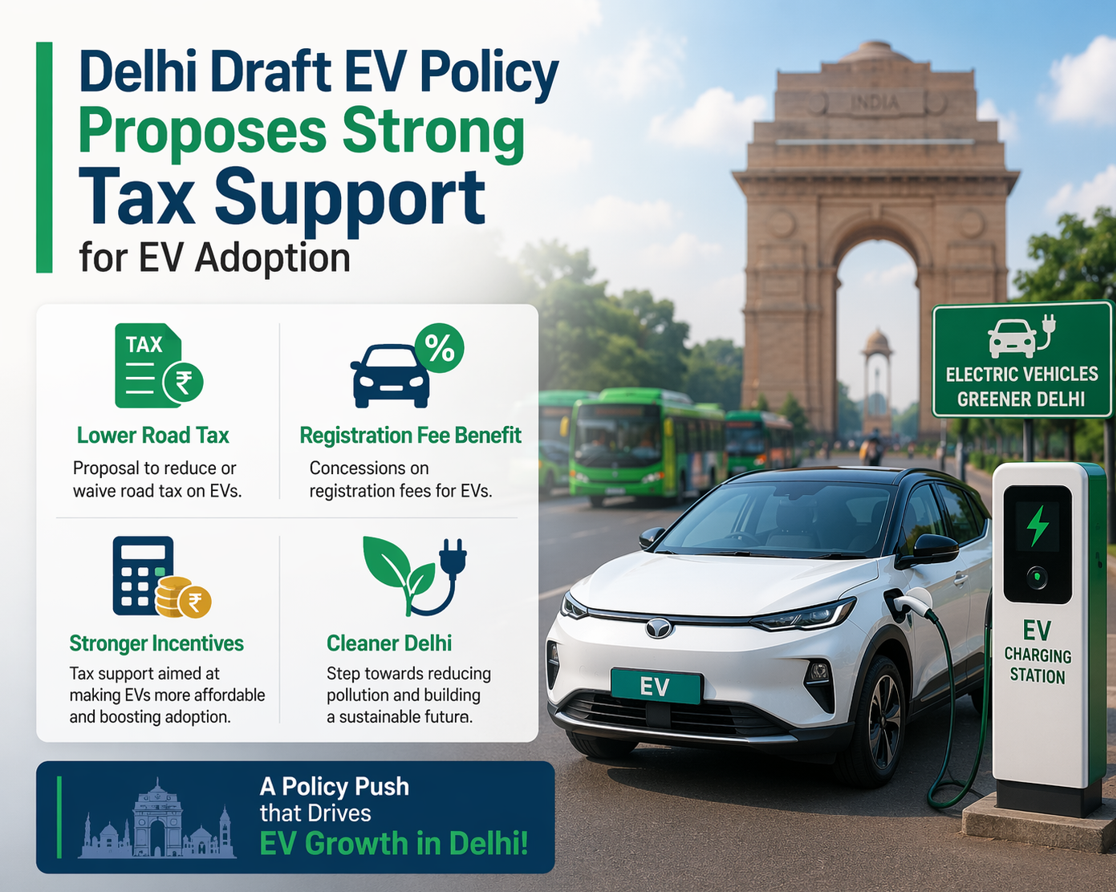
Delhi has taken a big step toward cleaner transport. The new draft EV policy for 2026–2030 proposes strong financial support for electric vehicle buyers, the idea is to bring the ownership cost of EVs down so more people can switch from petrol and diesel vehicles.
If you are a car buyer, fleet operator, delivery business owner, or someone who simply tracks policy and pollution trends, this draft deserves attention. It is not just about discounts. It is also about how Delhi wants to reshape mobility in the coming years through incentives and phased transition rules.
The policy is still in draft stage, which means feedback can change some provisions before final notification. But even at this stage, the direction is strong: make EVs more affordable and push cleaner transport faster.
What the draft policy proposes?
The biggest proposal is a 100% exemption on road tax and registration fee for electric cars priced up to ₹30 lakh (ex-showroom), valid till March 31, 2030. Vehicles above that price threshold are proposed to get no such exemption as per reports.
The draft also mentions a 50% exemption for strong hybrids, which is important because it gives a middle path for buyers who are not yet ready for full EV ownership.
Another major mobility transition proposal says that from January 1, 2027, only electric three-wheelers would be allowed for new registrations in Delhi. Reports also indicate broader phase-wise moves to reduce future registration of internal combustion engine (ICE) categories over time.
The government has invited public feedback for 30 days, so these are proposed measures, not yet final law.
Why this policy is important right now?
Delhi faces severe air quality stress, and road transport is one of the major contributors to urban emissions. The policy’s design shows a practical understanding of how consumer behavior works: most buyers first look at total cost, not just environmental benefit.
By reducing upfront costs through tax and fee exemptions, the draft tries to close the price gap between EVs and conventional vehicles. For many families, that gap is the single biggest reason for delaying an EV purchase.
The policy also signals continuity. Delhi’s previous EV policy launched in 2020 built early momentum. This draft appears to be a next-stage version with stronger long-term structure and more direct transition goals.
Practical examples: how this can affect real buyers?
Example 1: Middle-income family buying a new car
Suppose a family in Delhi is comparing a petrol compact SUV and an electric car under ₹30 lakh. If full road tax and registration waivers apply, the effective on-road price gap can shrink significantly. That can move EV from “maybe later” to “possible now.”
Example 2: Last-mile delivery operator
If policy direction tightens around cleaner registrations in coming years, fleet operators that switch early may avoid future disruption. Early EV adoption can also improve running cost economics if routes are predictable.
Example 3: Auto-rickshaw and 3-wheeler ecosystem
The draft’s electric-only new registration proposal for three-wheelers from 2027 can accelerate demand for EV financing, charging points, and battery-service models in this segment.
Will this make EVs automatically cheaper for everyone?
Not automatically. The policy helps, but final ownership economics depend on multiple factors:
- Final notified policy wording
- Ex-showroom vehicle price and eligibility
- Charging access at home/work
- Financing terms
- Insurance and service cost
- Real-world usage pattern
So the right approach is not “EV is always cheaper,” but “EV becomes easier to justify for more buyer profiles if policy support is strong and infrastructure keeps improving.”
What should buyers do now?
If you are planning a vehicle purchase in Delhi this year, do three things:
- Track final policy notification (not just draft headlines).
- Compare total on-road cost and 5-year running cost, not only sticker price.
- Check charging feasibility at your home, office, or daily route.
This prevents impulse decisions and gives a practical ownership picture.
Conclusion
The Delhi draft EV policy proposes strong tax support for EV adoption, and that is a meaningful shift for India’s urban mobility story. The proposed 100% road tax and registration exemption for eligible EVs can reduce upfront barriers in a market where affordability still drives decisions. At the same time, this is a draft. Final papers, timelines, and implementation clarity will matter when they’ll come. If Delhi executes this policy well, it can accelerate EV adoption, support cleaner air goals, and create a stronger long-term ecosystem for electric mobility.
Discover more from Newskart
Subscribe to get the latest posts sent to your email.

[…] Delhi Draft EV Policy Proposes Strong Tax Support for EV Adoption: What It Means for Buyers, Busines… […]