

Plazza Raises $15 Million to Make Medicine Delivery Faster, But Can Speed Work in Healthcare?


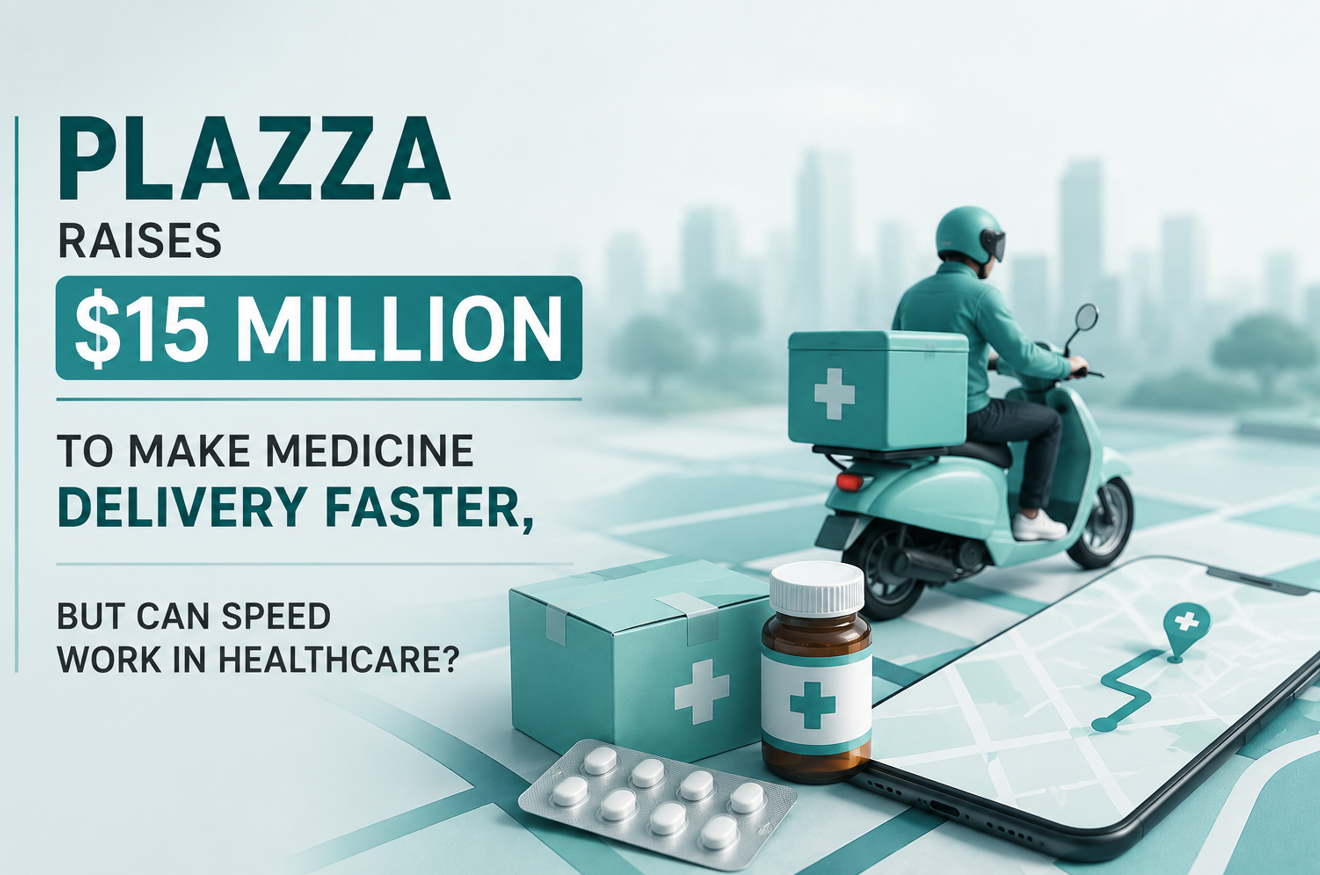
Plazza raises $15 million Series A funding at a time when quick commerce is moving beyond groceries, snacks and daily household items. The next big fight is now around medicines, where speed can be more than just convenience.
For many families, buying medicines is still a tiring task. A doctor writes a prescription, one nearby pharmacy does not have the full order, another asks the customer to come later, and online platforms may take several hours or even a day. Plazza wants to fix this gap with fast delivery, wider medicine availability and a stronger pharmacy network.
The Bengaluru-based startup has raised $15 million in a Series A round co-led by Accel, Elevation Capital and Nexus Venture Partners. Existing investors All In Capital and Better Capital also joined the round. The company plans to use the money to improve its technology, strengthen AI-based inventory planning, build operations and expand into more Indian cities.
What Plazza does
Plazza is a quick medicine delivery startup. Its main promise is simple – help people get medicines and healthcare products quickly, often within 15 to 30 minutes, depending on location and availability.
The company is not trying to work like a regular e-pharmacy where users place an order and wait for delivery later. It is closer to the quick commerce model, but with a healthcare focus. That means the company has to think about nearby supply, correct inventory, pharmacy rules, prescriptions, delivery timing and customer trust all at once.
Plazza was founded in 2024 by former Zomato executive Aman Priyadarshi and Aniruddha Sen, cofounder of Kenko Health.
The startup had earlier raised $1.4 million in seed funding led by All In Capital in September 2025. That round also included Better Capital and several angel investors.
Why the funding matters
A $15 million Series A is a serious step for a young startup, especially in a category as sensitive as medicine delivery. Unlike food or grocery delivery, medicines need higher accuracy. A wrong product, delay, missing stock or poor handling can create real problems for customers.
This is why Plazza is putting money into technology and inventory systems. In simple words, the company wants to know what medicines people are likely to need, where they are needed and how to keep them available near the customer.
That is easier said than done. A normal neighbourhood pharmacy may stock a limited number of products. Plazza has been reported to offer a much wider selection, including medicines and healthcare items. Earlier reports said the startup had around 20,000 SKUs, which means individual products listed in its system.
For a customer, this matters because speed is useless if half the prescription is unavailable. Plazza’s real challenge is not only delivering fast. It has to deliver the right medicine, from a reliable source, at the right time.
The aim and purpose of Plazza
The aim of Plazza is to make medicine access faster and less stressful for urban customers.
Its purpose is not just to bring quick commerce into healthcare for the sake of trend. The bigger problem is availability. Many people still visit two or three pharmacies to complete one prescription. This is common for chronic care medicines, pediatric medicines, dermatology products, mother and baby care items and special supplements.
Imagine a parent needing fever medicine late at night. Or an elderly patient running out of a regular diabetes medicine. Or someone returning from a clinic and needing the first dose quickly. These are the moments where a fast and dependable medicine delivery service can become genuinely useful.
Plazza is trying to build a network where the app, store, inventory and delivery system work together. If done well, this can reduce the gap between prescription and access.
How Plazza’s model may work differently
Plazza appears to be building an omnichannel model. That means it is not only an app and not only a physical pharmacy. It uses physical outlets, app-based ordering and local fulfilment.
This approach is important in medicine delivery because pharmacies need licences and proper stock handling. A pure marketplace may struggle with availability, while a pure offline store may not offer app-like convenience. Plazza is trying to sit in the middle.
The company has also spoken about AI-driven inventory and assortment intelligence. In plain English, this means using software to decide which medicines should be stocked in which location. For example, one area may have higher demand for child care products, while another may need more chronic care medicines. Better planning can reduce out-of-stock cases.
This is where Plazza’s founder background also becomes relevant. Aman Priyadarshi previously worked at Zomato, where local demand, delivery operations and consumer behaviour are important parts of the business. Medicine delivery is different from food delivery, but the need for tight local operations is similar.
Competitors in quick medicine delivery
Plazza is entering a busy space. Large players already have strong brand trust, deep pockets and wider networks.
Tata 1mg, Apollo Pharmacy, PharmEasy and Netmeds are among the well-known names in online pharmacy and healthcare delivery. Quick commerce platforms are also moving into the category. Swiggy Instamart has worked with PharmEasy for medicine delivery, while Zepto and Blinkit have also explored healthcare and pharmacy-linked offerings.
There are smaller quick medicine delivery startups too. Mint earlier reported on companies such as Medino’s, Medstown and Plazza trying to build faster medicine delivery services.
Plazza’s edge will depend on whether it can keep medicine availability high and delivery times short without losing control over quality. In healthcare, trust is not optional.
The biggest challenges ahead
Plazza has a strong opportunity, but the road is not simple.
- The first challenge is regulation. Medicines cannot be treated like chips or soft drinks. Prescription drugs need proper checks. Pharmacies need licences. Customer data must be handled carefully. Delivery partners need clear processes.
- The second challenge is inventory cost. Keeping a wide range of medicines close to customers needs money. Some medicines may sell fast, while others may sit on shelves. Managing this balance will decide how efficient the model becomes.
- The third challenge is customer trust. People may try a new app for snacks without thinking much. But for medicines, they want confidence. They need genuine products, correct substitutes, proper bills and clear support when something goes wrong.
- The fourth challenge is competition from giants. Big pharmacy and quick commerce platforms can spend heavily to win customers. Plazza will need to build a sharper experience, not just offer discounts.
Why this story is important
Plazza’s funding shows that investors are still interested in quick commerce, but the market is becoming more specific. The first wave focused on groceries and daily-use items. The next wave is moving into harder categories where speed, supply and trust all matter.
Medicine delivery is one of those harder categories. If Plazza gets it right, it can solve a real pain point. If it gets it wrong, customers may quickly return to known pharmacies and larger platforms.
This is why the startup’s next phase will be important. Expanding stores is useful, but the real test will be repeat usage. Do customers come back every month for regular medicines? Do families trust Plazza during urgent needs? Can the company handle prescriptions smoothly? These answers will shape its future.
Conclusion with key takeaways
Plazza raises $15 million Series A funding to build a faster and smarter medicine delivery network. The startup is young, but it is working on a real problem that many Indian households understand.
Its aim is to make medicines more available, reduce waiting time and use technology to plan inventory better. The idea sounds simple, but execution will be tough because healthcare needs accuracy, trust and compliance.
Key takeaways
- Plazza has raised $15 million in Series A funding co-led by Accel, Elevation Capital and Nexus Venture Partners.
- The startup was founded in 2024. Reports name Aman Priyadarshi and Aniruddha Sen as founders.
- Plazza wants to deliver medicines quickly, with reported timelines of around 15 to 30 minutes in supported areas.
- The fresh funds will be used for technology, AI-based inventory planning, operations and pharmacy network expansion.
- Its competitors include Tata 1mg, Apollo Pharmacy, PharmEasy, Netmeds, Swiggy Instamart, Zepto, Blinkit and smaller quick medicine delivery startups.
Facts Input- DaijiWorld
Discover more from Newskart
Subscribe to get the latest posts sent to your email.

Comments are closed.