


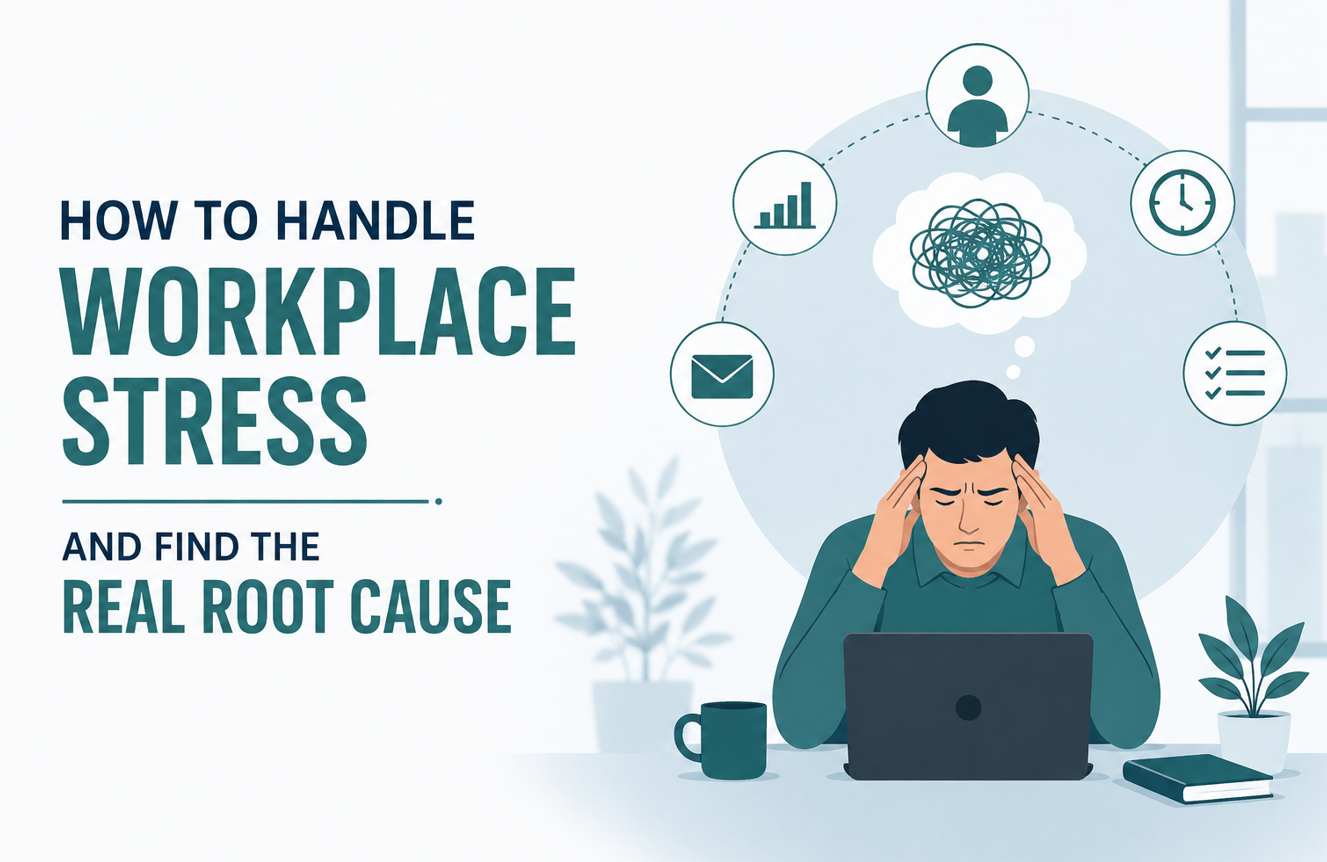
Workplace stress usually starts quietly. A few late replies, one extra meeting, a missed lunch, a deadline that keeps moving, and suddenly the whole day feels heavy.
Many people try to fix stress by taking a weekend break or watching a motivational video. That may help for a short time, but if the root cause stays the same, the stress comes back on Monday morning.
To handle workplace stress properly, you first need to understand where it is coming from. Is it workload? A difficult manager? Fear of losing the job? Poor sleep? Unclear expectations? Or the feeling that you are always available but never fully done?
What workplace stress really means
Workplace stress happens when the demands of your job feel bigger than your time, energy, skills, or support system.
A challenging job is not always bad. Some pressure can help you learn and grow. But stress becomes harmful when the pressure is constant, unclear, unfair, or beyond your control.
For example, preparing for one big presentation can feel exciting. But handling five urgent tasks every day, with no clear priority and no support, can slowly drain you.
That is the difference between healthy challenge and unhealthy stress.
Find the root cause first
Before trying to “manage stress,” write down what is actually bothering you.
Ask yourself –
- What part of my workday feels most stressful?
- When do I feel the most tense?
- Is the problem workload, people, timing, money, job security, or lack of control?
- Am I stressed because of work itself, or because work is affecting sleep, health, and family time?
- Is this a temporary busy phase or a daily pattern?
This small self-check can reveal the real issue. Sometimes we say, “I hate my job,” when the real problem is one unclear manager, one badly planned process, or too many meetings.
Common causes of workplace stress
- One major cause is excessive workload. When every task is urgent, your brain never gets time to recover.
- Another common cause is unclear expectations. If your manager says “do it quickly” but does not explain priority, quality, or deadline, stress rises.
- Lack of control also creates stress. People feel trapped when they have responsibility but no authority to decide how work should be done.
- Poor workplace culture can be another reason. Constant criticism, office politics, bullying, discrimination, or disrespect can make even a good role feel unsafe.
- Job insecurity also affects mental peace. If people keep hearing about layoffs, restructuring, or salary delays, stress becomes part of daily work.
Watch your body’s warning signs
Stress is not only in the mind. The body often speaks first.
You may notice headaches, tight shoulders, poor sleep, acidity, tiredness, fast heartbeat, irritability, overeating, loss of appetite, or difficulty focusing.
Emotionally, you may feel low, angry, numb, anxious, or disconnected from work you once enjoyed.
Do not ignore these signs for too long. Your body is not being dramatic. It is asking for attention.
Start with what you can control
You may not control the whole company, but you can control some parts of your day.
Make a short priority list each morning. Pick the three tasks that matter most. Finish at least one important task before getting lost in email or chat messages.
Block focused time for deep work. Even 45 minutes without notifications can make a big difference.
Keep one place for tasks. Do not keep work scattered across WhatsApp, email, sticky notes, and memory. A simple notebook or task app is enough.
At the end of the day, write what is pending. This helps your mind stop carrying unfinished work into the night.
Talk before stress becomes anger
Many people wait until they are exhausted before speaking up. By then, the conversation becomes emotional.
If workload is too high, speak early and clearly.
You can say –
“I can complete the report by Friday, but if the presentation is also urgent, I will need help deciding which one comes first.”
This is better than silently struggling and then missing both deadlines.
If instructions are unclear, ask for clarity. If meetings are unnecessary, suggest a shorter update. If you need support, say it before burnout starts.
Set small but real boundaries
Boundaries do not always mean dramatic statements. They can be simple habits.
Do not check office messages every few minutes after work unless your role truly requires it. Keep a fixed time to respond to non-urgent emails. Take lunch away from your laptop when possible.
If you work from home, create a shutdown habit. Close your laptop, write tomorrow’s top tasks, and mentally end the workday.
A boundary is not laziness. It is how you protect your ability to work well tomorrow.
Improve recovery outside work
Stress becomes worse when the body has no recovery.
Sleep is the first repair tool. Try to keep a regular sleep time, especially on workdays. Reduce late-night scrolling because it keeps the mind active.
Move your body, even lightly. A 20-minute walk can help clear stress hormones and improve mood.
Eat properly during the day. Skipping meals and surviving on tea or coffee can make anxiety and irritation worse.
Also, speak to someone you trust. Stress grows in silence. A friend, family member, mentor, or counsellor can help you see the situation more clearly.
Know when the workplace must change
Sometimes personal coping is not enough because the work environment itself is unhealthy.
If the workload is impossible, deadlines are unrealistic, bullying is normal, or managers punish people for speaking honestly, the root cause is not your weakness.
In such cases, document patterns. Keep records of unreasonable demands, repeated harassment, unpaid overtime, or unclear instructions. Speak to HR, a senior leader, or a trusted professional if needed.
If nothing changes and your health is getting worse, it may be time to plan a role change. No job is worth long-term damage to your health.
When to seek professional help
If stress is affecting sleep, appetite, mood, relationships, or daily functioning for weeks, consider speaking to a mental health professional.
If you feel hopeless, unsafe, or unable to cope, seek urgent help from a qualified professional or local emergency support.
Asking for help is not failure. It is responsible self-care.
Conclusion – Key takeaways
To handle workplace stress, do not begin with random fixes. Start by finding the root cause. Is it workload, unclear expectations, poor culture, lack of control, job insecurity, or personal overload?
Once you know the source, take practical steps. Prioritize work, set boundaries, speak early, protect sleep, move your body, and ask for support when needed.
Stress is not always a sign that you are not strong enough. Sometimes it is a signal that something in the work system needs attention. Listen to that signal before it becomes burnout.
Facts Input- WHO, CDC NIOSH, CDC NIOSH Stress at Work report, WHO occupational health
Discover more from Newskart
Subscribe to get the latest posts sent to your email.

Comments are closed.