


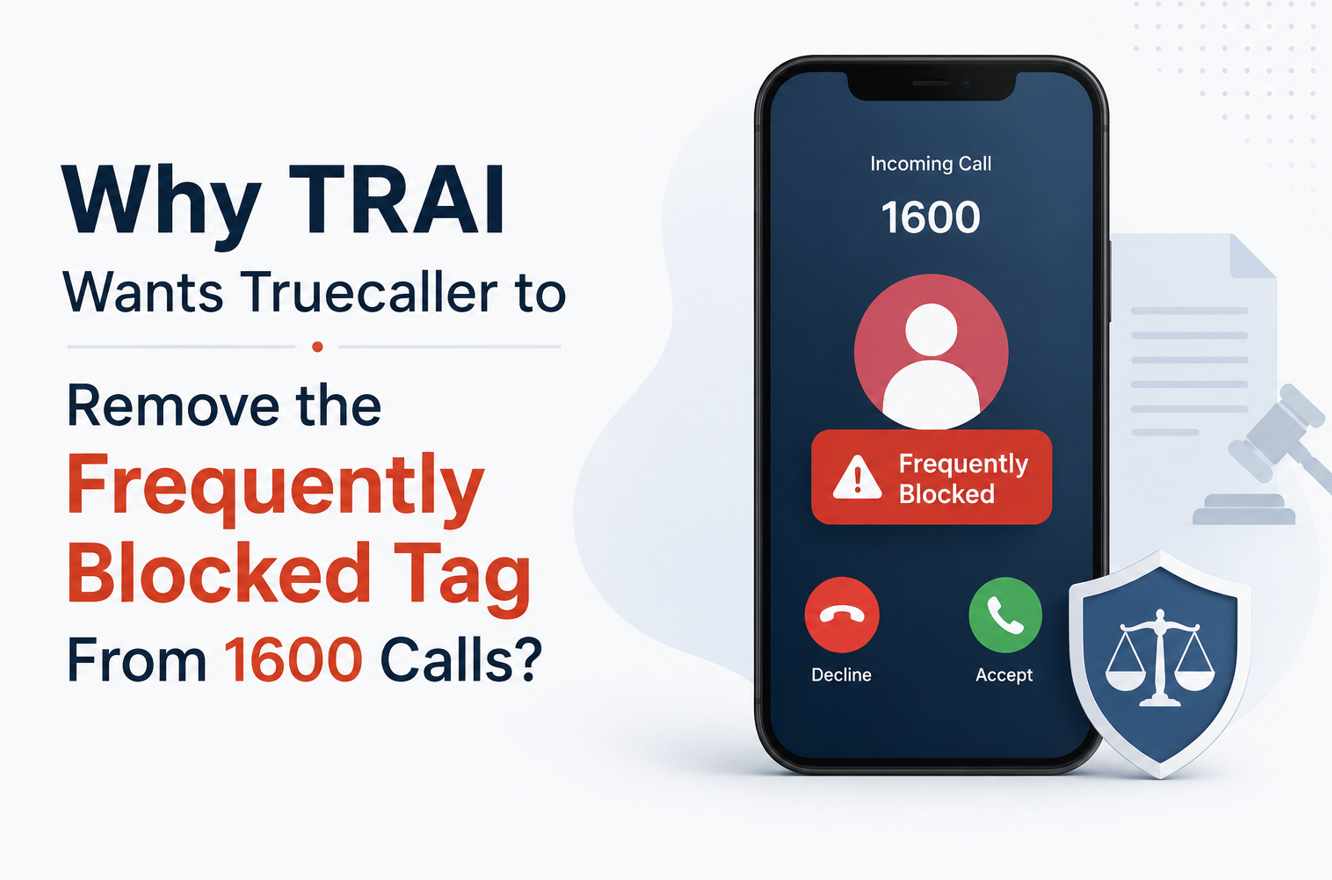
TRAI asks Truecaller to remove Frequently Blocked tag on 1600 series calls, and the issue is bigger than one app notification. It is about trust. When your bank, insurer or a government department calls you, should the phone app warn you that many people have blocked that number? Or should that number be treated as important because it belongs to a regulated series?
This is where the debate begins. India has been trying to clean up the mess of spam and fraud calls for years. The 1600 number series was created to make important service and transaction calls easier to identify. But Truecaller says many users are still blocking and ignoring such calls.
So the question is not just whether Truecaller should show a tag. The real question is how India can protect people from fraud without making genuine calls from banks and government bodies look suspicious.
What is the 1600 series?
The 1600 series is a dedicated phone number series for important service and transaction-related calls. These calls can come from banks, financial institutions, insurance companies, pension-related entities and government bodies.
Think of calls such as a fraud alert from your bank, a transaction confirmation, an authentication-related call, or a government service update. These are not regular sales calls. Some of them may need quick action from the customer.
TRAI has said the main idea behind the 1600 series is to make such calls more trustworthy for citizens. If people know that 1600 calls are meant for regulated and important communication, they may be more willing to answer them.
That is the clean version of the plan. In daily life, things are more complicated.
Why TRAI has objected to Truecaller’s tag
Truecaller had introduced a “Frequently Blocked” badge for some 1600 and 140 series numbers. The company’s argument is that it was not calling these numbers spam. It was only showing that many users had blocked them.
TRAI’s concern is different. The regulator believes that even a softer warning label can make people distrust a number series that was created for trusted communication. If a banking call appears with a warning-like label, a customer may ignore it, even if the call is genuine.
This can become risky. A customer may miss a fraud warning. Someone may ignore a transaction verification call. A policyholder may not respond to an insurance-related update. In financial services, a missed call is not always harmless.
TRAI has clarified that calls from the 1600 series should not be tagged, blocked or filtered by caller ID and call management apps. It has also said that the 140 series, used for promotional calls by registered telemarketers, should be managed through the Do Not Disturb system rather than app-based tagging.
The difference between 140 and 1600 calls
The 140 series is meant for promotional or marketing calls. For example, a bank offering a credit card, a telecom company promoting a plan, or a registered business making a sales call may use this route.
The 1600 series is meant for service and transaction calls. These are supposed to be more important and less promotional.
This difference matters because users often treat unknown business calls as spam. TRAI wants people to clearly understand what type of call they are receiving. A 140 call may be promotional. A 1600 call should normally be service-related or transactional.
In theory, this helps users decide faster. In practice, users are already tired of unwanted calls, so trust is low.
Why Truecaller disagrees
Truecaller says users are blocking and ignoring a large number of 140 and 1600 series calls. Its CEO Rishit Jhunjhunwala has argued that the company is only sharing community-based signals with users.
According to reports, Truecaller claimed that its users ignored 81 percent of 140 series calls and 79 percent of 1600 series calls over an eight-month period. It also said users manually blocked around 7.4 crore calls from these two series during that time.
Truecaller’s point is simple. If people are already blocking these numbers in large numbers, hiding that information may not rebuild trust. The company believes bad actors should be punished instead of limiting what caller ID apps can show.
This is why the matter has turned into a wider policy debate. TRAI is looking at the issue from the side of regulated communication. Truecaller is looking at it from the user’s side, where people want warnings before answering unknown calls.
Why this move is needed
TRAI’s move is needed because India cannot afford confusion around important financial and government calls. If every app starts adding its own warning labels to regulated number series, the purpose of creating these series may get weakened.
A simple example explains it well. Suppose your bank calls from a 1600 number because it has detected a suspicious transaction. If your phone shows a “Frequently Blocked” type warning, you may reject the call. Later, if money is lost, the bank may say it tried to contact you, while you may say the app made the call look unsafe.
That kind of confusion hurts everyone.
TRAI wants one clear system. If a 1600 number is assigned for important calls, then it should be treated as a trusted channel. If someone misuses the number, action should happen at the regulator, telecom operator or registered entity level.
The user problem is still real
At the same time, users are not wrong to be cautious. India has a serious spam and scam call problem. Many people receive unwanted calls every day for loans, cards, property, insurance, trading tips and fake customer care support.
People have learned to distrust unknown numbers because they have been disturbed too often. Even if a number series is officially meant to be safe, users will not trust it automatically. Trust has to be earned through strict enforcement.
This is the part TRAI and telecom companies will need to solve quickly. If 1600 numbers are protected from app tags, then misuse of those numbers must be handled strongly. Otherwise, users may simply stop answering them.
Who are Truecaller’s competitors?
Truecaller is the best-known caller ID app in India, but it is not alone. Other caller identification and spam-blocking options include Hiya, Whoscall, Phone by Google, Samsung Smart Call and CallApp.
These services also try to help users identify unknown callers and avoid spam. Some rely on community reports, some use business databases, and some are built directly into the phone dialer.
The TRAI issue matters for all of them, not only Truecaller. If apps are not allowed to tag or filter 1600 and 140 series calls, the same principle may apply across caller ID and call management platforms.
What should users do now?
Users should not blindly trust every call, even if it comes from a known-looking series. At the same time, they should not ignore every 1600 call without thinking.
If you receive a 1600 series call, listen carefully but do not share sensitive details like full card number, PIN, password or OTP unless you are fully sure of the process. Genuine banks usually do not ask for such information.
If a call sounds urgent and suspicious, disconnect and contact the bank through the official number listed on its website or app. This simple habit can save people from many scams.
For promotional calls, users can manage preferences through the Do Not Disturb system. That is the official route TRAI wants people to use for 140 series calls.
Conclusion with key takeaways
TRAI asks Truecaller to remove Frequently Blocked tag because the regulator wants 1600 series calls to remain trusted for banking, financial, insurance and government communication. The aim is sensible. Important calls should not be mistaken for spam.
But the user concern is also valid. People are tired of unwanted calls, and many do not trust unknown numbers anymore. The real solution is not just removing a label. India needs strict action against misuse, clearer caller identity, faster complaint handling and better public awareness.
Key takeaways
- TRAI says 1600 series calls should not be tagged, blocked or filtered by caller ID apps.
- The 1600 series is meant for service and transaction calls from regulated entities and government bodies.
- The 140 series is meant for promotional calls, and users can manage those through the DND system.
- Truecaller says users are still blocking and ignoring many 140 and 1600 series calls.
- The debate is really about balancing user safety with trusted communication.
Facts Input- TRAI, PIB, BS, ET Telecom
Discover more from Newskart
Subscribe to get the latest posts sent to your email.

Comments are closed.