

India’s White Rabbit Time Network Could Make IST Safer, Smarter and Harder to Tamper With


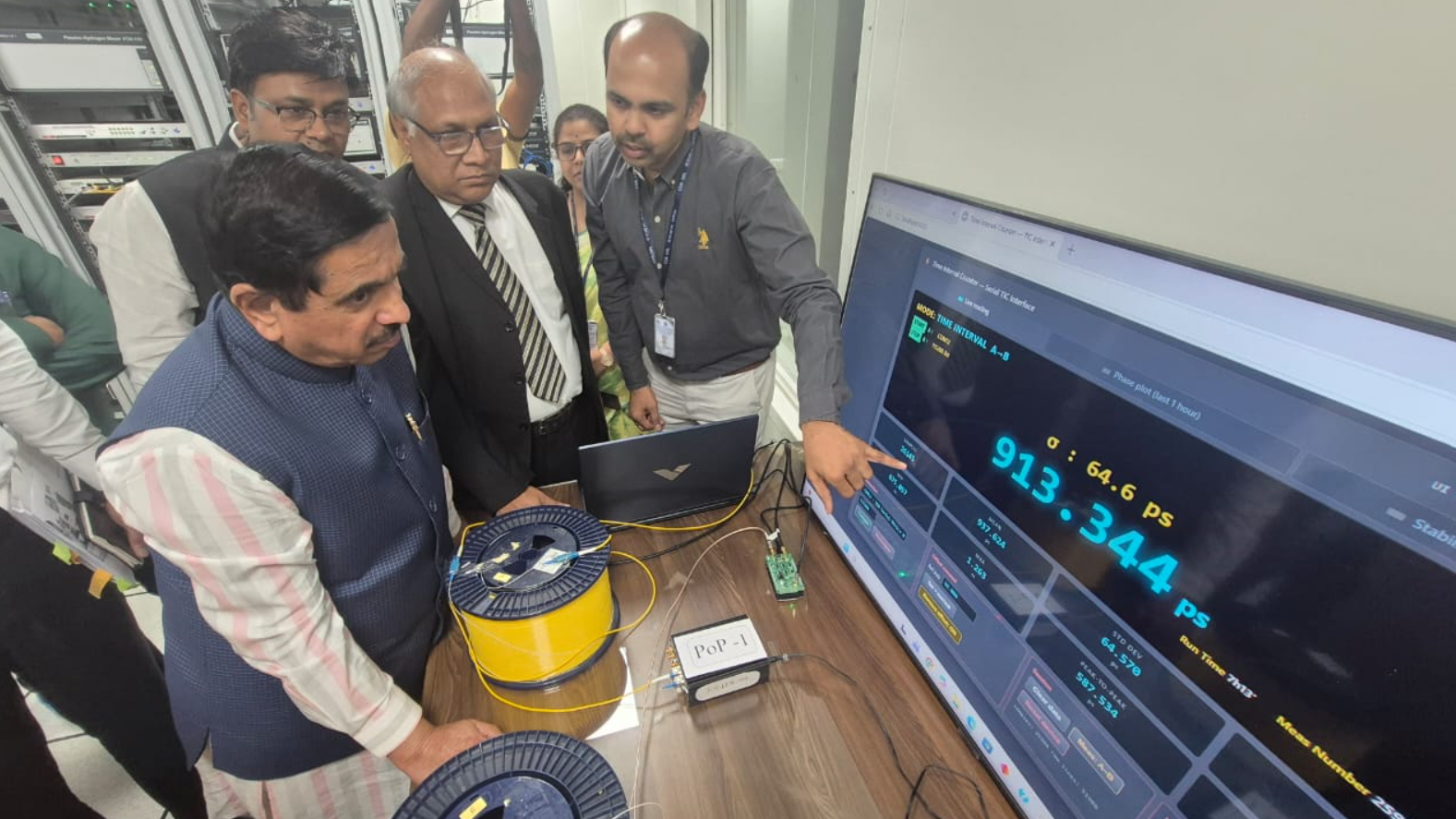
The Government launches White Rabbit tech network, and the name may sound unusual at first. It is not a consumer app, a telecom plan, or a new satellite. It is a precision time system, and its job is simple but powerful – make Indian Standard Time more secure, accurate and dependable for the country’s most important digital systems.
Most of us look at time casually. We check the phone, join meetings, book tickets, make payments and move on. But for banks, stock exchanges, telecom networks, power grids, defence systems and transport networks, time is not casual at all. A difference of even a tiny fraction of a second can create confusion, errors or security risks.
That is why this new initiative matters. India wants a trusted national time signal that comes from Indian sources and can be used by critical sectors without depending too much on foreign timing systems such as GPS.
What has the government launched?
Union Minister Pralhad Joshi commissioned a White Rabbit Technology-based Indian Standard Time Dissemination Demonstration Network at the Regional Reference Standard Laboratory in Bengaluru on July 16, 2026.
The project has been developed by the Department of Consumer Affairs, CSIR-National Physical Laboratory and ISRO. Other stakeholders include SEBI, NSE and BSNL. The government has also tested secure time transmission between the Bengaluru facility and NSE’s Chennai facility.
In simple terms, this is a test network that shows how Indian Standard Time can be sent securely over a digital network with very high accuracy. It is part of the wider “One Nation, One Time” idea, where different parts of India’s digital and physical infrastructure can follow the same trusted time source.
The official time reference comes from UTC NPLI. NPLI refers to the National Physical Laboratory of India, which maintains India’s official time standard.
What is White Rabbit technology?
White Rabbit is a technology used for very precise time synchronization over fibre or Ethernet networks. It was originally developed at CERN, the European research organization known for its particle physics work.
A normal internet-connected clock can be good enough for daily use. Your phone may show the correct time, and that is fine for most people. But critical systems need much more accuracy. White Rabbit can synchronise devices with extremely small time differences, often described in the sub-nanosecond range.
To understand this better, think of a stock exchange. Thousands of trades may happen in a very short time. If two systems record those trades with slightly different clocks, it can create disputes or make investigation harder. Accurate time stamping helps everyone know exactly what happened and when.
White Rabbit uses a timing method based on Precision Time Protocol, or PTP. That sounds technical, but the idea is simple. Devices on a network keep checking and correcting their clocks so they stay aligned with the master time source.
Why does India need this?
India’s economy is becoming more digital every year. UPI payments, online trading, telecom networks, smart grids, rail systems, cloud services and government platforms all depend on time in some way.
At a small level, a wrong timestamp may look like a harmless mismatch. At a national level, it can affect records, payments, audits, cybersecurity checks and even the coordination of power systems.
Many systems around the world use satellite-based timing, especially GPS. GPS is useful and widely trusted, but relying too much on external sources can become risky for critical infrastructure. Satellite signals can face jamming, spoofing or disruption. Spoofing means a system is fooled into accepting a fake signal.
India’s White Rabbit network is aimed at reducing that risk. It gives the country a way to distribute Indian Standard Time through a secure domestic setup. It does not mean GPS will suddenly disappear from use. It means India wants a stronger backup and, in some areas, a more controlled primary source.
Where will this be useful?
The first big use case is banking and financial markets. Every digital transaction needs a timestamp. Stock trades, bank transfers, payment settlements and audit trails all depend on knowing the exact order of events.
For telecom, accurate timing helps networks stay stable. As India moves deeper into 5G and later 6G, timing becomes even more important because network equipment must coordinate quickly and precisely.
Power grids also need tight time coordination. When electricity moves across large networks, operators need clean data from different points. If clocks are not aligned, it becomes harder to spot faults or manage load properly.
Transport and digital governance can also benefit. Ticketing systems, traffic control, identity platforms, public service records and emergency systems all work better when time records are consistent and trustworthy.
The aim and purpose of the initiative
The main aim is to make Indian Standard Time more secure, more accurate and easier to distribute across critical sectors.
There is also a bigger purpose. India wants time sovereignty. That simply means the country should not be overly dependent on foreign systems for something as basic and important as official time. Just as a country needs its own secure payment rails, communication systems and identity infrastructure, it also needs a trusted time layer.
This initiative also supports consumer protection and fair trade. For example, if a payment fails, a trade is disputed, or a digital service records two different times, trusted timestamps can help settle the matter more clearly.
It may sound like a back-end technology, but it touches everyday life quietly. When your money moves, your mobile network works, your train data updates, or your electricity grid stays stable, time is sitting somewhere in the background.
Is this a replacement for GPS?
Not exactly. It is better to see it as a secure Indian timing layer rather than a simple GPS replacement.
GPS will continue to be useful in navigation, mapping and many timing applications. But critical systems should not depend on only one source. A domestic White Rabbit-based time network can give India more control, especially for sensitive sectors.
In simple terms, GPS is like using a widely available public timing signal from outside. White Rabbit-based IST distribution is like building a secure, high-precision timing pipeline inside India for systems that cannot afford mistakes.
What happens next?
The current network is a demonstration project. That means it proves the technology and helps institutions test how secure IST distribution can work in real conditions.
The government has indicated that the system will be expanded after consultations and further rollout planning. If it works well at scale, more financial institutions, telecom networks, power operators and public digital platforms may connect to India’s secure time network.
The success of the project will depend on implementation. The technology must be reliable, affordable enough for wider adoption, and easy for different sectors to integrate. It will also need clear standards, maintenance systems and trained teams.
Conclusion with key takeaways
The launch of the White Rabbit tech network may not grab attention like a new smartphone or electric car, but it is an important digital infrastructure move. Time is the base layer for many modern systems, and India is now trying to make that layer more secure and independent.
For ordinary users, the benefit may not be visible on day one. But over time, it can support safer payments, cleaner financial records, stronger telecom networks, better grid monitoring and more trusted digital governance.
Key takeaways
- India has launched a White Rabbit Technology-based demonstration network to distribute secure Indian Standard Time.
- The project was commissioned in Bengaluru and involves the Department of Consumer Affairs, CSIR-NPL and ISRO.
- Its purpose is to reduce dependence on foreign timing sources and protect critical sectors.
- Banking, stock markets, telecom, power grids, transport and digital governance are expected to benefit.
- White Rabbit is useful because it can synchronize networked devices with extremely high precision.
Discover more from Newskart
Subscribe to get the latest posts sent to your email.

Comments are closed.