

PM-AJAY Scheme Benefits 47.59 Lakh People, Transforms 16,759 Villages, Lets Understand


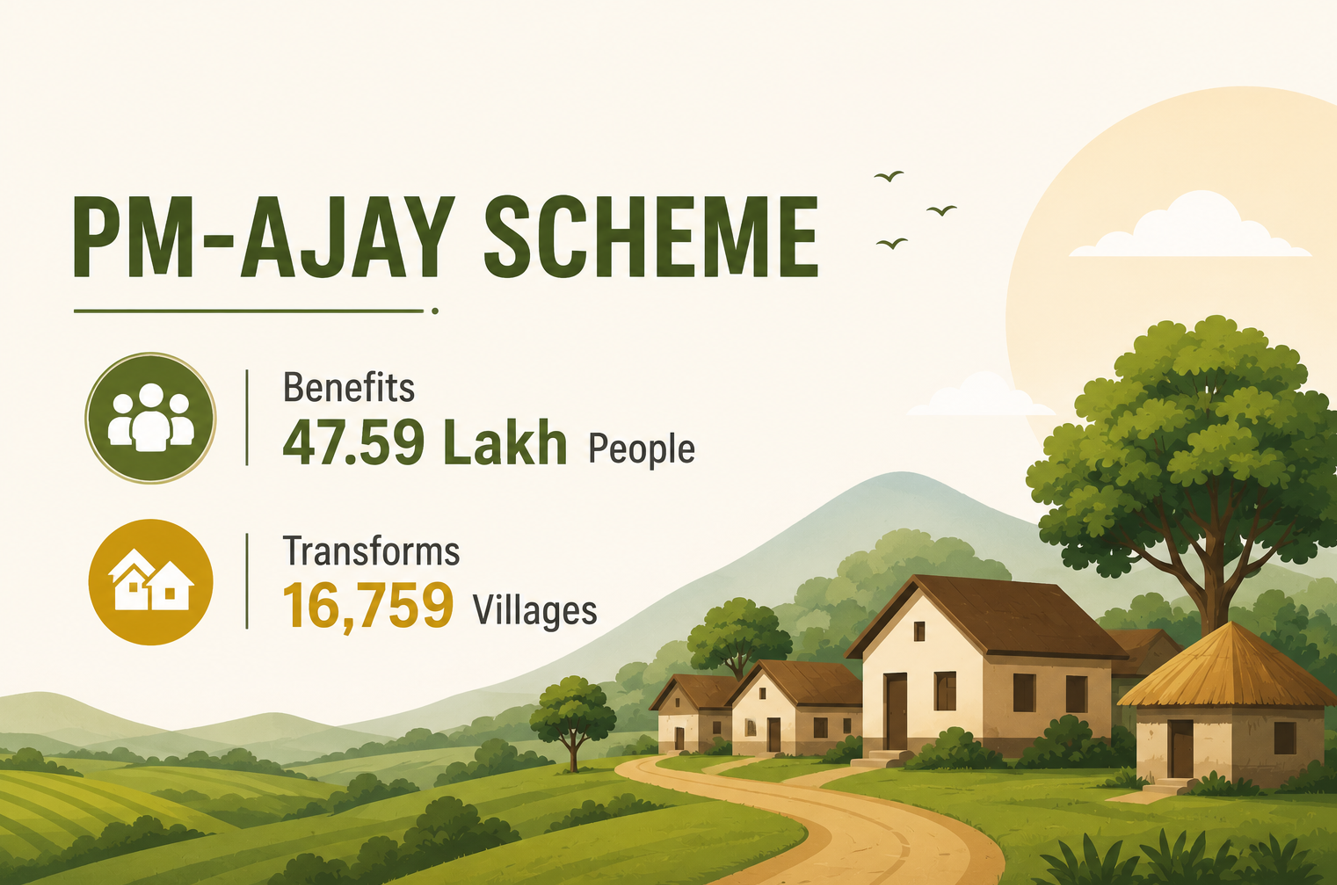
PM-AJAY has crossed an important milestone. The scheme has benefited more than 47.59 lakh citizens and helped 16,759 villages become Adarsh Grams, according to the latest update from the Ministry of Social Justice and Empowerment.
PM-AJAY is Pradhan Mantri Anusuchit Jaati Abhyuday Yojana. It is a government scheme focused on the socio-economic development of Scheduled Caste communities. The work is not limited to one type of benefit. It covers village infrastructure, livelihood support, skill development and hostels for students.
In simple words, PM-AJAY tries to improve both daily life and long-term opportunity. A village may get better basic facilities. A family may get support for income generation. A student may get hostel accommodation to continue education.
What is PM-AJAY
PM-AJAY is a centrally sponsored scheme of the Ministry of Social Justice and Empowerment. It has been implemented since 2021-22.
The scheme brings together three major components.
- The first is Adarsh Gram, which focuses on improving infrastructure and basic services in Scheduled Caste-dominated villages.
- The second is grants-in-aid for district and state-level projects that support socio-economic betterment of SC communities. This can include skill development, employment-linked activities and income-generating work.
- The third is hostel support, which helps create residential facilities for SC students, especially where distance or lack of accommodation affects education.
Why the scheme is needed
Development gaps are not always visible from a distance. A village may have roads but weak drainage. A child may want to study but may not have a hostel near a good school or college. A young person may want work but may not have skill training or support to start a small income activity.
PM-AJAY is designed to address these gaps in a focused way.
The scheme is especially important because it targets Scheduled Caste communities through village-level planning and local needs. Instead of only giving broad assistance, it tries to identify what a village or community actually lacks.
Latest progress
According to the latest government update, the Adarsh Gram component has covered 47,316 villages and benefited 47,59,399 citizens.
A total of 46,782 development works have been completed. These works can include local infrastructure and basic facilities needed to improve village life.
The government also said 24,133 Village Development Plans have been prepared. These plans are important because they help identify what each village needs instead of using the same template everywhere.
So far, 16,759 villages have been declared Adarsh Grams.
How Adarsh Gram helps villages
The Adarsh Gram component focuses on villages where Scheduled Caste population is 50 percent or more.
The idea is to improve basic development indicators. This may include better roads, drainage, drinking water, sanitation, street lighting, community assets, education-related facilities and other local needs.
A good village development plan can make a real difference. For example, if a village has poor internal roads, children may struggle during monsoon and farmers may face transport problems. If street lights are missing, safety becomes an issue. If drainage is poor, health problems increase.
Small infrastructure upgrades can change daily life more than people outside the village may realize.
Livelihood and skill benefits
PM-AJAY also works on poverty reduction through skill development and income-generating schemes.
This part matters because infrastructure alone is not enough. Families also need stable income.
Skill training can help young people get jobs or improve employability. Income-generating support can help families start small businesses, buy tools, improve self-employment or join local economic activities.
For example, a beneficiary may receive support linked to dairy, tailoring, repair work, small trade, agriculture-related activity or another local livelihood option depending on state plans and eligibility.
The aim is not only short-term help. The better goal is sustained earning.
Hostel support for students
Education is another major part of PM-AJAY.
The government has allocated Rs. 22.50 crore in central assistance for FY 2026-27 for three hostel projects, including two for girls. These hostels will provide accommodation for 750 students.
This is important because many students from rural or remote areas cannot continue education if they do not have a safe and affordable place to stay.
Girls’ hostels are especially important. In many families, parents may hesitate to send daughters far away for study unless proper accommodation is available.
A hostel can become the difference between dropping out and completing education.
Role of PM-AJAY portal and mobile app
The government has also moved PM-AJAY implementation toward digital monitoring through the PM-AJAY portal and AJAY mobile application.
This can help states submit action plans online, track works, monitor progress and improve transparency.
Digital systems do not solve every problem by themselves, but they can reduce paperwork, improve reporting and make it easier to check whether funds and works are moving as planned.
For a scheme spread across thousands of villages, monitoring is very important.
How beneficiaries are selected
Under income-generating schemes and skill development programmes, Scheduled Caste persons living below the poverty line are eligible.
For infrastructure work, villages with 50 percent or more SC population are eligible for grants.
Beneficiary selection follows government procedures and is generally linked with local institutions and state-level planning. Since implementation may vary by state, people should check local social welfare offices or official PM-AJAY channels for exact process details.
Why this scheme matters for inclusive growth
PM-AJAY is not only a welfare scheme. It is also a development scheme.
When a village gets basic facilities, the whole community benefits. When a young person gets skill training, the household gets a better chance at income. When a student gets hostel support, education becomes more reachable.
This is how inclusive growth works in real life. It is not only about big projects. It is also about whether a child can study, whether a family can earn, and whether a village has basic facilities.
Challenges ahead
The numbers are encouraging, but implementation will remain the real test.
Some villages may still need better planning. Some works may take longer because of land, tender or coordination issues. Skill programmes need to match actual job opportunities. Hostel projects need good maintenance and safety standards.
The scheme will work best if local people are involved in planning and monitoring. A village knows its own gaps better than anyone else.
Conclusion – Key takeaways
PM-AJAY has benefited 47.59 lakh people and helped 16,759 villages become Adarsh Grams. More than 46,782 development works have been completed, and 24,133 Village Development Plans have been prepared.
The scheme focuses on three connected goals – better village infrastructure, livelihood support and education through hostels.
Its purpose is simple but important – reduce socio-economic gaps for Scheduled Caste communities and create better opportunities at the village and household level.
Facts Input- PIB-Gov
Discover more from Newskart
Subscribe to get the latest posts sent to your email.

Comments are closed.