

Vorflux Secures $15 Million Seed Funding to Build an AI Autopilot for Software Engineering


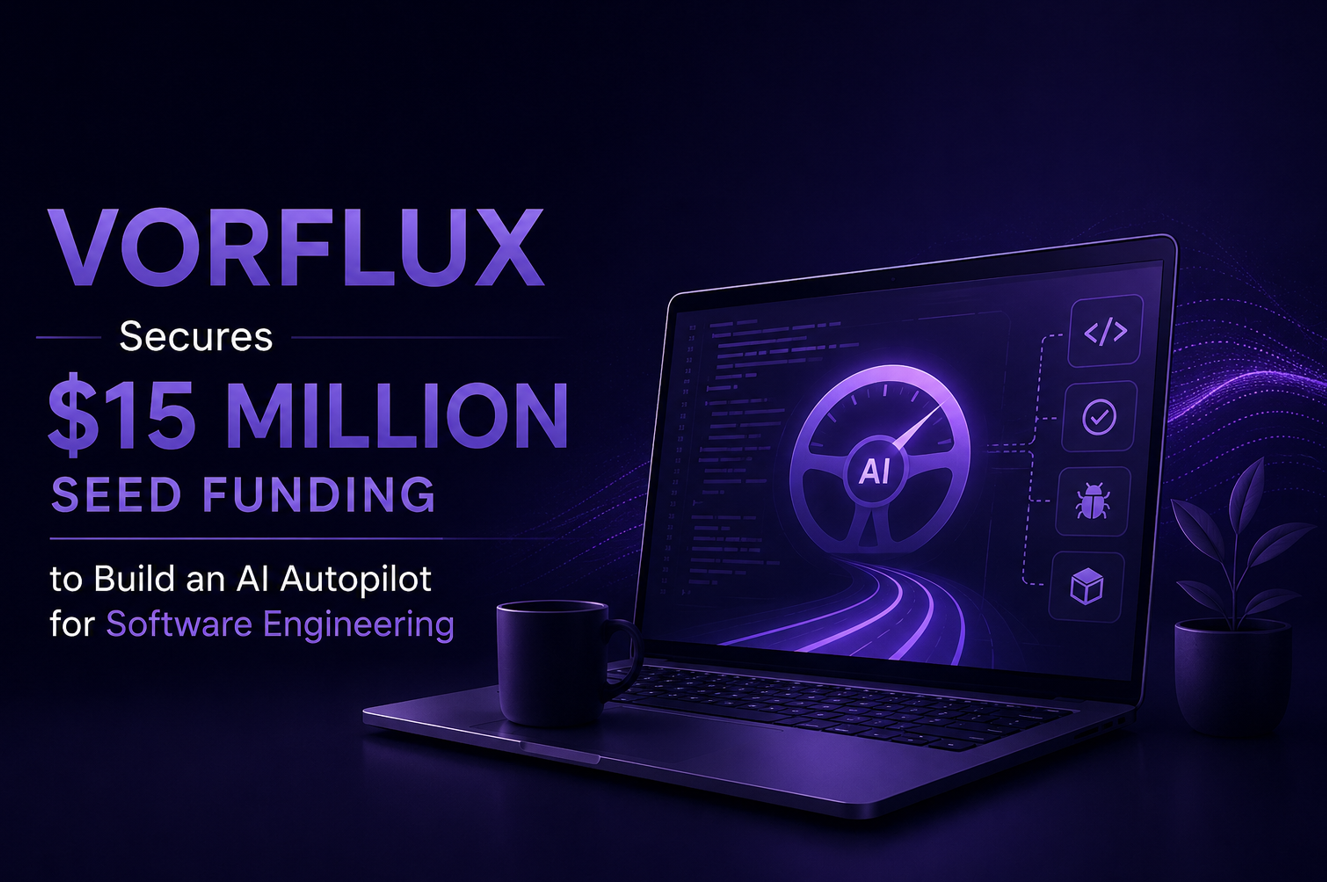
Vorflux, a new AI startup founded by Rippling co-founder Prasanna Sankar, has raised $15 million in seed funding to build what it calls an “autopilot” for software engineering.
The round includes backing from Y Combinator, Peak XV Partners, Powerset and Alliance, along with angel investors such as Parker Conrad, Immad Akhund and Balaji Srinivasan.
The startup is entering one of the hottest areas in AI right now – coding agents. But Vorflux is not pitching itself as another tool that only writes code snippets. Its bigger idea is to automate more of the software development cycle, from understanding a task to planning, building, testing and creating a merge-ready pull request.
What Vorflux does
Vorflux is building a cloud-based AI coding agent for software teams.
A developer or product team can give it a problem, such as fixing a bug, building a feature or improving an internal workflow. Vorflux then studies the codebase, prepares a plan, writes the code, runs it on a real machine, tests the output and creates a pull request that can be reviewed and merged.
In simple words, it wants to behave less like a junior assistant and more like an autonomous engineer that can take a task closer to completion.
The company’s own positioning is clear – “autopilot for software engineering.” That means it wants AI to handle the long, repetitive engineering work while humans focus more on judgment, product direction and final review.
Founder and background
Vorflux was founded by Prasanna Sankar, best known as a co-founder of Rippling, the HR and workforce management software company started in 2016.
Sankar remains associated with Rippling as its Chief Technology Officer. Vorflux is his new AI venture after his earlier Web3 startup 0xPPL shut down.
His background matters because Vorflux is not being built by someone outside software engineering. It is coming from a founder who has seen how large engineering teams work, where time gets wasted, and why shipping software is often slower than writing code itself.
Funding details
Vorflux has raised $15 million in seed funding.
The investors include Y Combinator, Peak XV Partners, Powerset and Alliance. Angel investors include Parker Conrad, who co-founded Rippling, Immad Akhund of Mercury, and Balaji Srinivasan, former CTO of Coinbase.
The money is expected to help Vorflux expand its engineering team, improve the product and build its go-to-market strategy for enterprise software teams.
Startup aim and purpose
Vorflux’s aim is to reduce the bottlenecks in software engineering.
Today, many AI tools can generate code. But coding is only one part of engineering. A real task also needs planning, environment setup, testing, code review, debugging, deployment checks and team-specific standards.
That is the gap Vorflux wants to solve.
For example, if a company asks an AI coding tool to “add billing export support,” the hard work does not end after the first code draft. Someone must check the database, understand existing billing logic, update tests, make sure the UI works, handle edge cases and open a clean PR.
Vorflux wants to take more of that full journey into one AI-driven workflow.
How it is different from normal coding assistants
Most coding assistants work inside a developer’s editor. They suggest code, complete lines or answer questions.
Vorflux is trying to work at a higher level. It runs in the cloud, connects to tools like repos, databases, CI/CD systems, error tracking, project management tools and communication apps, then works across the engineering workflow.
It also supports multiple AI models from different labs instead of depending on only one model. This matters because AI models are improving quickly, and the “best” model for coding can change from month to month.
Vorflux’s idea is that the model is only one part of the system. The real value comes from the workflow around the model – planning, testing, reviewing and remembering how a team works.
Why this matters now
Software teams are already using AI, but many are still stuck at the assistant stage.
A developer may ask AI to write a function, but still has to test it locally, fix broken parts, check standards and handle deployment. That saves some time, but not enough to change how teams ship software.
Vorflux is betting that AI has reached a point where it can handle longer engineering tasks, especially when it has the right cloud environment and review system.
If this works, the role of engineers may shift. Instead of writing every line themselves, they may spend more time defining the task, reviewing decisions, setting standards and checking whether the output is safe to ship.
Competitors
Vorflux enters a crowded and fast-moving market.
Its competitors and adjacent players include GitHub Copilot, Cursor, Replit, Cognition’s Devin, OpenAI Codex-style agents, Google’s AI coding tools, Anthropic’s Claude-based coding workflows and other agentic development platforms.
The difference will come down to reliability. Many tools can impress in demos. Fewer can consistently work on messy real codebases, run tests, follow company standards and produce merge-ready work.
That is the real battlefield.
Challenges ahead
Vorflux has a strong story, but it also has a hard problem to solve.
Enterprise codebases are complex. They have old systems, undocumented logic, security rules, internal tools and team habits that are not always written down. An AI agent must understand all this before making changes.
Trust is another challenge. Companies will not let an AI freely change production systems unless they believe the tool is safe, auditable and easy to control.
Cost may also matter. Running cloud machines and using frontier AI models can become expensive. Vorflux will need to show that its tool saves enough engineering time to justify the bill.
Conclusion – Key takeaways
Vorflux’s $15 million seed funding shows how quickly AI coding is moving from simple assistance to autonomous engineering workflows.
Founded by Rippling co-founder Prasanna Sankar, the startup wants to build an AI “autopilot” that can plan, code, test and ship merge-ready pull requests.
The purpose is not just to write code faster. It is to remove the slow parts of software delivery. If Vorflux can make that reliable for real enterprise teams, it could become an important name in the next wave of AI software development.
Facts Input- ET
Discover more from Newskart
Subscribe to get the latest posts sent to your email.

Comments are closed.