


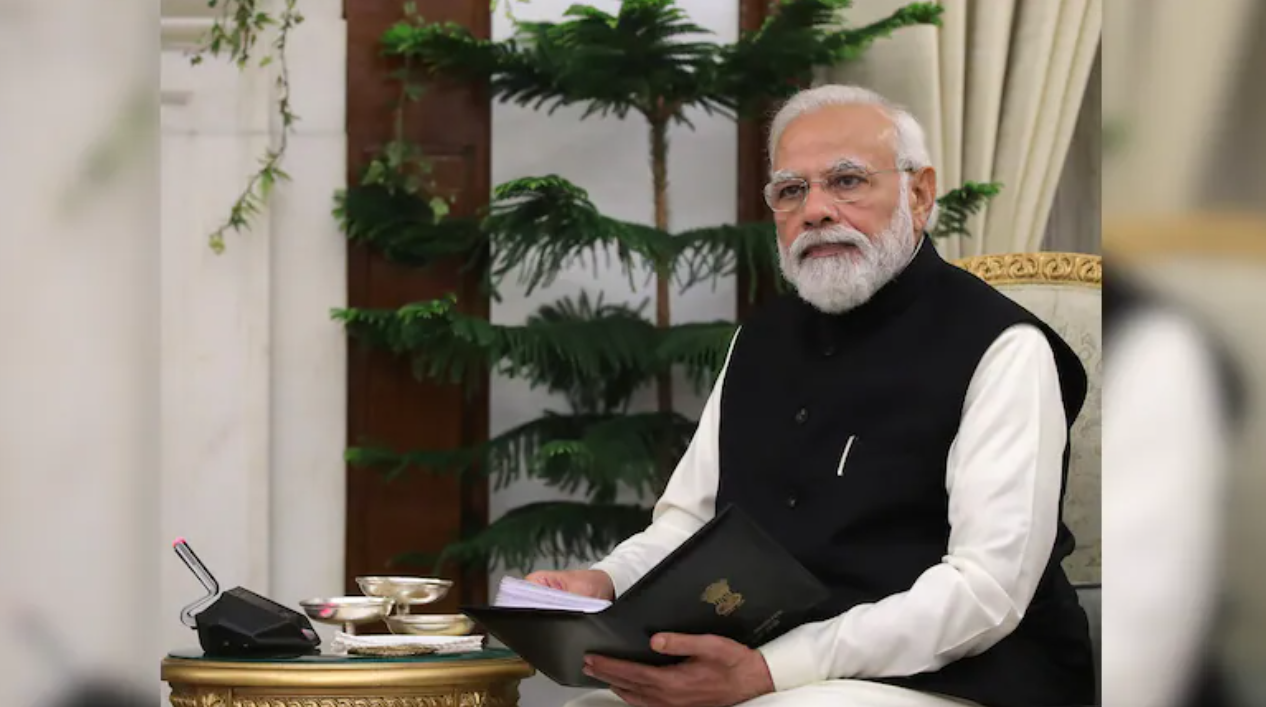
India’s work culture debate has returned to the center stage again due to recent war and fuel import situation. Prime Minister Narendra Modi’s recent appeal to restart work-from-home practices, alongside lower fuel consumption and reduced non-essential travel, has reopened an earlier question which has remained unresolved. Can WFH deliver both national economic relief and long-term business value?
For India’s IT sector, this is not a theoretical discussion. It is a direct operating question. Over the past few years, companies have moved between full remote, hybrid, and office-first models while trying to balance productivity, client confidence, talent retention, and costs. So, if WFH gets renewed momentum now, the impact could be significant, but not uniform across all firms.
Why PM Modi’s WFH message matters for IT now
The Prime Minister’s call came in the context of global uncertainty, fuel pressure, and the need for responsible consumption. His broader message was clear which was to reduce avoidable travel and use digital alternatives where possible. In that context, WFH is being positioned not just as an HR preference, but as an economic efficiency lever.
For IT and IT-enabled services, this has immediate relevance because the sector already has mature digital workflows. Most firms can run core delivery, support, coding, project management, and client communication remotely when needed. That means the sector is structurally more prepared for WFH than many others.
There is also a cost angle. If organizations reduce daily commute-linked overheads, optimize office utilization, and lower travel frequency, operating expenses can improve. At the employee level, savings on commute time and transport costs can support better work-life balance, which often helps retention in high-churn talent markets.
But this is not unidirectional. Some leaders still argue that in-person collaboration improves onboarding, culture-building, and rapid problem solving, especially for junior teams. So the likely result is not “full WFH for everyone,” but pressure toward smarter hybrid design.
Will it really change IT policy on the ground?
The short answer is yes, it can influence policy, but mostly through gradual shifts rather than immediate mandates. In the immediate term, we may see three practical outcomes.
First, companies could revisit attendance rules and reduce rigid office-day requirements for roles that are fully digital.
Second, employee groups and unions may push for formal remote-work advisories where operationally feasible.
Third, firms may invest more in outcome-based performance systems, where delivery quality matters more than physical presence.
For clients, especially global ones, the key concern will remain reliability. If Indian IT firms can prove stable delivery, cybersecurity discipline, and measurable productivity under hybrid or remote structures, client resistance will be limited. In fact, efficient distributed models can improve scalability in many project categories.
The larger impact may be strategic. India’s IT industry has already entered an AI-driven transformation phase, with growing emphasis on higher-value services and product capabilities. Flexible work, if implemented well, can widen talent access beyond major metros and help companies hire specialized skills faster. That could support competitiveness, not weaken it.
In conclusion, PM Modi’s WFH revival appeal is likely to act as a policy signal rather than a one-time administrative change. For the IT sector, the opportunity lies in designing disciplined hybrid systems that cut waste, protect productivity, and improve talent outcomes. The companies that adapt with clarity, not ideology, are likely to gain the most.
Discover more from Newskart
Subscribe to get the latest posts sent to your email.

Comments are closed.