

Odisha Makes EVs Mandatory for Official Use From June 1 – A Big Push for Cleaner Government Transport


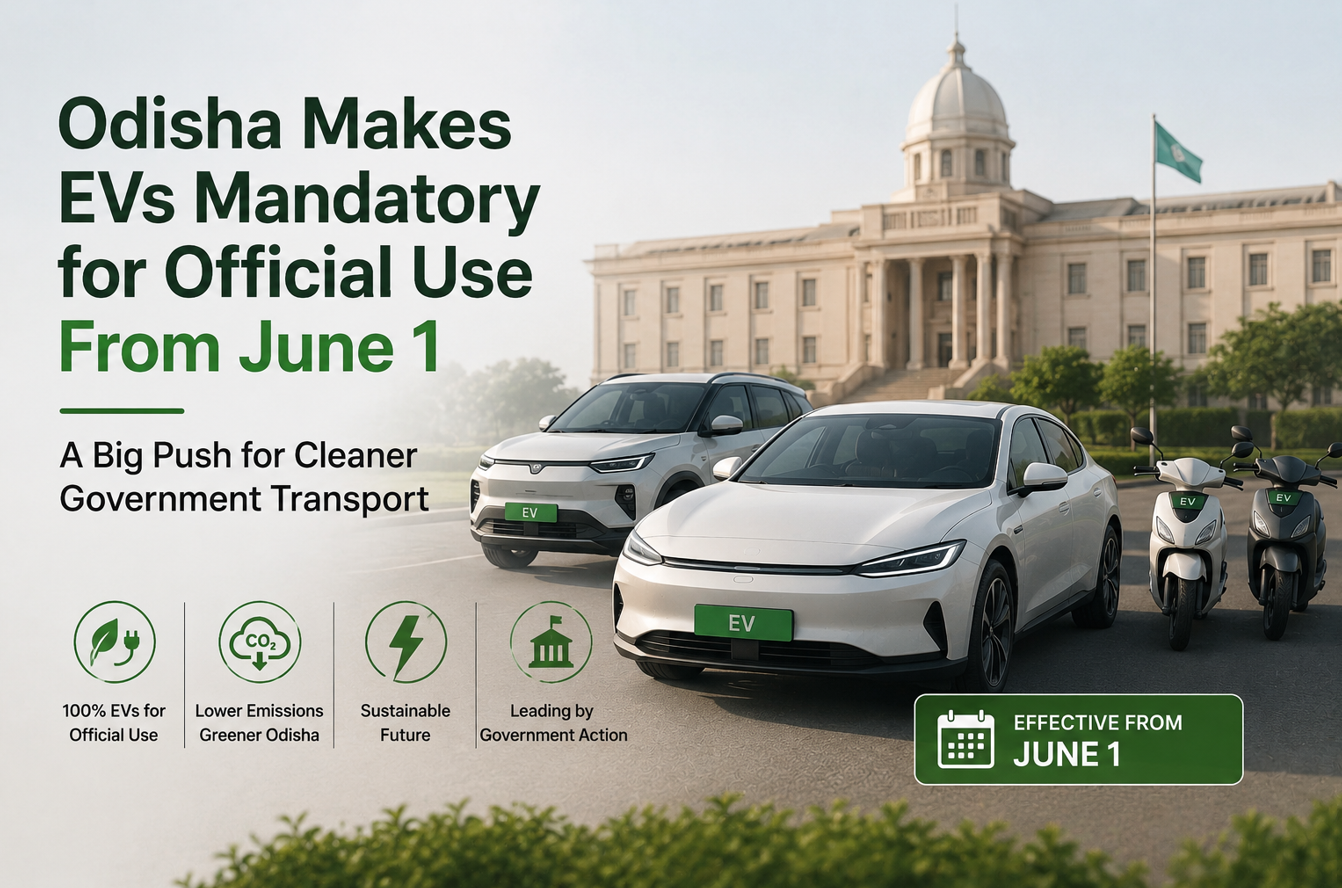
Odisha has taken a strong step toward electric mobility. From June 1, 2026, all new two-wheelers and four-wheelers bought by state government departments for official use must be electric vehicles. The decision is part of a wider fuel-saving plan announced by Chief Minister Mohan Charan Majhi. The state wants to reduce petrol and diesel use, lower fuel costs, and make government transport cleaner.
At first, this may look like a simple administrative order. But the impact could be bigger. When a state government starts buying only EVs for official use, it can influence demand, charging infrastructure, fleet planning, and even public confidence in electric vehicles.
What Odisha Has Announced
The Odisha government has made it mandatory for departments to purchase only electric two-wheelers and four-wheelers for official use from June 1, 2026. The rule also applies to four-wheelers hired on rent for government work. Petrol and diesel vehicles will be allowed only in special cases where an EV is not suitable.
This order is part of an eight-point fuel conservation plan. The plan also asks departments to reduce unnecessary travel, conduct meetings online when possible, and encourage carpooling among senior officials.
In simple words, Odisha is not only changing the type of vehicles it buys. It is also trying to reduce avoidable fuel use across government work.
Why This Move Matters
Government fleets can create visible change. When officials, departments and public offices start using EVs, people notice. It sends a message that electric vehicles are not just for private buyers or early adopters. This can help build confidence among regular consumers. Many people still worry about EV range, charging points, battery life and service support. If government departments start using EVs regularly, it may slowly reduce some of that hesitation.
The move can also create steady demand for EV makers. State departments need vehicles for inspections, office work, field visits and local travel. If these purchases shift to electric models, manufacturers and dealers get a clearer market signal.
For Odisha, this could also support its broader EV policy goals. The state has already been promoting electric mobility through policy support and incentives. This new mandate gives that policy a more practical push.
Impact on EV Adoption and Charging Infrastructure
The biggest impact may be on charging infrastructure. Buying EVs is only one part of the story. Government offices will also need charging points, parking space, load planning and maintenance support. For example, if a district office buys electric cars for official travel, it will need reliable charging at the office or nearby. If officials travel between cities, highway charging becomes important. If two-wheelers are used for field work, departments must plan charging around daily routes.
This can push public and semi-public charging networks to grow faster. Government buildings, district offices, guest houses and transport hubs may become natural charging locations.
It may also help local EV service businesses. More government EVs mean more need for technicians, battery checks, charger installation, software support and maintenance.
Still, execution will matter. If departments buy EVs without planning charging properly, the policy may face delays or frustration. The order is good, but charging readiness will decide how smoothly it works.
How It Can Affect Costs and Pollution
EVs usually cost more upfront than petrol or diesel vehicles, but their running cost can be lower. Electricity is cheaper than fuel for daily use, and EVs have fewer moving parts, which can reduce routine maintenance. For government departments that use vehicles every day, this can matter over time. The savings may not appear on day one, but they can build across months and years.
The pollution benefit is also important. EVs do not produce tailpipe emissions. In cities like Bhubaneswar, Cuttack and Rourkela, cleaner official fleets can help reduce local air pollution, especially if the number of government EVs grows steadily.
Of course, EVs are only as clean as the electricity used to charge them. But even with India’s current power mix, EVs can help reduce urban tailpipe pollution and oil dependence.
Challenges Odisha Must Solve
- The first challenge is availability. Government departments need vehicles that match their actual work. Some need city cars. Some need rugged vehicles for rural roads. Some need long-range travel. Not every use case can be solved by the same EV.
- The second challenge is charging access. Urban offices may adapt quickly, but rural and remote departments may need more planning. If charging points are not available, officials may still prefer petrol or diesel vehicles.
- The third challenge is service support. EVs need trained technicians, battery diagnostics and proper repair systems. Odisha will need coordination with manufacturers and service providers.
- The fourth challenge is exception handling. Since petrol and diesel vehicles are allowed only in special cases, the government must define those cases clearly. Emergency services, remote areas, long-distance field work and tough terrain may need flexible rules.
A good policy should be strict enough to push change, but practical enough to avoid disruption.
Who Benefits From This Decision
EV manufacturers can benefit because government purchases create reliable demand. Companies like Tata Motors, Mahindra, MG, Hyundai, BYD, Citroen, Ola Electric, TVS, Ather, Bajaj and Hero MotoCorp may see more interest depending on vehicle category and tender rules. Charging companies may also benefit. More official EVs will need chargers at government premises and public points.
The public may benefit if the policy encourages cleaner air, lower fuel spending and better charging networks. Government employees may also get a quieter and smoother vehicle experience, especially for city travel.
But the benefit will be strongest only if the transition is planned well. EV adoption is not just about replacing vehicles. It is about creating a complete system around them.
Conclusion and Key Takeaways
Odisha’s decision to buy only EVs for official use from June 1, 2026, is a strong policy signal. It shows that the state wants to cut fuel use, reduce emissions and make government transport cleaner. The move can boost EV demand, improve public confidence and encourage charging infrastructure. But it will also require careful planning, especially for rural areas, long-distance use and department-level charging needs.
Key takeaways
- Odisha government departments must buy only EVs for new official two-wheeler and four-wheeler purchases from June 1, 2026.
- Hired four-wheelers for government work must also be EVs where possible.
- Petrol and diesel vehicles will be allowed only under special circumstances.
- The decision is part of an eight-point fuel conservation plan.
- The policy may boost EV adoption, charging infrastructure and local service networks.
The biggest challenges will be charging access, vehicle availability, service support and clear exemptions.
Facts Input- BS
Discover more from Newskart
Subscribe to get the latest posts sent to your email.

Comments are closed.