


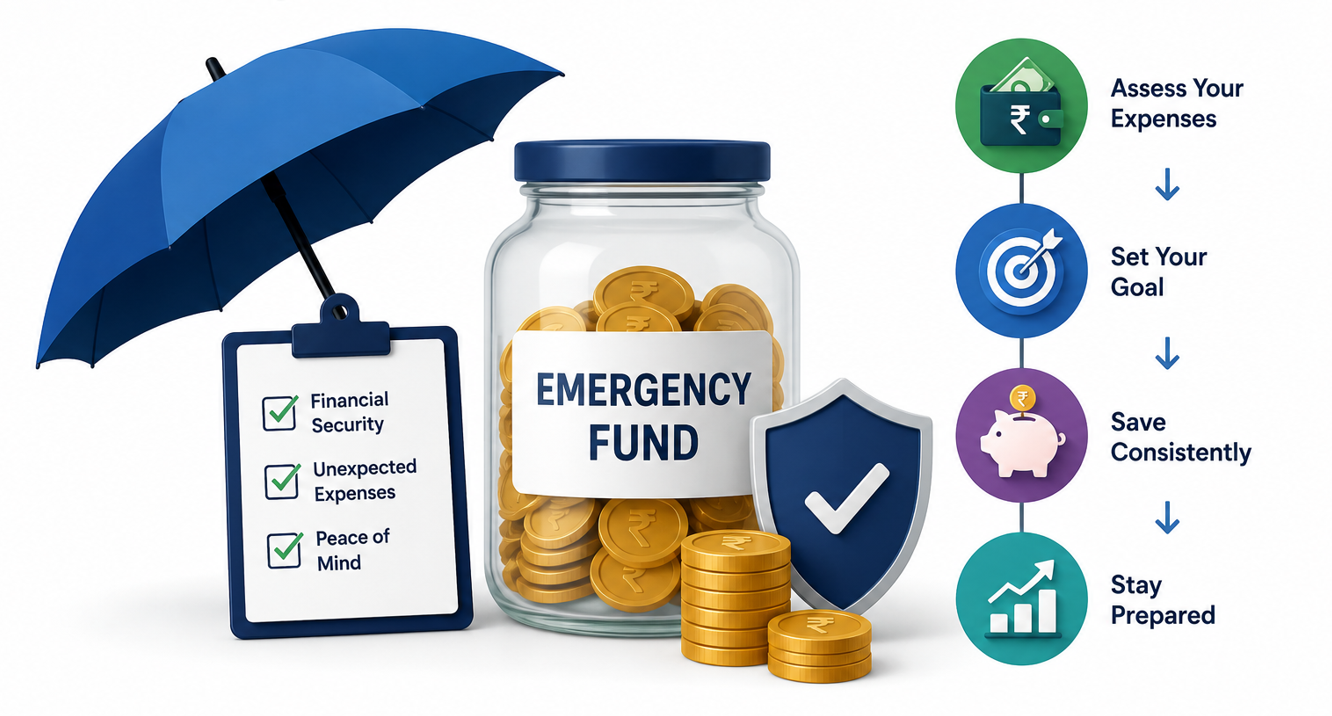
Most financial plans fail for one simple reason because life does not follow a straight line. A job loss, sudden medical bill, urgent home repair, or family emergency can disrupt your budget in a single week. When that happens, people without backup cash often use high-interest debt or break long-term investments at the wrong time. That is exactly why an emergency fund matters.
An emergency fund is not an investment for high returns. It is a financial shock absorber. Its job is to protect your daily life and your long-term goals when something unexpected happens.
Why an emergency fund is non-negotiable
A proper emergency fund creates breathing room. When any type of emergency comes, so instead of panicking during that crisis, you get time to make better decisions. This matters emotionally and financially both.
First, it reduces over dependence on credit cards and personal loans. Borrowing during stress usually leads to costly decisions, and repayment can drag for months. Second, it protects your investments. If markets are down and you need cash urgently, selling long-term assets can lock in losses. A dedicated emergency pool avoids that pressure.
Regulatory and investor education platforms in India also emphasize this sequence clearly. They focus to build financial basics first, then they tell you to invest aggressively. In practice, this means emergency savings and insurance should come before higher-risk wealth goals.
Another benefit is confidence. People with a financial buffer usually handle career shifts better, negotiate better, and avoid fear-based money moves. So this is not just a “savings tip.” It is your personal financial safety net.
How to build your emergency fund step by step
You should start by deciding your target amount. A common rule is 3 to 6 months of essential expenses. If your income is unstable, you are self-employed, or your family has high fixed obligations, then you can target closer to 6 to 12 months.
Now calculate only essential monthly costs such as rent/EMI, food, utilities, school fees, medicine, insurance, transport, and minimum debt payments. You can ignore discretionary spending like vacations and entertainment while setting this base target.
Next, create a separate account only for emergencies. You should not mix it with your regular spending account. Separation reduces temptation and makes tracking easier. Then automate contributions in these emergency accounts from your regular salary account. Even small monthly transfers work if the habit is consistent. You can start with a realistic number and increase it gradually every few months. If you receive bonus income, tax refunds, incentives, or freelance payments, direct a fixed portion into this fund.
Where should you keep it? Priority is liquidity and safety, not maximum return. A high-access savings account is usually the first choice. Some people also use low-risk liquid options for part of the fund, but make sure withdrawal is quick and simple when needed.
Define what counts as an emergency before you start using the money. Genuine emergencies include sudden medical needs, job loss, urgent repairs, or unavoidable travel linked to family crises. Festival shopping, gadget upgrades, and planned expenses are not emergencies.
Now if you have used the emergency fund, then replenish it immediately with a recovery plan. Emergency funds should always be maintained separately.
Finally, an emergency fund is the foundation that keeps every other financial goal alive. It may not look exciting, but it gives you control when life becomes unpredictable. You can build it steadily, should protect it strictly, you should use it only when truly needed. That one habit can change your entire financial journey.
Discover more from Newskart
Subscribe to get the latest posts sent to your email.

[…] general reason is not building an emergency fund. You should take care of unexpected expenses, such as medical bills, job loss, or urgent repairs, […]
[…] can choose FD if your goal is capital preservation with predictable returns from a one-time surplus, bonus, maturity amount, or emergency fund bucket you do not need […]
[…] Emergency Fund Explained-Why You Need It and How to Build It Fast […]
[…] Emergency Fund Explained-Why You Need It and How to Build It Fast […]