


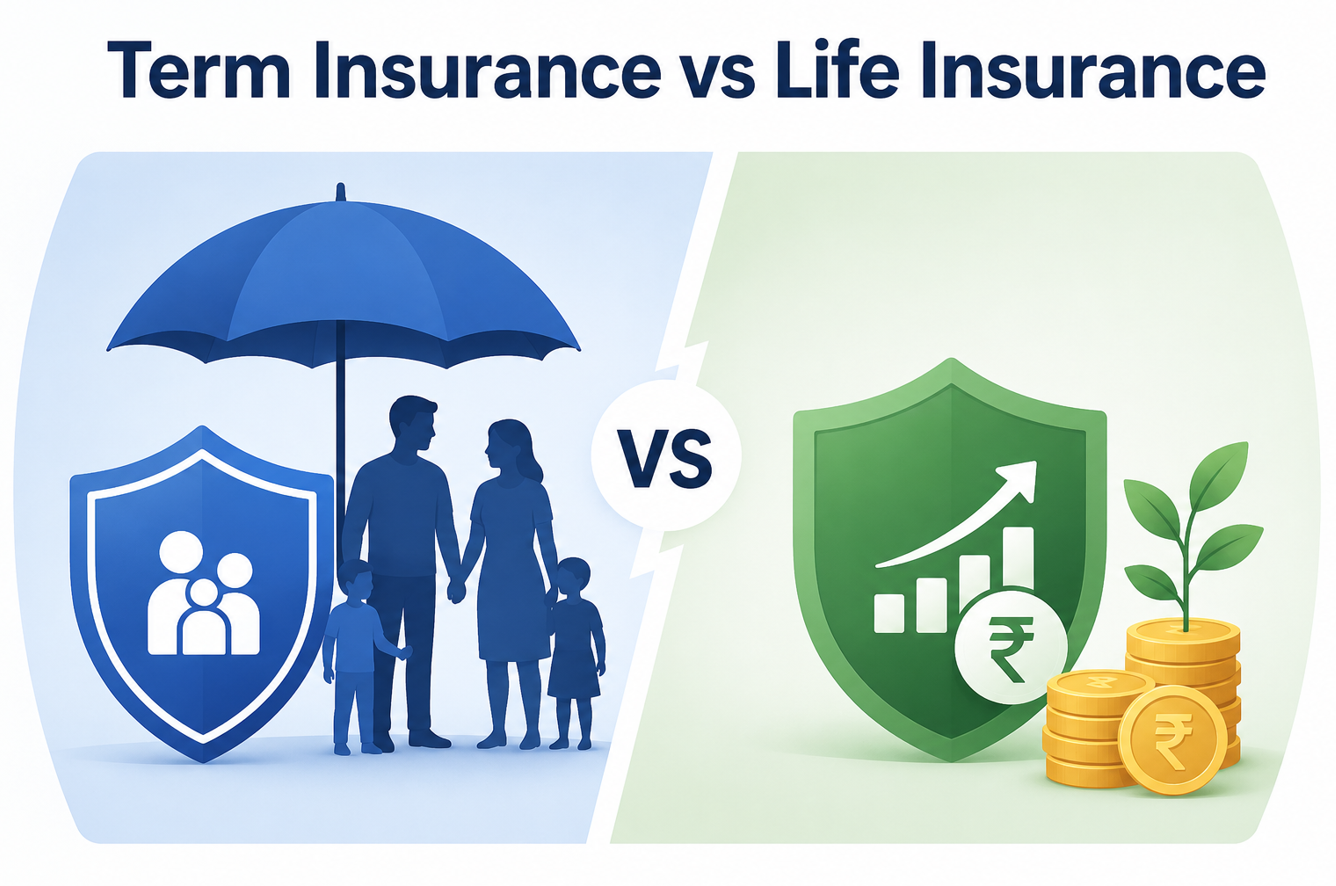
Insurance decisions usually look simple until you start comparing policies. One plan says “high cover at low premium,” another says “protection plus savings,” and suddenly it becomes confusing. This is where most people get stuck between term insurance and life insurance.
The easiest way to understand the difference is this- term insurance is built mainly for protection, while many traditional life insurance plans combine protection with a savings or maturity component. None of them are universally better but the right choice depends on your financial responsibilities, goals, and budget.
Term Insurance vs Life Insurance – Core difference
A term insurance plan pays your nominee a death benefit if you pass away during the policy term. If you outlive the term, regular term plans usually do not pay maturity benefits. Because it is pure risk cover, premiums are generally lower for the same sum assured.
Traditional life insurance products (such as endowment-type or whole-life-oriented structures) may offer death cover plus maturity/survival benefits, depending on plan design. Since there is an added savings or cash-value element in many of these plans, premiums are usually higher compared with term plans.
In practical terms
- If your priority is maximum cover at affordable cost, term insurance is often the better fit.
- If your priority is insurance plus long-term payout structure, traditional life insurance plans may suit you better.
This is why two people of the same age can buy very different policies and both still make the right decision for their own life stage.
Which one should you buy?
If your family depends on your income, start by securing adequate life cover first. For most young earners, parents, and home-loan borrowers, term insurance is a strong first step because it gives higher coverage without straining monthly cash flow.
You should choose a coverage amount that can realistically support your family’s major needs which includes daily expenses, loan repayment, children’s education, and emergency buffer money. Many buyers underinsure because they only look at premium, not at actual family risk.
Now, where does traditional life insurance fit? It can be useful for people who prefer structured long-term savings behavior, want policy-linked maturity value, or are comfortable paying higher premiums for combined objectives. But remember: mixing protection and investment in one product is not always the most efficient path for everyone.
A common practical strategy is
- Buy a solid term plan for core protection.
- Build wealth separately through suitable investment instruments based on your risk profile and goals.
This keeps protection clear and investing flexible.
Common mistakes to avoid before buying
One major mistake is delaying purchase. Premiums typically rise with age and health risks, so waiting can make cover expensive. Another mistake is hiding medical history or smoking habits in the proposal form. Such non-disclosure can create claim complications later, exactly when your family needs support.
You should also check policy details carefully such as waiting periods (if any), exclusions, rider terms, claim process, and premium payment discipline. You should avoid buying these plans only for tax reasons. You should remember that tax benefits are useful, but the main purpose of life cover is financial security for dependents.
Finally, the term insurance vs life insurance debate is not about picking a “winner.” It is about choosing the right tool for the right purpose. If your priority is high protection at lower cost, term insurance usually leads. If you need a bundled long-term structure and if you can afford higher premiums, then certain life insurance plans may work. The best policy is the one your family can rely on when it matters most.
Discover more from Newskart
Subscribe to get the latest posts sent to your email.

Comments are closed.