


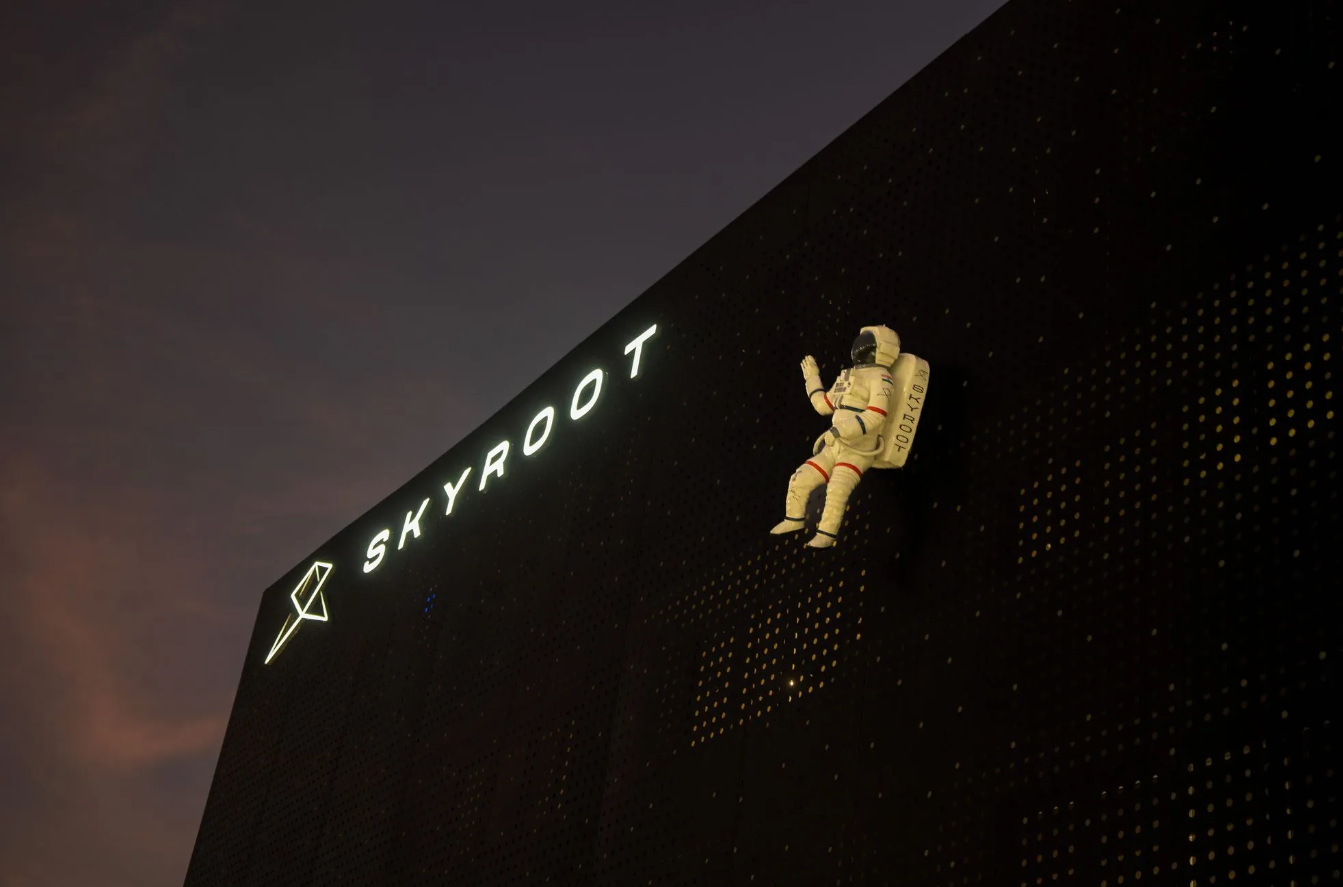
India’s private space industry has just crossed a major milestone. Hyderabad-based Skyroot Aerospace has raised $60 million in fresh funding and officially entered the unicorn club with a valuation of around $1.1 billion. That makes it India’s first spacetech unicorn and one of the strongest signals yet that deep-tech businesses in India are moving from promise to scale.
It reflects how investor confidence in Indian space startups has changed in just a few years. Earlier, private space in India was seen as high-risk and long-gestation. Now, serious global and domestic investors are backing startups that have already proven technical capability and are close to commercial launch operations.
What Happened in This Funding Round
The round was co-led by Sherpalo Ventures and GIC, with participation from names including BlackRock, founders from Greenko Group, Arkam Ventures, and other investors. Some existing investors increased participation, while a few new investors also entered. Reports also noted that veteran investor Ram Shriram is expected to join Skyroot’s board.
This matters because the round is not just about valuation optics. The company has outlined practical deployment goals for the new capital: scaling launch cadence, expanding manufacturing capability, and accelerating development of its next launch vehicle stages. In startup terms, that suggests this is execution capital, not just balance-sheet padding.
Skyroot was founded in 2018 by Pawan Kumar Chandana and Naga Bharath Daka, both former ISRO scientists.
The company had already drawn attention with India’s first private rocket launch and has been preparing for the Vikram-1 orbital mission. The latest funding now gives it stronger operational runway to move from demonstration milestones to sustained commercial activity.
Why This Matters for India’s Space and Startup Ecosystem
The immediate impact is symbolic and structural at the same time. Symbolically, India now has a spacetech unicorn—something that would have sounded unlikely not long ago. Structurally, it can influence three big areas.
- First, it can unlock more capital for Indian deep-tech. When a category produces a unicorn with strong investors, other startups in adjacent areas—satellite systems, propulsion, avionics, launch support—often find fundraising easier.
- Second, it supports India’s ambition to become a competitive launch and space-services hub. If private players can deliver reliable, cost-effective launches, India can attract more global payload demand and build a stronger domestic space value chain.
- Third, it changes founder confidence. Young engineers and researchers can now see a clearer path from lab-grade innovation to venture-backed commercial scale in India itself, rather than only looking abroad.
Of course, unicorn status is not the finish line. Skyroot’s next test is execution consistency: successful launches, customer conversion, and repeat mission reliability. In space, credibility is earned mission by mission.
Conclusion
Skyroot’s $60 million raise and unicorn milestone represent a landmark moment for Indian innovation. It shows that private Indian space startups can attract world-class investors and build globally relevant technology with commercial intent. Recently, Bengaluru based startup GalaxEye launched Drishti, the world’s first OptoSAR satellite, via SpaceX Falcon 9 which also shows that Indian startups are not only interested in Spacetech field but are also working hard bring better outcome.
Facts Input – ET
Discover more from Newskart
Subscribe to get the latest posts sent to your email.

[…] of the most visible updates was Skyroot Aerospace raising $60 million on May 7, with participation from Sherpalo, GIC, BlackRock, and others. Founded […]