

Bellatrix Aerospace Raised $20 Million on 28 Mar 2026: Why This Is a Big Moment for India’s Space-Tech Sector


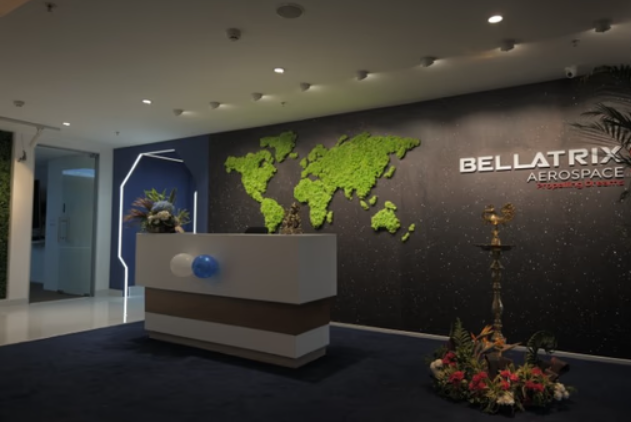
India’s private space ecosystem got a major boost on 28 March 2026 when Bengaluru-based Bellatrix Aerospace announced a fresh $20 million funding round. The round was reported to be led by Cactus Partners, and the company said the capital will be used to scale commercial manufacturing of satellite propulsion systems and expand global deliveries.
Bellatrix is not in a fast-fashion app category or consumer trend segment. It builds core space mobility technology – the kind of deep engineering infrastructure that determines how efficiently satellites move, stay in orbit, and complete missions.
That is why this funding matters beyond one company. It is another signal that investors are willing to back India’s deep-tech capability when the technology solves real, high-value problems.
What Exactly Was Announced?
As reported on 28 March 2026:
- Bellatrix Aerospace raised $20 million (about ₹190 crore)
- The round was led by Cactus Partners
- Funds are intended for commercial-scale propulsion manufacturing and global delivery expansion
In simple terms: Bellatrix is moving from strong technology building into a bigger scale execution phase.
Why Propulsion Technology Is So Important
Most people think space business is only about rockets launching satellites. But launch is only one part. Once in orbit, satellites still need efficient movement and control to perform their tasks.
That is where propulsion systems matter. They help with:
- orbit raising
- station keeping
- collision avoidance
- mission life optimization
If propulsion is weak or inefficient, satellite performance and mission economics suffer. If propulsion is advanced and reliable, satellite operators get more control and better mission value.
So Bellatrix’s focus is strategically important for modern satellite operations.
Bellatrix’s Position in the Market
Bellatrix describes itself as a space mobility company with multiple propulsion technologies, including electric and green propulsion offerings. The company has positioned itself around “in-space mobility,” meaning post-launch movement and mission support.
This matters because global satellite demand is evolving:
- more small satellites
- more constellation deployments
- rising need for precise in-orbit maneuvering
- growing demand for cost-efficient mission operations
In that context, a propulsion-focused startup can become a critical infrastructure player, not just a component vendor.
Bellatrix Aerospace Products (As of now)
Efficient Hall-effect thruster platform designed for long life and in-orbit performance.
High-performance greener propulsion alternative positioned against hydrazine-class systems.
Multi-mission orbital transfer vehicle for precise deployment and hosted payload support.
Ultra-compact propulsion engine designed for nano and small satellite missions.
Water-powered electric propulsion concept aimed at efficient space mobility.
Bellatrix flagship propulsion initiative highlighted under current product portfolio.
Source: Bellatrix Aerospace official website (Products section) – bellatrix[dot]aero
Practical Example: Why Customers Care
Imagine an Earth-observation company launching a satellite for imaging services. If that satellite can be moved accurately and maintained efficiently in orbit, the operator can:
- improve mission uptime
- reduce fuel inefficiency
- extend operational life
- increase return on launch investment
That is real business value. This is exactly why propulsion startups are becoming more relevant in the global space economy.
Competitor Landscape (India and Beyond)
Bellatrix is growing in a competitive but expanding ecosystem.
In India, adjacent and competing momentum can come from private space players such as:
- Skyroot Aerospace (launch systems focus)
- Agnikul Cosmos (launch innovation)
- Pixxel (satellite applications side, not direct propulsion competitor but ecosystem peer)
Globally, Bellatrix also competes indirectly with propulsion-focused and in-space mobility companies from the US and Europe that serve satellite operators.
So Bellatrix’s growth challenge is clear: maintain technology performance while scaling manufacturing and delivery speed.
Why This Funding Round Is a Positive Signal for India
This deal reinforces three positive trends:
-
Deep-tech funding appetite is alive
Investors are not only funding apps and SaaS; they are funding hard engineering too. -
India’s private space supply chain is maturing
From launch to in-space systems, India’s ecosystem is becoming more complete. -
Commercialization is becoming the key focus
The next phase is not just “can the tech work?” but “can it scale reliably for global customers?”
Risks and Execution Challenges Ahead
Even after a strong raise, deep-tech execution is demanding. Bellatrix will still need to deliver on:
- high manufacturing consistency
- qualification reliability for mission-critical hardware
- international customer confidence and timelines
- cost discipline while scaling production
In deep-tech, funding gives runway — but quality and execution decide long-term leadership.
Final Takeaways
India’s private space-tech story is entering a more serious, scale-oriented phase. For founders, this is a reminder that difficult engineering categories can attract capital when there is clear product-market relevance.
For investors, it shows India’s deep-tech stack is broadening.
For the ecosystem, it adds momentum to India’s ambition of becoming not just a launch destination, but a complete space technology supplier.
If Bellatrix executes well on manufacturing scale and global delivery, this round could become a defining inflection point in India’s in-space mobility journey.
Discover more from Newskart
Subscribe to get the latest posts sent to your email.

Comments are closed.