

Delhi EV Policy 2026 Gets Cabinet Nod, Electric Vehicles Under Rs. 30 Lakh Become More Affordable


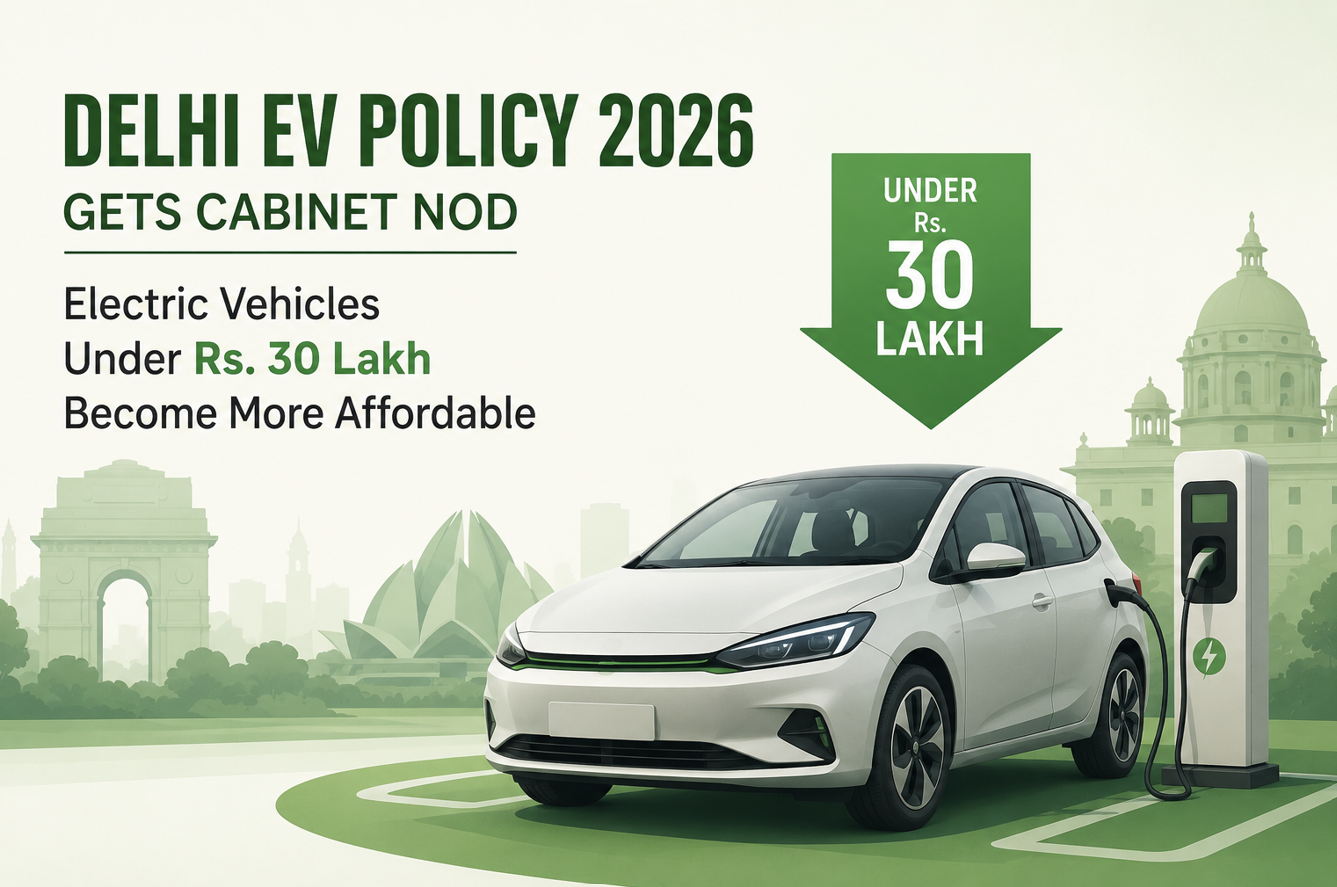
Delhi Cabinet has approved the new EV Policy 2026, giving a fresh push to electric mobility in the national capital. The biggest highlight is the 100 percent exemption on road tax and registration charges for electric vehicles priced up to Rs. 30 lakh.
The policy is expected to come into effect from July 1, 2026. It is part of a larger Rs. 15,000 crore plan over four years to make electric vehicles more attractive, improve charging support, and reduce pollution from transport.
For Delhi, this is not only an automobile policy. It is also a public health and clean-air move. The city has struggled with severe pollution for years, especially during winter. While dust, construction, waste burning and outside factors also play a role, vehicle emissions remain one of the most visible and daily sources of pollution.
What Delhi EV Policy 2026 offers
The new Delhi EV Policy 2026 makes electric vehicles cheaper by removing road tax and registration charges for EVs costing up to Rs. 30 lakh ex-showroom.
This can directly lower the on-road price for buyers. For example, if a family is planning to buy an electric car under Rs. 30 lakh, the exemption can reduce the upfront cost. That matters because EVs often look expensive at first, even though running costs are lower over time.
The policy also includes incentives of up to Rs. 50,000 for electric two-wheelers and three-wheelers in the first year. This is important because scooters, bikes, autos and delivery vehicles are used heavily inside the city.
Delhi also plans to move strongly toward electric public and shared transport. From January 1, 2027, only electric auto-rickshaws will be registered in Delhi. From April 1, 2028, registration of new petrol and CNG two-wheelers is expected to stop.
Why the Rs. 30 lakh exemption matters
The Rs. 30 lakh limit is practical because it covers many mass-market and premium mass-market EVs. It does not mainly target ultra-luxury electric cars. Instead, it supports buyers who are more likely to use EVs for daily travel.
This can help office-goers, families, cab operators, small business owners and fleet users shift from petrol or diesel to electric.
For a buyer, the benefit is simple. Lower purchase cost, lower running cost and cleaner driving. Charging an EV is generally cheaper than using petrol or diesel, though the final saving depends on electricity rates, driving habits and charging method.
For the city, the benefit is bigger. More EVs mean fewer tailpipe emissions on Delhi roads. Electric vehicles do not release smoke from an exhaust pipe while driving. That can help reduce local pollution in crowded areas, markets, residential colonies and traffic-heavy corridors.
How it can help pollution control
EVs are not a magic cure for Delhi’s pollution, but they can help reduce one major source – vehicular emissions.
Vehicles release pollutants such as nitrogen oxides, carbon monoxide, particulate matter and other harmful gases. These emissions are worse in traffic jams because engines keep running even when vehicles barely move.
Electric vehicles remove tailpipe emissions from the road. If more two-wheelers, autos, buses and delivery vehicles become electric, Delhi’s daily exposure to traffic fumes can come down.
This is especially useful in areas with high vehicle density such as ITO, Anand Vihar, Dhaula Kuan, Connaught Place, Ring Road, Outer Ring Road and market zones. People walking, cycling, waiting for buses or working near roads face direct exposure to exhaust fumes.
A CAQM-linked discussion on vehicular emissions has noted that past studies estimated transport’s contribution to Delhi’s PM2.5 pollution in a wide range, from around 20 percent to 41 percent. The number changes by season, location and method, but the message is clear – transport is a serious part of the problem.
Impact on two-wheelers and autos
Two-wheelers are one of the most important parts of this policy. Delhi has a huge number of scooters and motorcycles, and they are used daily for short trips.
If electric scooters become cheaper and easier to charge, many buyers may shift faster. This can reduce petrol use and daily street-level emissions.
Auto-rickshaws are another key segment. They run for long hours, often in crowded areas. Moving new auto registrations to electric from 2027 can reduce pollution in a visible way. It can also lower operating costs for drivers if charging access is reliable.
However, the transition must be smooth. Drivers will need affordable vehicles, enough charging points, quick service support and financing options. Without these, the policy may look strong on paper but move slowly on the road.
What it means for EV makers
The Delhi EV Policy 2026 can benefit electric vehicle companies, battery firms, charging operators, fleet companies and service providers.
Automakers selling electric cars under Rs. 30 lakh may see better demand. Electric two-wheeler brands may also gain, especially if subsidies and tax waivers make their products more affordable.
Charging companies can benefit because higher EV adoption creates more need for public and private charging points. Housing societies, malls, offices, parking lots and petrol pumps may see more charging installations.
This policy may also push competition among EV brands. Tata Motors, MG Motor, Mahindra, Hyundai, BYD, Ola Electric, Ather, TVS, Bajaj and Hero MotoCorp-linked EV brands are some names that may watch Delhi’s market closely.
Challenges Delhi must solve
- The first challenge is charging. People will buy EVs only if they feel confident about charging at home, office or public stations.
- The second challenge is battery safety and service. Buyers need reliable after-sales support, especially for two-wheelers and commercial vehicles.
- The third challenge is electricity source. EVs reduce local pollution, but their full climate benefit improves when more electricity comes from cleaner sources. Still, even with today’s grid, EVs can reduce roadside smoke inside the city.
- The fourth challenge is affordability for lower-income users. Subsidies help, but financing, battery warranty and resale value will also decide adoption.
Conclusion with key takeaways
Delhi EV Policy 2026 is a big step toward cleaner transport. The 100 percent tax exemption for EVs under Rs. 30 lakh can make electric cars more attractive, while support for two-wheelers and three-wheelers can reduce everyday pollution from busy city roads.
Key takeaways
- Delhi Cabinet approved EV Policy 2026 on June 29, 2026.
- EVs priced up to Rs. 30 lakh will get full road tax and registration fee exemption.
- The policy is expected to start from July 1, 2026.
- Delhi plans Rs. 15,000 crore investment over four years for electric mobility.
- New auto-rickshaw registrations will move to electric from January 1, 2027.
- New petrol and CNG two-wheeler registrations are expected to stop from April 1, 2028.
Discover more from Newskart
Subscribe to get the latest posts sent to your email.

[…] Delhi EV Policy 2026 Gets Cabinet Nod, Electric Vehicles Under Rs. 30 Lakh Become More Affordable […]