


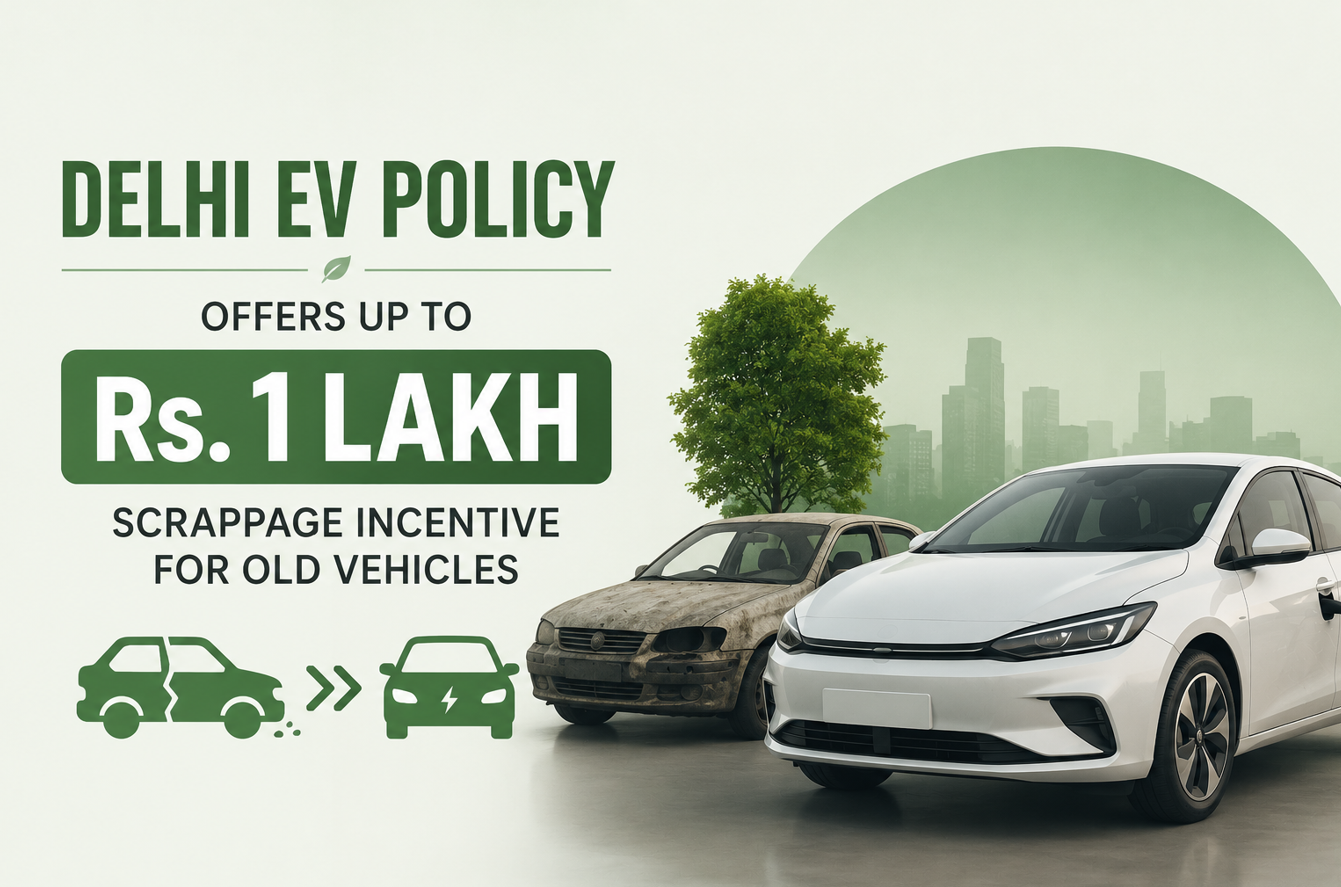
Delhi’s new EV Policy has brought one of its most practical benefits for vehicle owners – scrappage incentives of up to Rs. 1 lakh for people who replace old, polluting vehicles with electric vehicles.
This is not just a discount scheme. The idea is to remove older vehicles from Delhi’s roads and make cleaner transport easier to choose. For a city that fights air pollution every year, especially in winter, this policy can become an important step if it is implemented properly.
The Delhi Cabinet has approved the new EV policy with a larger plan to promote electric mobility, reduce vehicular pollution and support cleaner public transport. The policy is expected to come into effect from July 1, 2026.
What the scrappage incentive means
The scrappage incentive is a financial benefit for old vehicle owners who give up an older vehicle and move to an electric vehicle.
In simple words, if you own an old petrol or diesel vehicle and decide to scrap it through the approved process, you may become eligible for an incentive when you buy a new EV. The maximum benefit reported under the policy is up to Rs. 1 lakh.
This is different from simply selling your old vehicle in the second-hand market. Scrappage means the vehicle is formally taken off the road and dismantled through an authorized vehicle scrapping facility. The owner usually receives a certificate after the vehicle is scrapped. This certificate can then help claim benefits under the policy, depending on the final rules.
Why Delhi is pushing vehicle scrappage
Older vehicles usually pollute more than newer vehicles. Their engines may not meet modern emission standards, their parts may be worn out, and maintenance may not be enough to keep emissions low.
Delhi already has strict rules around old vehicles. Petrol vehicles older than 15 years and diesel vehicles older than 10 years are not allowed to run in Delhi-NCR, as per earlier court and regulatory directions. Still, many older vehicles remain a problem because they may be parked, shifted, sold informally or used in nearby areas.
A scrappage incentive gives owners a cleaner exit. Instead of holding on to an old vehicle with little resale value, they can scrap it and use the benefit while buying an EV.
How it can help an EV buyer
The biggest issue with EVs is upfront cost. Many buyers know that electric vehicles are cheaper to run, but the purchase price can still feel high.
This is where scrappage support helps. If a buyer gets a scrappage benefit, road tax relief and other EV incentives, the total cost can come down. That can make the switch easier for families, cab users, small business owners and delivery operators.
For example, a person with an old diesel car may be unsure whether to spend on another petrol car or move to an electric car. If the policy gives a meaningful scrappage benefit and removes road tax on eligible EVs, the electric option becomes more attractive.
The benefit can be even more useful for commercial users. A delivery business, local trader or driver who runs many kilometres every day can save more on fuel by moving to electric.
What is the final scrap policy for older vehicles
The final detailed process should be checked from the official Delhi Transport Department notification once it is published. Based on current reports, the broad direction is clear.
Vehicle owners will need to scrap their old vehicle through authorized channels. They should keep the scrappage certificate safely because it may be needed to claim the incentive. The benefit is linked to switching from an older vehicle to an electric vehicle.
The policy is also expected to work alongside other EV benefits such as road tax and registration fee exemptions for eligible EVs. Delhi’s new policy has also announced 100 percent exemption on road tax and registration charges for electric vehicles priced up to Rs. 30 lakh.
This means the total saving may not come from one place. It can come from scrappage support, tax exemption, lower running cost and possible category-based incentives.
How pollution control can improve
Scrapping older vehicles can directly help pollution control because it removes high-emission vehicles from the road.
Old vehicles can release more smoke, nitrogen oxides and fine particles. These pollutants are harmful because they enter the lungs and can worsen asthma, breathing trouble and heart-related risks.
Electric vehicles do not produce tailpipe emissions while running. So, replacing old petrol and diesel vehicles with EVs can reduce street-level pollution, especially in traffic-heavy areas.
This matters in Delhi because people are exposed to vehicle fumes every day. Busy roads, flyovers, markets, school zones, office areas and traffic signals often have high local pollution. Even if EVs do not solve every pollution problem, they can reduce one daily source.
Delhi still needs to control dust, construction pollution, waste burning and industrial emissions. But reducing vehicle emissions is one of the most visible and practical changes the city can make.
Impact on two-wheelers, autos and small transport
The policy is not only about cars. Delhi is also pushing electric two-wheelers and three-wheelers.
Reports say only electric auto-rickshaws will be registered in Delhi from January 1, 2027. New petrol and CNG two-wheeler registrations are expected to stop from April 1, 2028.
This is important because scooters, bikes and autos are used heavily inside the city. They cover short trips, office commutes, deliveries and last-mile transport. If these categories turn electric, the pollution benefit can be felt more widely.
Electric two-wheelers can also be cheaper to run than petrol scooters. For daily users, fuel savings can become a strong reason to switch.
What owners should check before scrapping
Vehicle owners should not rush without checking the official process.
- First, check whether your old vehicle qualifies for the benefit. The rules may depend on vehicle category, registration status, age, emission norm and ownership details.
- Second, use only authorized scrapping centres. Informal scrapping may not give you the certificate needed to claim benefits.
- Third, compare the total value. Sometimes an old vehicle may still have resale value outside Delhi if it is legally transferable. In other cases, scrapping plus incentive may be better.
- Fourth, check the EV you plan to buy. Make sure it qualifies under the Delhi EV Policy, especially if you want tax exemption or other benefits.
Conclusion with key takeaways
Delhi’s scrappage incentive of up to Rs. 1 lakh can make the EV shift more practical for owners of older vehicles. The policy tries to solve two problems together – reduce old polluting vehicles and make electric mobility more affordable.
Key takeaways
- Delhi EV Policy offers scrappage incentives of up to Rs. 1 lakh for old vehicles.
- The benefit is linked to replacing older vehicles with electric vehicles.
- EVs up to Rs. 30 lakh are also set to get full road tax and registration fee exemption.
- The policy is expected to start from July 1, 2026.
- Owners should wait for the final official process and use authorized scrapping centres.
Discover more from Newskart
Subscribe to get the latest posts sent to your email.

Comments are closed.