

Amit Shah Launches Land Port Management System, A Digital Push For Faster Border Trade


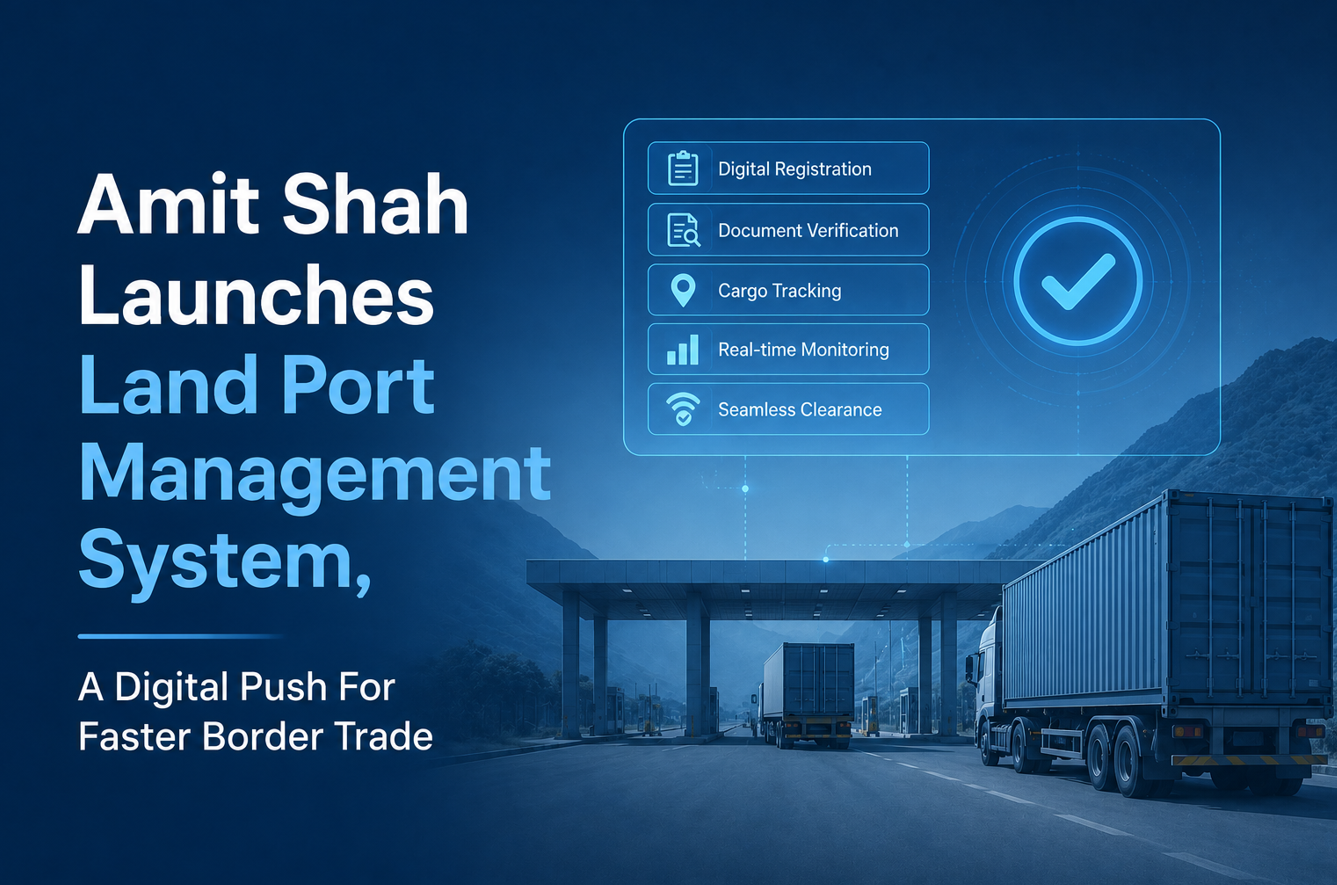
Union Home Minister Amit Shah has launched the Land Port Management System, also called LPMS, to make India’s land border movement faster, more transparent and more digital. The system is meant to improve how cargo trucks, passengers and official clearances move through India’s land ports. This may sound like a government back-end update, but it can affect trade, transport, exporters, importers and travelers. Land ports are important entry and exit points on India’s borders with countries such as Bangladesh, Nepal, Bhutan, Myanmar and Pakistan.
The big idea is simple. Instead of relying heavily on paperwork, manual checking and disconnected systems, LPMS will create a more integrated digital workflow for border movement.
What is the Land Port Management System
The Land Port Management System is a technology-enabled digital platform for cargo and passenger processing at land ports. A land port is like an airport or seaport, but for people and goods moving through road-based international borders. Trucks carrying goods, passengers crossing borders, immigration officials, customs teams, security agencies and port operators all work together at these points.
LPMS aims to bring these processes into one digital system. It will help officials track cargo, manage passenger movement, reduce repeated paperwork and improve coordination between different departments.
Why it has been launched
India’s border trade has grown over the years, but many land ports still face delays because of manual work, multiple checks and heavy documentation. According to reports, LPMS is expected to reduce paperwork by up to 90 percent. It may also cut cargo truck waiting time by 22-35 percent and reduce gate processing time by 40-60 percent.
For a truck driver, this can mean less time waiting at the border. For a trader, it can mean faster movement of goods. For officials, it can mean better monitoring and fewer gaps in the process.
How it can help traders and transporters
Border delays can increase costs. If a truck carrying perishable goods waits too long, the quality of the product may suffer. If a consignment is delayed, buyers and sellers may lose time and money.
With LPMS, documents and approvals can move digitally. Trucks may be tracked better, gate entry can become smoother, and agencies can work with clearer information.
For example, an exporter sending goods to Bangladesh through a land port may benefit if cargo details, vehicle data and approvals are handled before the truck reaches the gate. This can reduce confusion and make the process more predictable.
How it can help passengers
LPMS is not only for cargo. It is also expected to support passenger movement at land ports.
People crossing borders for travel, trade, medical reasons or family visits often need immigration and security checks. A digital system can make passenger processing more organized, especially at busy checkpoints.
This does not mean security will be reduced. In fact, better digital records can help officials improve security while reducing unnecessary delays for genuine travelers.
Why this matters for border security
A smarter land port system can also support national security. Border points need both speed and control. If systems are too slow, trade suffers. If systems are too loose, security risks increase.
LPMS can help by giving agencies better visibility of vehicles, cargo, passengers and movement records. When data is organized, suspicious patterns can be identified more easily. This fits into the government’s larger focus on smart borders, where technology, surveillance, digital systems and inter-agency coordination are used to manage border infrastructure better.
Role of Land Ports Authority of India
The Land Ports Authority of India, or LPAI, works under the Ministry of Home Affairs and manages India’s integrated check posts and land port infrastructure. LPAI was set up to create, upgrade and manage border infrastructure for smooth cross-border movement. LPMS is part of that broader mission.
Integrated Check Posts bring agencies such as customs, immigration, border security, quarantine and other authorities into one location. A digital platform like LPMS can make these multi-agency locations work more efficiently.
What changes can be seen
- The first visible change may be less paperwork. Traders and transporters may not need to repeat the same information across several counters.
- The second change could be faster gate movement. If approvals and records are already available digitally, trucks may spend less time waiting.
- The third change is better transparency. Digital records can reduce confusion about where a file, truck or approval is stuck.
- The fourth change is improved planning. Authorities can use data to understand peak traffic hours, frequent bottlenecks and infrastructure needs.
Comparable systems
LPMS can be compared with digital systems used at airports and seaports. Airports use passenger processing, immigration systems and cargo tracking tools. Seaports use port community systems and cargo management platforms. Land ports handle similar movement, but through road borders. LPMS is meant to bring land ports closer to that level of digital coordination.
Conclusion with key takeaways
The launch of the Land Port Management System is an important step in modernizing India’s border trade and passenger movement. It may not be a consumer app, but it can quietly improve logistics, trade speed, passenger handling and border transparency.
Key takeaways
- Amit Shah launched the Land Port Management System on June 9, 2026, in New Delhi.
- LPMS is a digital platform for cargo and passenger processing at India’s land ports.
- It is expected to reduce paperwork, truck waiting time and gate processing delays.
- The system can help traders, transporters, passengers and border agencies.
Its success will depend on smooth adoption, staff training, system uptime and coordination between departments.
Discover more from Newskart
Subscribe to get the latest posts sent to your email.

Comments are closed.