

TOCAL’s Rs. 9 Crore Funding Could Build a Cleaner Delivery Network for India’s E-Commerce Boom


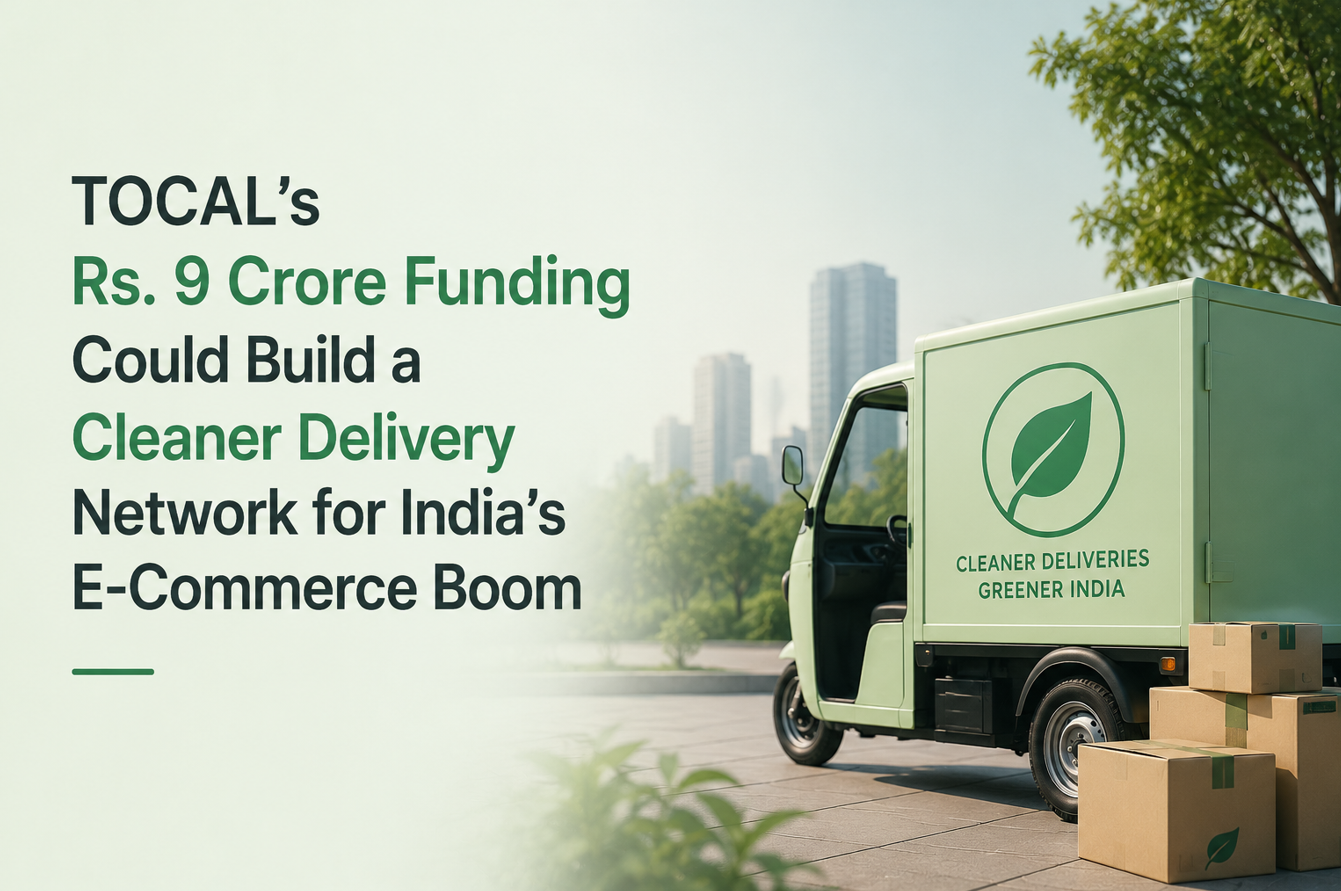
TOCAL has raised Rs. 9 crore to expand its EV logistics and fulfilment network, giving the Bengaluru-based startup fresh fuel for its next growth phase. The round was led by XB Group, the parent company of K-Indev Logistics, with participation from Navyug Global Ventures, a family office and high-net-worth investor Nivetha Muralidharan.
The funding also begins a strategic partnership between TOCAL and K-Indev Logistics. That is the important part of this story. TOCAL is not only adding more electric vehicles. It is trying to build a wider logistics platform that combines EV-powered last-mile delivery, fulfilment centres, fleet technology and enterprise logistics support.
Founded by Dhairyasheel Deshmukh, TOCAL currently operates in Bengaluru. Its services are aimed at e-commerce, quick-commerce and direct-to-consumer brands that need cleaner and more reliable delivery support.
What TOCAL is trying to solve
Online shopping looks simple from the customer side. You order a product, get a tracking link and wait for the package. But behind that order, there is a long chain of work.
The product has to be stored, picked, packed, sorted, assigned to a rider and delivered on time. If one step fails, the customer experience suffers. If the delivery vehicle sits idle, the company loses money. If fuel costs rise, delivery becomes expensive.
TOCAL is trying to solve this through a mix of fulfilment and electric mobility. Its platform offers EV-based last-mile delivery, fulfilment centres, fleet management software and rider enablement services.
In simple words, it wants to help brands move products from storage to customer doors with less friction and lower fuel dependence.
Why the Rs. 9 crore funding matters
The funding round includes an Rs. 8.5 crore commitment from XB Group. For a logistics startup, this kind of capital can be useful because the business needs more than software.
TOCAL needs vehicles, charging planning, fulfilment hubs, warehouse tools, riders, operations teams and enterprise sales. Every city expansion requires local groundwork.
The company plans to use the money to move beyond Bengaluru into major metro markets, set up more fulfilment centres, scale its EV fleet, improve fleet and warehouse management technology, and build stronger enterprise partnerships.
That is a practical use of funds. In logistics, growth is not only about signing customers. It is about making sure every delivery works day after day.
How the K-Indev partnership can help
The partnership with K-Indev Logistics can give TOCAL access to deeper logistics experience. K-Indev brings knowledge in micro-warehousing, nationwide logistics operations and enterprise customer relationships.
TOCAL brings EV fleet operations, hyperlocal delivery, rider network and its own technology platform.
This mix can be useful. A small D2C brand may need local storage, same-day dispatch and electric delivery in one city. A larger e-commerce seller may need fulfilment support across multiple cities. A quick-commerce business may need fast local movement with predictable delivery windows.
If the partnership works well, TOCAL can offer a more complete logistics service instead of only providing vehicles.
The bigger aim and purpose
TOCAL’s purpose appears to be linked with building cleaner, technology-led logistics for modern commerce.
India’s delivery market is growing because people now order groceries, medicines, fashion, electronics, beauty products and daily-use items online. But more deliveries also mean more vehicles on roads, more fuel use and more pressure on city traffic.
Electric delivery fleets can reduce tailpipe emissions and bring down running costs for short-distance routes. Fulfilment centres can keep products closer to customers, which can reduce delivery time.
Together, EV logistics and micro-fulfilment can make city delivery cleaner and faster.
For example, a skincare brand selling online in Bengaluru may not want to build its own warehouse and rider team. A platform like TOCAL can store products in a fulfilment centre, process orders and deliver through electric vehicles. That saves the brand time and lets it focus on product and customers.
Growth plans look ambitious
TOCAL has set large targets for the next four to five years. It aims to expand to more than 15 cities, deploy over 20,000 electric vehicles, operate 75 fulfilment centres and work with more than 1,000 brands.
These are ambitious goals for a young company. Reaching them will need capital, strong operations and reliable partnerships.
The biggest test will be execution. Logistics businesses are judged on simple things – whether deliveries are on time, whether products are handled safely, whether tracking works, and whether brands can control costs.
If TOCAL can maintain service quality while expanding, it can build a serious position in EV-led logistics.
Competitors and market pressure
TOCAL operates in a competitive space. In EV logistics, companies such as Zypp Electric, MoEVing, Magenta Mobility and Hala Mobility are active in related areas. In fulfilment and delivery, it also faces pressure from larger logistics and commerce infrastructure players such as Delhivery, Shiprocket, Shadowfax, Ecom Express and local delivery networks.
The market is crowded, but demand is also growing. Brands want faster delivery, lower costs and better visibility. Many also want cleaner supply chains because customers and investors are paying more attention to sustainability.
TOCAL’s edge will depend on how well it combines electric fleets with fulfilment infrastructure. A delivery-only model can be copied. A well-run network of hubs, riders, fleet software and enterprise relationships is harder to build.
What to watch next
The next stage will show whether TOCAL can expand beyond Bengaluru without losing control over service quality.
Important things to watch include new city launches, fleet size, fulfilment centre locations, brand partnerships, rider support, charging access and technology performance.
Unit economics will also matter. That means whether each delivery, hub and customer account can make financial sense after all costs. Logistics startups can grow fast, but profitable growth is harder.
TOCAL’s partnership with K-Indev may help reduce some of that pressure by bringing established logistics strength into the model.
Conclusion with key takeaways
TOCAL’s Rs. 9 crore funding is a meaningful step for India’s EV logistics and fulfilment market. The startup is trying to solve a real business problem – how to help brands deliver faster, cleaner and more efficiently in crowded cities.
Its aim is not only to put more electric vehicles on the road. The larger purpose is to build an integrated network where fulfilment centres, fleet software, riders and EV-powered last-mile delivery work together.
Key takeaways
- TOCAL has raised Rs. 9 crore in funding.
- The round was led by XB Group, parent company of K-Indev Logistics.
- XB Group committed Rs. 8.5 crore, with participation from Navyug Global Ventures, a family office and Nivetha Muralidharan.
- TOCAL was founded by Dhairyasheel Deshmukh and currently operates in Bengaluru.
- The startup serves e-commerce, quick-commerce and D2C brands.
- It plans to expand into more than 15 cities, deploy over 20,000 EVs, operate 75 fulfilment centres and work with more than 1,000 brands over four to five years.
Facts Input – Autocar Professional
Discover more from Newskart
Subscribe to get the latest posts sent to your email.

Comments are closed.