

Lava Virat Series Could Be the Made-in-India Phone Line to Watch Between Rs. 10,000 and Rs. 25,000


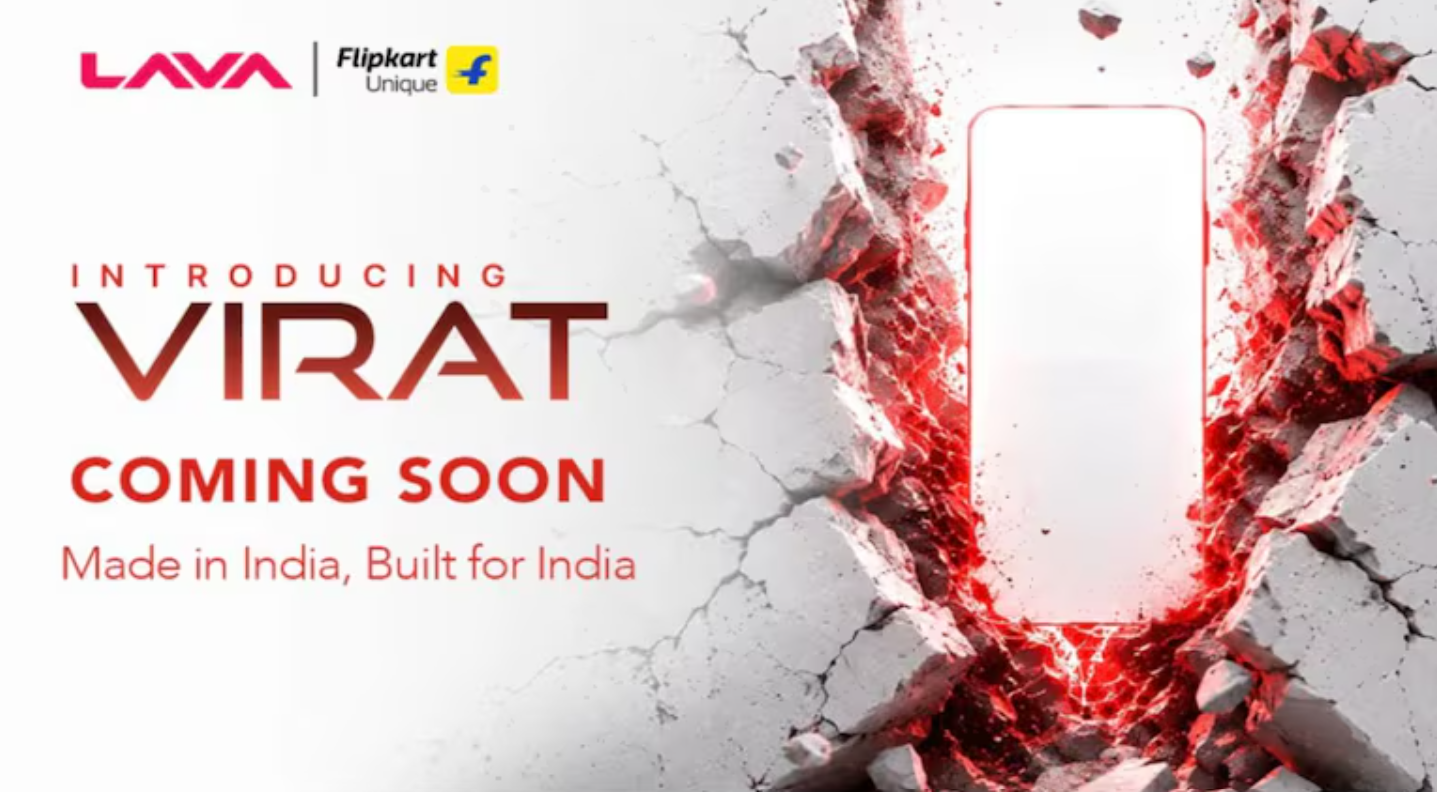
Lava is preparing to launch its new Virat Series in India, and the price band already makes it interesting. The company has confirmed that the phones will sit between Rs. 10,000 and Rs. 25,000, which is one of the busiest and most competitive smartphone segments in the country.
This is the same price range where many Indian buyers look for their first 5G phone, a better camera, longer battery life, smoother display, and clean software without spending flagship-level money. For Lava, the Virat Series could become a fresh online-focused push, especially if the company gets the balance of specs and pricing right.
The important thing to remember is that the full specifications are not official yet. So, this article separates confirmed details from expected features based on current reports, Lava’s recent phones, and what buyers usually demand in this price range.
What has been confirmed so far
The Virat Series has been confirmed for the Indian market and is expected to be sold online, with Flipkart likely playing a key role. The reported price range is Rs. 10,000 to Rs. 25,000.
The series is expected to include both 4G and 5G models. Reports also point toward long battery life and AI camera features as major highlights.
That means Lava may not be launching just one phone. It could bring multiple models under the Virat name, with one aimed at budget buyers and another aimed at users who want a stronger mid-range experience.
This strategy makes sense. A student buying a phone around Rs. 12,000 has different needs from a working professional looking near Rs. 22,000. A series approach allows Lava to cover both.
Why the Virat Series matters for Lava
Lava is one of India’s homegrown mobile brands. The company was founded in 2009 by Vishal Sehgal, Hari Om Rai, Shailendra Nath Rai, and Sunil Bhalla. It is headquartered in Noida and has been trying to rebuild its smartphone image through value-focused devices.
In the last few years, Lava has worked on phones such as the Agni, Blaze, Storm, Yuva and Smart series. The company has also pushed the idea of Indian design, clean Android experience, and better after-sales service.
The Virat Series could help Lava reach buyers who want an Indian smartphone brand but still expect modern features. Today, people do not buy a phone only because it is local. They want performance, camera quality, battery life, updates, display quality, and a fair price.
So, Lava’s challenge is clear. The Virat Series must feel competitive, not just patriotic.
Possible specifications to expect
Since official specs are not fully out, the safest way to look at the Virat Series is by price segment.
For the lower-priced model, likely around Rs. 10,000 to Rs. 13,000, buyers can expect a large display, a 5,000mAh or bigger battery, 4G or entry-level 5G connectivity, and a main camera tuned for social media photos. Lava may also offer 4GB to 6GB RAM with 64GB or 128GB storage.
For the middle model, possibly around Rs. 15,000 to Rs. 18,000, a 5G chipset would make more sense. Buyers in this range now expect a 120Hz display, at least 6GB or 8GB RAM, 128GB storage, fast charging, and a cleaner software experience.
For the top model, closer to Rs. 20,000 to Rs. 25,000, Lava will need to offer stronger hardware. An AMOLED display, 50MP main camera with better image processing, 8GB RAM, 256GB storage option, 5G support, and faster charging would make the phone more attractive.
These are expected features, not confirmed specifications. The real value will depend on what Lava actually announces.
What could be special in this price range
The Virat Series could stand out if Lava focuses on a few things that Indian buyers genuinely care about.
- The first is battery life. Many users want a phone that lasts a full day without stress. If Lava offers a large battery with decent charging speed, it can appeal to students, travellers, delivery workers, shop owners, and office users.
- The second is clean software. Many budget phones come with too many pre-installed apps and unwanted notifications. Lava has a chance to attract buyers by keeping the interface simple and light.
- The third is AI camera support. In this price range, buyers want good photos without learning manual settings. AI scene detection, portrait improvement, night mode, document scanning, and better skin tones can make the camera feel more useful.
- The fourth is after-sales trust. A phone is not only about specs on launch day. Buyers want service if the display breaks, battery weakens, or software causes trouble. Lava can use its local presence to build confidence here.
Practical example for buyers
Imagine a college student who wants a phone for online classes, Instagram, payments, YouTube, and light gaming. A Virat model around Rs. 12,000 or Rs. 13,000 with a big battery and decent camera could be enough.
Now think of a young professional who wants a phone for office calls, 5G data, navigation, UPI, camera, and weekend entertainment. That buyer may look at the Rs. 18,000 to Rs. 22,000 model and expect better display, faster performance, and more storage.
This is why the Rs. 10,000 to Rs. 25,000 range is so important. It covers different users with different needs, but all of them want value.
Competitors Lava will face
The Virat Series will enter a crowded market. In the Rs. 10,000 to Rs. 15,000 range, Lava will face phones from Redmi, Realme, Poco, Samsung, Motorola, iQOO and Tecno.
In the Rs. 15,000 to Rs. 25,000 segment, the competition becomes tougher. Buyers compare 5G performance, AMOLED screens, camera quality, software updates and charging speed. Brands like OnePlus, Nothing, Vivo, Oppo, iQOO, Motorola and Samsung already have strong options here.
Lava’s edge could be clean Android, Indian branding, local service, and aggressive pricing. But it must avoid weak processors or average cameras at the higher end, because buyers in this segment now compare every detail.
What buyers should wait to check
Before buying any Virat Series phone, buyers should wait for the final launch details. The most important things to check will be processor, display type, battery size, charging speed, camera sensor, Android version, update promise, storage type, and service terms.
A phone can look attractive in ads, but daily use depends on small things. Does it heat while gaming? Does the camera work well at night? Are there too many ads in the software? Does the battery remain healthy after months of use? These questions matter more than one big headline feature.
Conclusion with key takeaways
The Lava Virat Series could become an important launch for buyers looking between Rs. 10,000 and Rs. 25,000. The confirmed price range puts it right in the heart of India’s mass smartphone market.
If Lava delivers strong battery life, clean software, useful AI camera features, and reliable 5G options, the Virat Series can become a serious choice for budget and mid-range buyers. But the final judgment should wait until the official specifications, prices, and reviews are out.
Key takeaways
- Lava Virat Series is confirmed for India.
- The expected price range is Rs. 10,000 to Rs. 25,000.
- The series may include both 4G and 5G models.
- Long battery life and AI camera features are expected to be key highlights.
- Lava was founded in 2009 by Vishal Sehgal, Hari Om Rai, Shailendra Nath Rai, and Sunil Bhalla.
- The phones will compete with Redmi, Realme, Poco, Samsung, Motorola, iQOO, Vivo, Oppo, OnePlus and Nothing.
Facts Input and Image- Techgenyz
Disclaimer
This article is based on early reports and available information. Final specifications, price, launch date, sale offers and features may change after Lava’s official announcement. Buyers should check the official product page before making a purchase.
Discover more from Newskart
Subscribe to get the latest posts sent to your email.

Comments are closed.