

BSNL Satellite Phone at Rs. 1.34 Lakh Is Not for Everyone, But It Could Be a Lifesaver Where Mobile Networks Fail


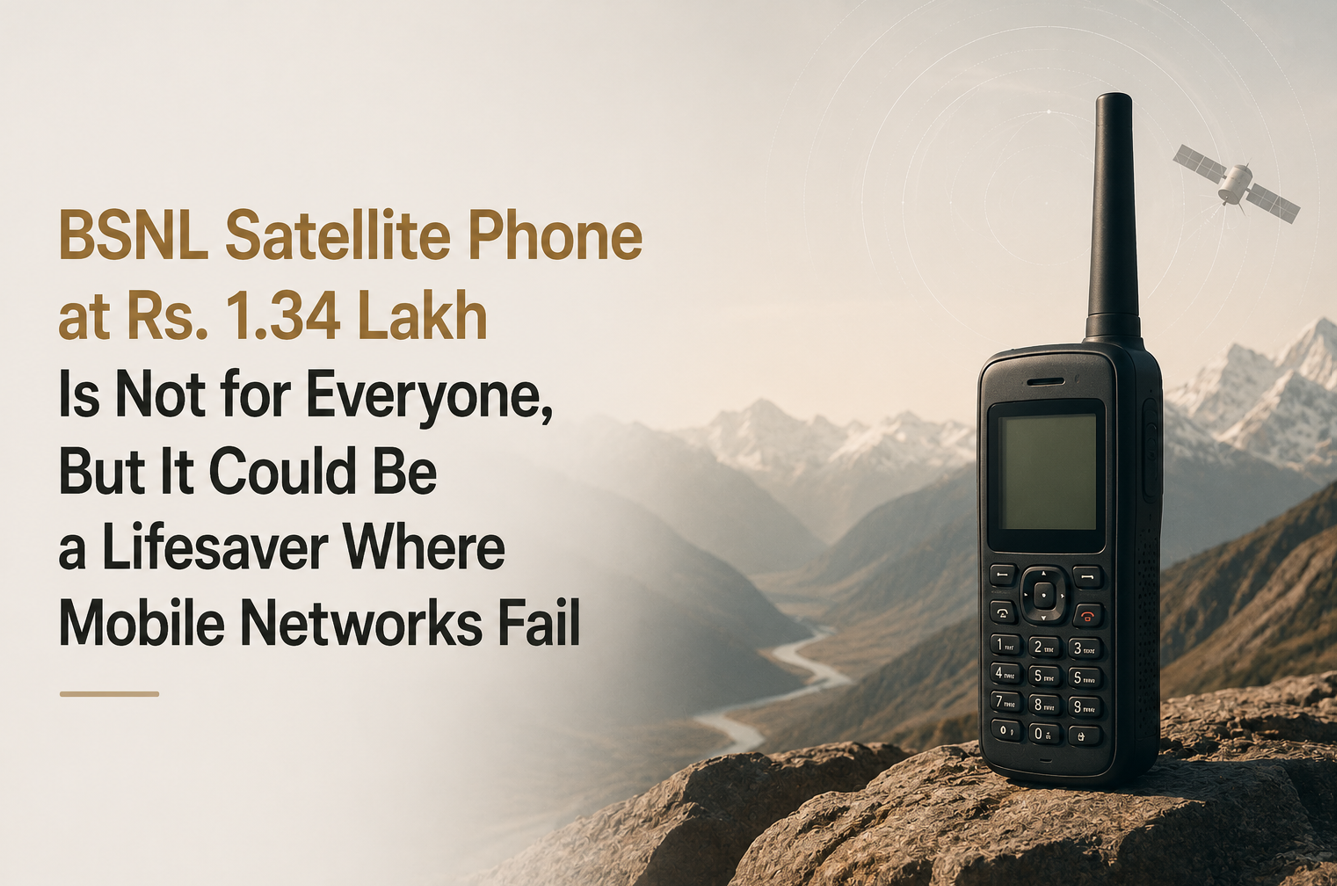
BSNL has introduced a satellite phone in India at a price of around Rs. 1.34 lakh, and the high cost has naturally caught everyone’s attention. At first glance, many people may compare it with premium smartphones. But this device is not trying to compete with an iPhone, Samsung Galaxy, or OnePlus flagship.
A satellite phone is made for a very different purpose. It is built for places where normal mobile towers do not work. That includes deep-sea routes, border regions, disaster-hit areas, forests, remote hills, and emergency zones where regular networks can go down or may not exist at all.
The main value of the BSNL satellite phone is not entertainment, camera quality, gaming, or app performance. Its value is simple – staying connected when every normal network fails.
Why this phone costs Rs. 1.34 lakh
The price may look shocking for a phone that does not offer the usual premium smartphone features. But satellite phones use a different communication system.
A regular mobile phone connects to nearby telecom towers. If there is no tower or the tower is damaged, the phone becomes almost useless for calls. A satellite phone connects through satellite networks, which makes it useful in areas without mobile coverage.
This hardware, satellite access, network support, licensing, and service setup make the device expensive. Reports also suggest that calls may cost around Rs. 18 per minute, which again shows that this is not meant for casual daily calling.
For a normal user in a city, this phone makes little sense. For a disaster response team, a ship crew, a border unit, or a rescue officer, it can be extremely useful.
What makes it special
The biggest special feature is network independence. The phone can work in places where your normal SIM card shows “No Service.”
This can matter during floods, cyclones, landslides, earthquakes, or major power failures. In such situations, mobile towers may stop working. Internet services may go down. Roads may be blocked. A satellite phone can help teams send updates, ask for help, or coordinate rescue work.
It can also be important for maritime users. Fishermen, ship operators, coast guard teams, and offshore workers often travel far away from normal mobile coverage. A satellite phone can become a safety tool in such conditions.
The device is also expected to support voice calling and emergency communication features. Some reports mention SOS support, which can be useful when a user needs quick help in a risky area.
Who can buy or use it
This is the most important point. The BSNL satellite phone is not a mass-market phone for everyone.
In India, satellite phone usage is regulated. These devices are mainly meant for authorized users such as defence personnel, government departments, disaster management teams, maritime users, and approved institutional buyers.
That means a regular consumer may not be able to simply walk into a store and buy one like a normal smartphone. Permission, verification, and service activation rules can apply.
This is because satellite communication can be sensitive from a security point of view. India has strict rules around who can use such devices and how they can be used.
Why India needs satellite phones
India has large cities with strong networks, but it also has many difficult geographies. There are high-altitude areas, islands, forests, coastal zones, deserts, border regions, and flood-prone districts where normal connectivity can be weak.
During disasters, communication is often the first thing that breaks. Rescue teams may struggle to contact control rooms. Local officials may not be able to send real-time updates. Families may not know whether help is coming.
This is where satellite phones can support emergency response.
For example, during a cyclone, a coastal rescue team may lose mobile network access. With a satellite phone, they can still contact the command centre and report their location. In a remote border area, security teams can stay connected even where tower coverage is not available. In deep-sea fishing, communication can help prevent missing boat cases and improve rescue coordination.
How it is different from satellite features in smartphones
Some premium smartphones now offer limited satellite features. But those features are usually designed for emergency messaging, location sharing, or SOS alerts. They are not the same as a full satellite phone.
The BSNL satellite phone is built for direct satellite-based voice communication in difficult conditions. It is closer to a professional emergency device than a lifestyle gadget.
So, comparing it with a premium smartphone is not fully fair. A smartphone is better for apps, camera, display, payments, social media, and daily life. A satellite phone is better when there is no tower, no data signal, and no other way to communicate.
Both products serve different needs.
Competitors and market context
In the wider satellite communication market, global names such as Inmarsat, Iridium, Thuraya, Starlink, OneWeb, and Viasat are well known. But their services and devices differ by country, licensing rules, customer type, and use case.
In India, BSNL has long been linked with government-backed telecom and satellite communication services. Private satellite internet players may become more visible in the coming years, but satellite phones remain a regulated category.
For users, the key question is not only which device is cheaper. The bigger question is whether the service is legally available, reliable in the required region, supported locally, and approved for the user’s purpose.
What are the limitations
The BSNL satellite phone sounds powerful, but it is not perfect.
- First, it is expensive. At Rs. 1.34 lakh, it is clearly not for everyday buyers.
- Second, calling charges are high compared with normal mobile plans.
- Third, it may not offer smartphone-like features. People expecting a big display, high-end camera, app store, gaming, and fast internet will be disappointed.
- Fourth, satellite phones usually need open-sky access for better performance. They may not work well inside buildings, basements, tunnels, or dense covered areas.
- Fifth, usage rules matter. Buyers must follow Indian regulations and service conditions.
Why this launch still matters
Even with these limits, the launch is important. It shows that communication planning in India is moving beyond normal mobile towers.
For a country with a long coastline, disaster-prone states, remote villages, mountain regions, and strategic borders, backup communication is not a luxury. It is a necessity.
This device may not change the life of a city smartphone user. But it can matter deeply for a rescue worker, a sailor, a government officer posted in a difficult area, or a team working where networks are unreliable.
That is the real story of this phone. It is not about being stylish. It is about being reachable.
Conclusion with key takeaways
BSNL’s satellite phone at Rs. 1.34 lakh is a specialized device, not a regular consumer phone. Its high price makes sense only when seen through its actual purpose – communication in areas where normal mobile networks do not work.
For India, such devices can support disaster response, defence communication, maritime safety, remote operations, and emergency coordination.
Key takeaways
- BSNL’s satellite phone is priced at around Rs. 1.34 lakh.
- It is meant for remote areas, maritime use, defence, disaster management, and authorized users.
- The phone can work where normal mobile networks are unavailable.
- Reported call charges are around Rs. 18 per minute.
- It is not designed to compete with premium smartphones.
- Regular consumers may not be able to buy or use it freely due to regulations.
Disclaimer
This article is for informational purposes only. Satellite phone purchase and usage in India may require approval and must follow government rules. Readers should check BSNL’s official terms and applicable regulations before making any decision.
Discover more from Newskart
Subscribe to get the latest posts sent to your email.

Comments are closed.