

PM Modi Flags Off India’s First Hydrogen-Powered Train – How the Technology Works


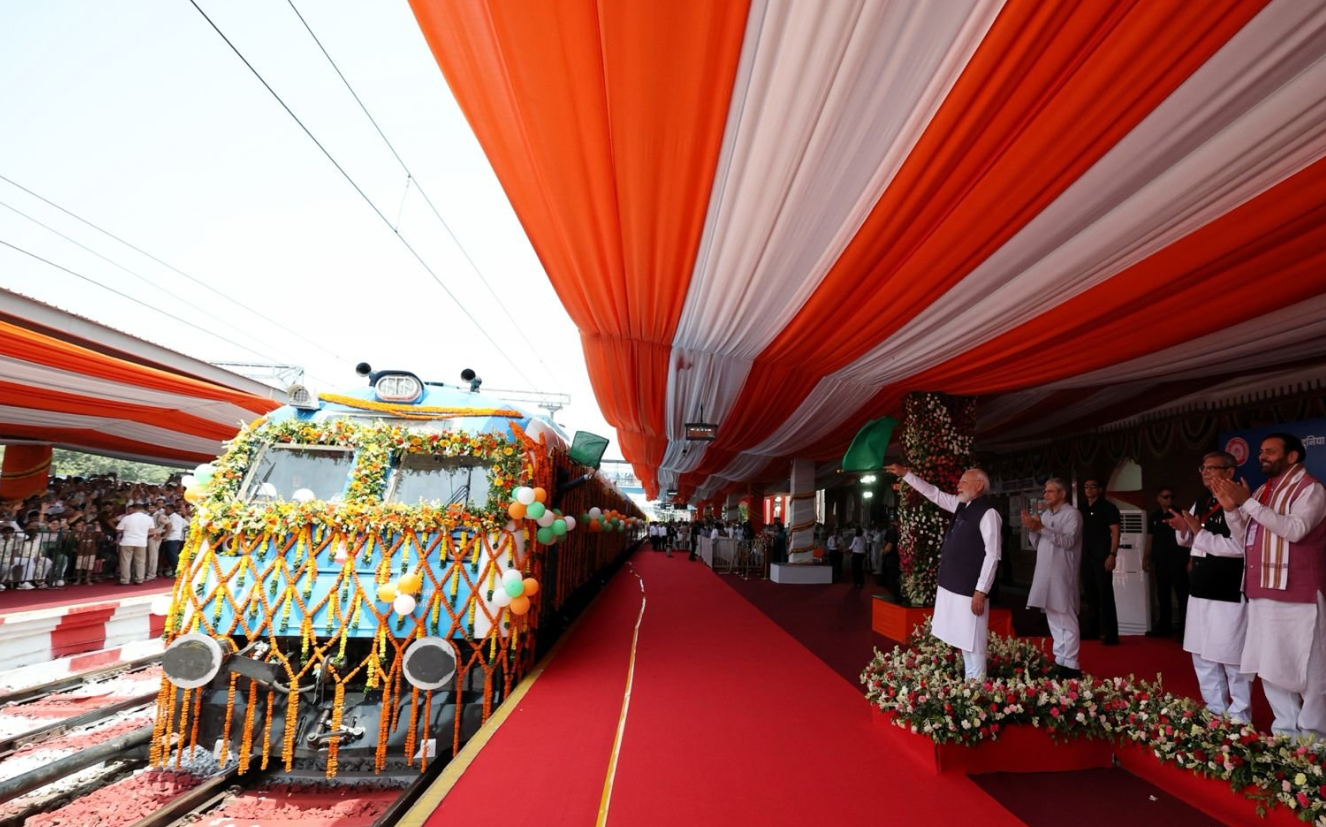
India has taken a big step in clean rail travel with Prime Minister Narendra Modi flagging off the country’s first hydrogen-powered train from Jind in Haryana on July 17, 2026. The train will run on the Jind-Sonipat section of Northern Railway.
This is not a normal diesel train with a new fuel tank. It is a hydrogen fuel cell trainset that generates electricity onboard by using hydrogen and oxygen. The only direct by-products are water vapour and heat, which makes it much cleaner at the point of use than diesel-powered trains.
For Indian Railways, this is also a technology test. If it works well in regular service, hydrogen trains could become useful on routes where full electrification is difficult, expensive or not practical.
What is India’s first hydrogen-powered train
India’s first hydrogen train is a 10-coach trainset. It has two Hydrogen Driving Power Cars and eight passenger trailer coaches.
Each power car carries fuel cells, batteries and hydrogen storage cylinders. Together, the two power cars generate enough power to move the full trainset.
The train will initially operate on the 89-km Jind-Sonipat route in Haryana. It will connect Jind Junction, Gohana Junction and Sonipat, along with intermediate stations and halts.
Indian Railways says the train has an operational speed of 75 kmph on this route and a design speed of 110 kmph. It has a passenger capacity of around 2,600, making it among the larger hydrogen passenger trainsets globally.
How hydrogen train technology works
A hydrogen train works like an electric train, but with one major difference. Instead of drawing electricity from overhead wires, it produces electricity onboard.
The train stores hydrogen in special cylinders. Inside the fuel cell, hydrogen reacts with oxygen from the air. This reaction creates electricity, which powers the traction motors and moves the train.
The process does not burn fuel like a diesel engine. There is no smoke from combustion. The direct output is water vapour and heat.
India takes a major leap towards green mobility!
In Jind, flagged off India’s first indigenous hydrogen-powered train between Jind and Sonipat.
This remarkable achievement reflects the ingenuity and dedication of the Indian Railways team. It is a proud symbol of Aatmanirbhar… pic.twitter.com/hVo89u5vvI
— Narendra Modi (@narendramodi) July 17, 2026
A simple way to understand it
- Hydrogen plus oxygen creates electricity
- Electricity powers the train motors
- The train moves
- Water vapour comes out as the by-product
The train also uses batteries. These batteries help manage power demand, store energy and support smoother operation when the train accelerates or needs extra power.
Where does the hydrogen come from
For this project, Indian Railways has built a hydrogen refuelling facility at Jind. The facility produces hydrogen through electrolysis.
Electrolysis means using electricity to split water into hydrogen and oxygen. The hydrogen is then stored, compressed and filled into the train.
The Jind facility can compress hydrogen to high pressure and refuel both power cars. According to official information, the storage and supply system has approval from the Petroleum and Explosives Safety Organization.
This is important because the train is not just a vehicle launch. It also creates India’s first integrated hydrogen railway ecosystem, with production, storage, compression and refuelling at one place.
Why hydrogen trains matter
Hydrogen trains can help reduce dependence on diesel.
Indian Railways has already electrified most broad-gauge routes, but some sections may still need alternative clean solutions. Hydrogen trains can be useful where overhead electric lines are difficult or where the route does not justify heavy electrification cost.
They are also quieter and cleaner at the point of use. For passenger routes, heritage lines and regional sections, this can make travel less polluting and more modern.
Hydrogen trains also support India’s National Green Hydrogen Mission and the country’s long-term net-zero goals.
Safety systems on the train
Hydrogen is highly flammable, so safety is the first question people ask. Indian Railways says the train and refuelling system have multi-layer safety systems.
The train has sensors to detect hydrogen leaks, heat, flames and smoke. It also has ventilation systems so hydrogen does not collect in one place if there is a small leak.
There are automatic shut-off systems that can cut hydrogen supply if something unusual is detected. The loco pilot gets system health information on a screen, which helps monitor the train during operation.
The hydrogen ecosystem has also gone through third-party safety assessment. Official information says the system follows international safety standards and was assessed by TÜV SÜD, Germany.
How it compares with diesel and electric trains
A diesel train burns fuel and releases emissions from the engine. It can run without overhead wires, but it adds pollution and fuel cost.
A regular electric train draws electricity from overhead lines. It is efficient and widely used in India, but it needs fixed electrification infrastructure.
A hydrogen train sits between these two ideas. It runs like an electric train but carries its own power source. It does not need overhead wires for traction power, and it avoids diesel exhaust.
The limitation is that hydrogen production, storage and refuelling infrastructure must be built carefully. It is cleaner only when the hydrogen is produced using clean energy.
Global context
Hydrogen trains are still new across the world. Germany was among the first countries to run commercial hydrogen passenger trains. Countries such as France, China, Japan and Italy have also explored hydrogen rail projects.
India’s train stands out because of its scale. Many hydrogen trains abroad are smaller regional trainsets. India’s 10-coach configuration shows that Indian Railways wants to test hydrogen for higher-capacity passenger operations, not just short demonstrations.
Benefits for passengers and the environment
For passengers, the travel experience may feel similar to a modern electric train. The bigger benefit is behind the scenes – cleaner propulsion and lower local emissions.
For the environment, the main gain is reduced diesel use and no direct carbon emissions from the train while running. If green hydrogen is used, the overall climate benefit becomes stronger.
For Indian Railways, the project builds technical knowledge. Engineers, operators and maintenance teams will learn how hydrogen trains behave in real Indian conditions.
Challenges ahead
Hydrogen trains are promising, but they are not simple.
Hydrogen needs careful storage at high pressure. Refuelling stations cost money. Maintenance teams need training. Safety systems must work all the time.
Cost will also matter. If hydrogen remains expensive, the technology may be used only on selected routes. The real test will be whether Indian Railways can make hydrogen trains reliable, safe and economical over time.
Conclusion – Key takeaways
PM Modi’s flag-off of India’s first hydrogen-powered train on the Jind-Sonipat route is a major clean mobility milestone for Indian Railways.
The train uses hydrogen fuel cells to generate electricity onboard, with water vapour as the main direct by-product. It has 10 coaches, two hydrogen power cars, a 75 kmph operational speed on the route, and safety systems for leak, heat, flame and smoke detection.
This is still an early step, but it is an important one. If the Jind-Sonipat project proves successful, hydrogen trains could become a useful clean option for selected railway routes in India.
Facts Input- PMIndia, PBI-Gov, PIB-Gov Rail,
Image Credit- X
Discover more from Newskart
Subscribe to get the latest posts sent to your email.

Comments are closed.