

Maruti Suzuki And Hero MotoCorp Bring Flex-Fuel Vehicles To India, A Cleaner Road Ahead Begins


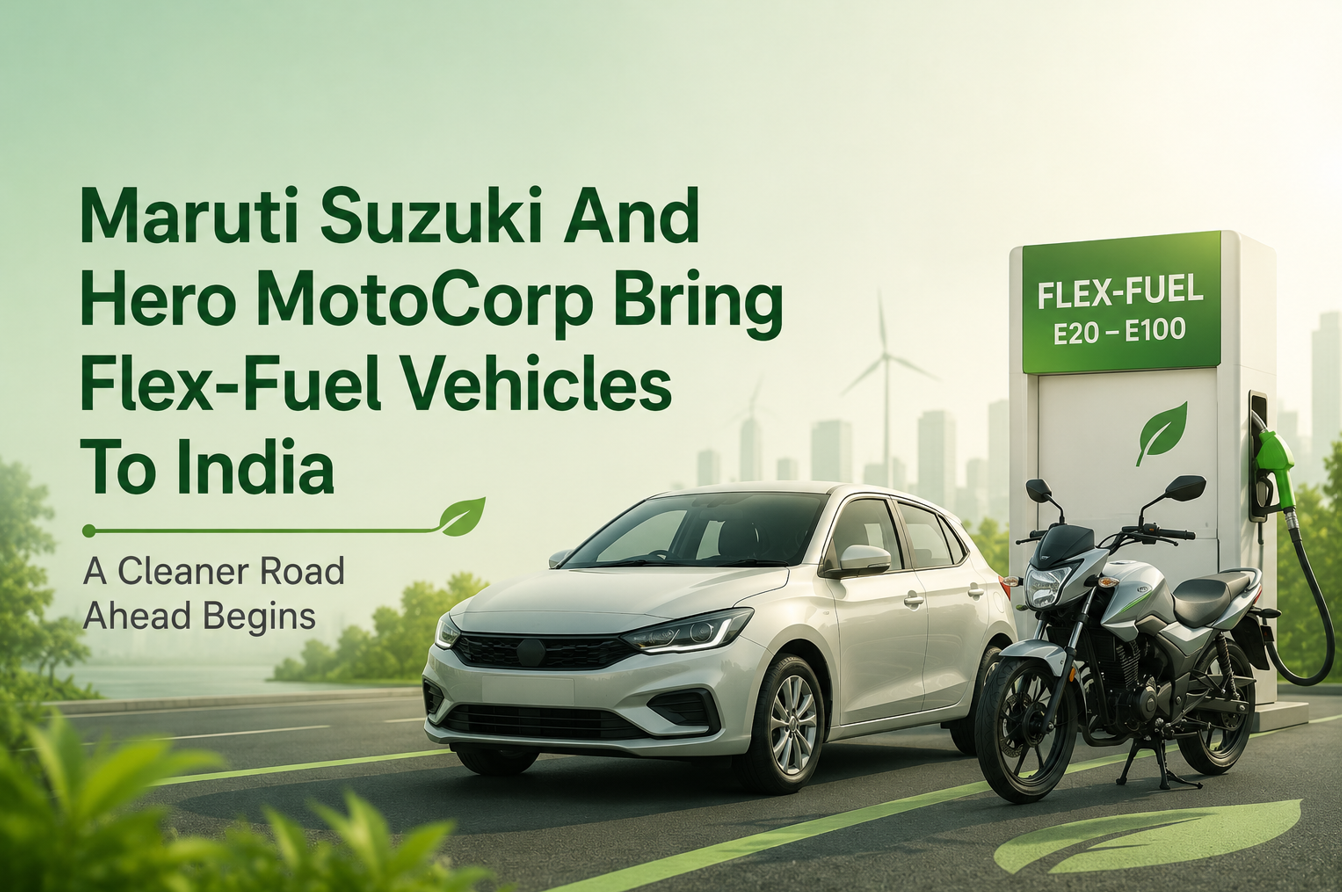
India’s clean mobility story is no longer only about electric vehicles. Flex-fuel vehicles have now entered the mainstream conversation, with Maruti Suzuki launching the Wagon R Flex Fuel and Hero MotoCorp introducing flex-fuel versions of the Splendor+ and HF Deluxe. This is an important shift because these are not luxury products or niche experiments. Wagon R, Splendor+ and HF Deluxe are familiar mass-market names. They are used by families, office-goers, delivery riders, small business owners and daily commuters across India.
The idea is simple. If cleaner fuel technology reaches everyday vehicles, the environmental impact can become much larger than a few premium launches. That is why this moment matters.
What are flex-fuel vehicles
A flex-fuel vehicle can run on different blends of petrol and ethanol. Ethanol is a biofuel usually made from crops and biomass such as sugarcane, maize and other agricultural sources. In India’s case, the big talking point is E85, which means fuel with up to 85 percent ethanol blended with petrol. Maruti Suzuki says its Wagon R Flex Fuel can work with blends from E20 to E100, though it is homologated around the E85 framework under current rules. Hero’s new flex-fuel motorcycles support blends from E20 to E85.
For a regular buyer, this means the vehicle does not need only one fixed fuel type. It can adjust to different ethanol-petrol blends through engine and electronic control changes.
Maruti Suzuki Wagon R Flex Fuel – India’s first flex-fuel car
Maruti Suzuki launched the Wagon R Flex Fuel on June 4, 2026, in New Delhi. The company calls it India’s first flex-fuel car, and it has introduced the technology in one of its most popular family hatchbacks. This choice is smart. Wagon R is not an image-only model. It is a practical city car with wide recognition, especially among budget-conscious buyers. By putting flex-fuel technology in Wagon R, Maruti is testing the idea where India’s real car market lives.
The car has been engineered for ethanol-blended fuel compatibility. Its engine control unit can adjust to different fuel blends, which is important because ethanol behaves differently from petrol. The final customer response will depend on price, fuel availability, mileage, running cost and long-term reliability.
Hero MotoCorp’s flex-fuel motorcycles – Splendor+ and HF Deluxe
Hero MotoCorp unveiled the Splendor+ Flex Fuel and HF Deluxe Flex Fuel on June 3, 2026. These are India’s first flex-fuel motorcycles in the 100cc commuter segment. The HF Deluxe Flex Fuel has been reported at Rs. 72,792 ex-showroom Delhi, while the Splendor+ Flex Fuel is priced at Rs. 82,710 ex-showroom Delhi. The bikes are expected to be introduced first in Delhi and selected parts of Maharashtra in July 2026, followed by a wider rollout.
This is a major development because India is a two-wheeler country. Millions of people depend on commuter bikes for daily travel. If flex-fuel technology works well in this segment, it could reach more households than many expensive clean mobility options.
Why this matters for the environment
The environmental promise of flex fuel comes from replacing part of petrol with ethanol. Petrol is fossil fuel. Ethanol, when produced responsibly, can reduce dependence on crude oil and lower some emissions. The government has also linked ethanol adoption with energy security and farmer income. More ethanol demand can create a larger market for agricultural produce and biomass. That is why policymakers often describe this as a fuel, farming and environment story together.
There is another practical angle. India cannot depend on only one clean mobility solution. Electric vehicles are growing, but charging infrastructure, battery costs and range concerns still matter for many buyers. CNG is useful, but not available everywhere. Hybrids are efficient, but can be costly. Flex fuel gives India one more route.
The fuel station challenge
The biggest challenge is not just building flex-fuel vehicles. It is making the right fuel available. According to the Petroleum Ministry, the early plan is to roll out 50 to 100 flex-fuel-ready retail outlets in corridors such as Delhi-NCR and Mumbai-Pune-Nagpur. The plan is to expand this to nearly 500 outlets by December 2026 and about 5,000 outlets across major cities by the end of 2027.
This rollout will decide how quickly people adopt these vehicles. A buyer will not choose a flex-fuel car or bike only for the badge. They need confidence that E85 or suitable ethanol fuel will be available nearby, priced sensibly and dispensed safely.
A simple example explains this. If a rider buys a Splendor+ Flex Fuel in Delhi but travels regularly to a town where E85 is unavailable, the benefit becomes limited. Fuel availability must grow along with vehicle launches.
Competitors and market response
Maruti Suzuki and Hero MotoCorp have taken the first big mass-market step, but they will not be alone for long if the fuel ecosystem improves. Toyota has already shown flex-fuel hybrid prototypes in India, including the Innova Hycross-based concept. Honda has demonstrated flex-fuel motorcycle technology earlier. Other two-wheeler and carmakers such as TVS, Bajaj, Tata Motors, Mahindra, Hyundai and Kia may also study the market carefully before bringing similar products.
The competition will not be only about who launches first. It will be about who offers the best mix of price, mileage, service support, engine durability and fuel flexibility.
Future possibilities for India
Flex fuel can become especially useful in India’s smaller towns and rural regions if ethanol supply chains are built well. Farmers can benefit from stronger demand for ethanol feedstock, while consumers may get another fuel option. It may also support India’s goal of reducing crude oil imports. India imports a large share of its crude requirement, so even partial substitution with domestic ethanol can help at scale.
In the long run, we may see flex-fuel cars, bikes, hybrids and commercial vehicles. Fleet operators, taxi users and delivery networks could also explore the technology if running costs are attractive.
Still, flex fuel is not magic. Ethanol production must be sustainable. Water use, crop planning, food security, pricing and storage infrastructure need careful handling. The clean mobility future will work only if the full chain is managed responsibly.
Conclusion with key takeaways
Maruti Suzuki and Hero MotoCorp’s flex-fuel launches mark a serious new chapter for India’s transport sector. By choosing mass-market models like Wagon R, Splendor+ and HF Deluxe, both companies are taking cleaner fuel technology closer to everyday users.
Key takeaways
- Maruti Suzuki launched the Wagon R Flex Fuel as India’s first flex-fuel passenger car.
- Hero MotoCorp unveiled the Splendor+ Flex Fuel and HF Deluxe Flex Fuel in the 100cc commuter motorcycle segment.
- These vehicles can run on higher ethanol-petrol blends, helping reduce petrol dependence.
- The success of flex-fuel mobility will depend heavily on E85 fuel availability, pricing and public awareness.
Flex fuel can support cleaner mobility, farmer income and India’s energy security, but it must grow with responsible ethanol production.
Discover more from Newskart
Subscribe to get the latest posts sent to your email.

Comments are closed.