

Maruti Suzuki’s First Flex-Fuel Car Is Coming On June 5, And Wagon R Looks Like The Strong Bet


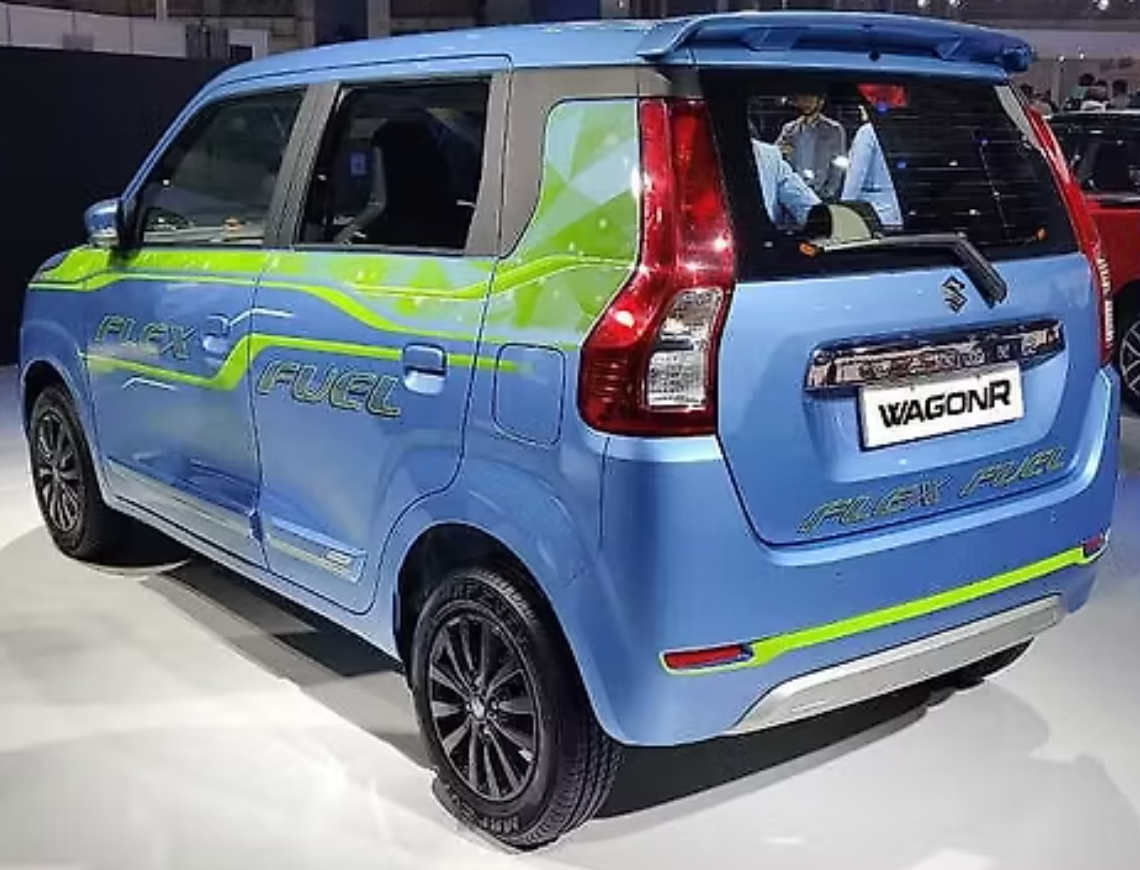
Maruti Suzuki is preparing for a big alternative-fuel moment in India. As per reports, Union Minister Nitin Gadkari has said that Maruti Suzuki will launch a flex-fuel passenger vehicle on June 5, 2026, which is World Environment Day. If the launch goes as expected, it could become India’s first mass-market car designed to run on very high ethanol fuel blends, possibly even E100.
For everyday buyers, this sounds exciting but also slightly confusing. Is it an electric car? Is it cheaper to run than petrol? Will it give the same mileage? And most importantly, which Maruti model will it be?
The strongest guess right now is the Maruti Suzuki Wagon R flex fuel. Maruti had already showcased a Wagon R Flex Fuel prototype in 2022, and that car was designed for ethanol-petrol blends from E20 to E85. Some reports also mention the Fronx as a possibility, but Wagon R looks more likely because it fits the “mass-market” idea better.
What Is A Flex-Fuel Vehicle
A flex-fuel vehicle is a car that can run on petrol as well as ethanol-blended petrol. In simple words, it gives the engine more flexibility in fuel choice.
Normal petrol cars in India are now being made compatible with E20, which means petrol blended with 20 percent ethanol. A flex-fuel car can go much higher. Depending on the engine and fuel system, it can support blends such as E85 or even E100.
E100 means 100 percent ethanol. Ethanol is usually produced from crops such as sugarcane, maize, and other feedstock. India is promoting ethanol because it can reduce crude oil imports, support farmers, and lower some emissions.
But flex-fuel technology is not just about pouring ethanol into a normal petrol engine. The car needs upgraded engine parts, fuel injectors, sensors, fuel lines, and engine software. Ethanol behaves differently from petrol, so the car must constantly understand the fuel mix and adjust combustion.
Which Model Could Maruti Launch
The most practical answer is Wagon R.
Maruti Suzuki unveiled the Wagon R Flex Fuel prototype in December 2022. That prototype was locally developed in India with support from Suzuki Motor Corporation, Japan. It had changes such as an ethanol sensor, heated fuel rail for cold starts, upgraded fuel pump, upgraded injectors, and engine control changes.
This is why Wagon R looks like the natural candidate for the June 5 launch. It is affordable, popular, spacious, and already has a strong mass-market image. If India wants flex-fuel vehicles to move beyond auto expos and policy events, a car like Wagon R makes sense.
The Fronx is also being discussed because Suzuki has shown flex-fuel interest globally and the Fronx is a newer, more premium product. But if the goal is India’s first mass-market flex-fuel car, Wagon R has the clearer logic.
How Efficient Would It Be
This is the most important question for buyers.
Ethanol has lower energy content than petrol. That means one litre of ethanol usually gives less driving range than one litre of petrol. So if a car runs on E100, its kilometre-per-litre figure may be lower than the same car running on petrol.
NITI Aayog’s ethanol blending roadmap says E20 can reduce fuel efficiency by around 6-7 percent in older four-wheelers designed for E0 and calibrated for E10. For vehicles designed and tuned for E20, the loss can be much lower, around 1-2 percent. For E100, industry inputs in the same roadmap suggested fuel efficiency may be more than 30 percent lower than petrol in a comparable engine.
So, if a petrol Wagon R gives around 24 kmpl under official test conditions, an E100 version may not deliver the same kmpl number on pure ethanol. A rough real-world expectation could be that the ethanol mileage is lower, but the running cost will depend on ethanol pricing.
That last part matters. If E100 is priced much cheaper than petrol, the lower mileage may still be acceptable. If ethanol is only slightly cheaper, buyers may not feel a strong saving.
The good part is that Maruti’s earlier Wagon R Flex Fuel prototype claimed similar power performance when running on E85. Maruti also said the prototype running on E85 could reduce tailpipe greenhouse gas emissions by 79 percent compared with a conventional petrol Wagon R. That is a strong environmental claim, though real-world results will depend on fuel quality, driving style, and the final production tuning.
Why This Launch Matters For India
India has already moved quickly on ethanol blending. The government earlier targeted 20 percent ethanol blending by 2030, then advanced the target to 2025-26. Official updates say India achieved major blending milestones ahead of schedule.
The next challenge is not just blending ethanol into petrol. It is about vehicles that can handle higher ethanol blends properly. A Maruti Suzuki flex-fuel vehicle can help create confidence among buyers because Maruti is India’s largest carmaker by volume and has a huge service network. If Maruti can make flex-fuel ownership simple, other brands may follow faster.
This is also important for small-car buyers. Electric cars are improving, but they are still costly for many Indian families. Flex-fuel vehicles could become another route for cleaner mobility, especially if the price premium is controlled and ethanol availability improves.
What Buyers Should Watch Before Getting Excited
The launch will be important, but buyers should wait for some details.
- First, Maruti must confirm the exact model. If it is Wagon R, the pricing will decide how mass-market it really is.
- Second, the official fuel compatibility range matters. Will it support E20 to E85, or full E100? These are not the same thing.
- Third, fuel availability will be a real concern. A flex-fuel car is useful only if high-ethanol fuel is available at pumps in enough cities.
- Fourth, Maruti must clearly explain warranty terms, service intervals, and mileage expectations. Ethanol can need different engine and fuel-system protection, so buyers will want clarity.
Competitors And Market Context
Maruti will not be the only company exploring ethanol. Toyota has already showcased flex-fuel technology in India, including an Innova Hycross flex-fuel prototype. Tata Motors and Mahindra have also been part of India’s broader alternative-fuel push, though mass-market E100 cars are still at an early stage.
Globally, Brazil is the best-known flex-fuel market. Many cars there can run on ethanol or petrol because ethanol supply is widely available and consumer acceptance is mature. India is trying to build a similar ecosystem, but it will take time.
For now, Maruti’s biggest advantage is scale. If it launches a flex-fuel Wagon R at a sensible price, it can make the technology feel less experimental.
Conclusion With Key Takeaways
Maruti Suzuki’s June 5, 2026 flex-fuel launch could become a turning point for India’s ethanol mobility plan. The most likely model is the Wagon R, mainly because Maruti already developed and showcased a Wagon R Flex Fuel prototype earlier.
The car may support high ethanol blends and possibly E100, but its real success will depend on price, fuel availability, mileage, and running cost. Ethanol can reduce emissions, but it usually gives lower kmpl than petrol, especially at very high blends.
Key takeaways
- Maruti Suzuki is expected to launch or unveil a flex-fuel vehicle on June 5, 2026.
- The likely model is the Maruti Wagon R flex fuel.
- The car may support high ethanol blends, possibly up to E100.
- E100 mileage may be lower than petrol, so fuel price will decide real savings.
Toyota, Tata, and Mahindra may also become important players in India’s flex-fuel vehicle market.
Facts Input- BS, Niti Aayog
Discover more from Newskart
Subscribe to get the latest posts sent to your email.

[…] Suzuki launched the Wagon R Flex Fuel on June 4, 2026, in New Delhi. The company calls it India’s first flex-fuel car, and it has […]