


India’s space sector is growing beyond rockets and satellite launches. A large part of the work now happens in the systems that help satellites move, adjust their orbit, avoid collisions, and complete their missions safely.
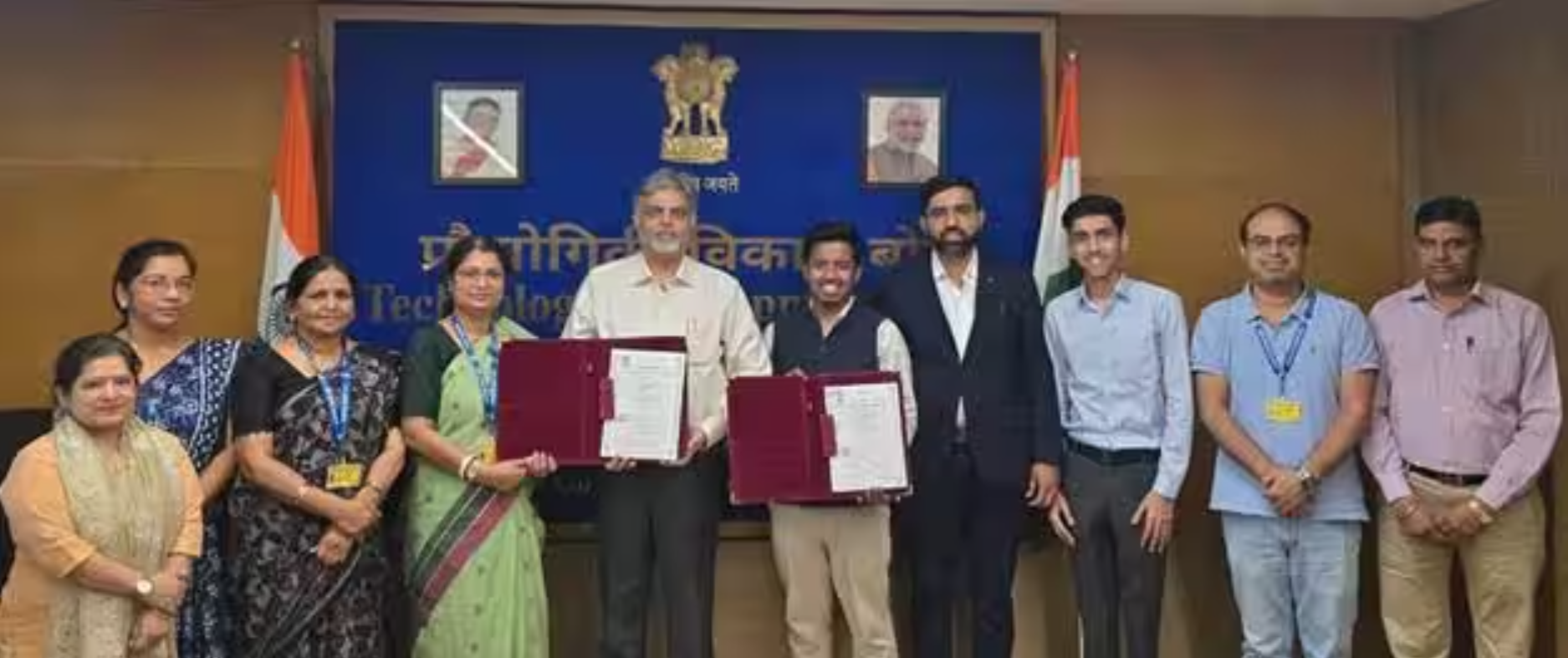
Navi Mumbai-based Manastu Space has received Rs. 116 crore in financial support from the Technology Development Board under the Department of Science and Technology. The support will help the startup develop indigenous green propulsion technology for satellites and launch vehicles.
The project is more than a funding milestone. It is aimed at making satellite propulsion safer, more practical, and less dependent on imported technology.
What Manastu Space is building
Manastu Space develops propulsion systems for satellites, launch vehicles, orbital transfer vehicles, and landers. In simple terms, propulsion is the system that gives a spacecraft the controlled push needed to move or change direction in space.
The company is working on a hydrogen peroxide-based green propellant with additives, along with engines, propellant feed systems, and a high-temperature ceramic catalyst. Traditional spacecraft fuels can create handling and safety challenges. Manastu’s approach is designed to reduce those operational difficulties while improving performance and cost efficiency.
Its system is planned for applications between 5 millinewtons and 300 newtons of thrust. That range covers small satellite needs as well as larger propulsion requirements.
For example, a small satellite may need a gentle push to correct its orbit. A stronger propulsion system may be needed for a launch vehicle or to move a satellite into a planned position. Manastu is trying to build one scalable platform for these different uses.
The story behind the startup
Manastu Space was founded in 2017 by Tushar Jadhav and Ashtesh Kumar, both IIT Bombay alumni.
Jadhav serves as co-founder and chief executive officer, while Kumar is the co-founder and chief technology officer.
The company began with a focus on replacing hazardous satellite fuels with safer alternatives. Over the years, it has moved from laboratory research to ground tests and in-space demonstrations.
According to the company, its green propulsion system was tested in space during the Adyanta mission on ISRO’s PSLV-C60 mission. That matters because space technology must prove that it can work outside controlled laboratory conditions.
How the Rs. 116 crore support will be used
The Rs. 116 crore support comes through the government’s Research Development and Innovation Fund. The total project cost is Rs. 277.63 crore.
This is not a standard grant. The support will be provided as optionally convertible debt, a form of financing that can function as debt and may be converted into equity under agreed terms.
The project will focus on further engineering, system integration, testing, and validation. Its goal is to move Manastu’s propulsion technology from Technology Readiness Level 6 to Level 9.
In plain language, this means taking an advanced working prototype toward a system that is proven for real operational use. The company wants to improve reliability and prepare the technology for wider use in satellites and launch vehicles.
Competition and the larger opportunity
Manastu Space operates in a developing Indian space-tech market that includes companies such as Bellatrix Aerospace, which also works on satellite propulsion technology.
The competition is not limited to building a powerful thruster. Companies need to prove safety, reliability, price, and the ability to manufacture at scale. Satellite makers also need systems that fit their missions without adding unnecessary weight or complexity.
Government support can help deep-tech companies handle the long testing cycles involved in space hardware. Unlike a consumer app, a propulsion system cannot be rushed into the market after a few software updates. It needs repeated testing and mission-level proof.
Discover more from Newskart
Subscribe to get the latest posts sent to your email.
