

Intel Arc G3 Chips Aim To Make Windows Handheld Gaming Faster, Smarter, And More Console-Like, Lets Explore


Intel is finally taking handheld gaming PCs seriously. The company has introduced its new Intel Arc G3 chips, a processor family made for Windows gaming handhelds rather than regular laptops. That is important because handhelds need a different balance of power, heat, battery life, and graphics performance.
Until now, AMD has been the stronger name in this space. Devices like the Asus ROG Ally, Lenovo Legion Go, and many smaller handheld PCs have used AMD Ryzen Z-series chips. Intel entered with the MSI Claw earlier, but the first generation did not fully shake the market. Arc G3 is Intel’s bigger second push, and this time the chip is designed around the handheld form factor from the beginning.
The first devices using Intel Arc G3 chips are expected to include Acer Predator Atlas 8, MSI Claw 8 EX AI+, and a new OneXPlayer handheld. Intel says systems will start rolling out from OEM partners in June 2026, with wider availability through the year.
What Are Intel Arc G3 Chips
Intel Arc G3 is a new handheld-focused processor family based on Intel’s Panther Lake platform. It comes in two versions – Intel Arc G3 and Intel Arc G3 Extreme. Both chips are mobile processors, but the branding is different from Intel’s usual Core Ultra laptop line. The idea is simple. Intel wants gamers to see Arc G-Series as a chip made for portable PC gaming, not a laptop chip reused inside a smaller body.
The standard Intel Arc G3 has 14 CPU cores, made up of 2 performance cores, 8 efficiency cores, and 4 low-power efficiency cores. It has a maximum turbo frequency of up to 4.60 GHz and uses Intel Arc B370 graphics with 10 Xe cores.
The higher-end Intel Arc G3 Extreme also has 14 CPU cores, but it clocks slightly higher at up to 4.70 GHz. Its bigger advantage is graphics. It uses Intel Arc B390 graphics with 12 Xe cores, which should make it the more attractive option for premium handhelds.
Why It Matters For Handheld Gaming
A handheld gaming PC is not like a laptop. It has less room for cooling, a smaller battery, and a screen that is usually held close to the face. That means raw performance is not enough. The chip must run games smoothly without draining the battery too quickly or making the device uncomfortable to hold.
This is where Intel is trying to position Arc G3. The chips support a configurable power range, with the standard Arc G3 listed at 8W to 30W and the Arc G3 Extreme listed at 8W to 35W. In practical terms, this lets device makers tune performance based on the handheld’s cooling system and battery size.
For example, a slim handheld may run the chip at a lower power level to improve battery life. A thicker premium model with better cooling may allow higher performance for demanding games. This flexibility matters because not every handheld buyer wants the same thing. Some want longer playtime, while others want higher frame rates.
The Technology Behind Arc G3
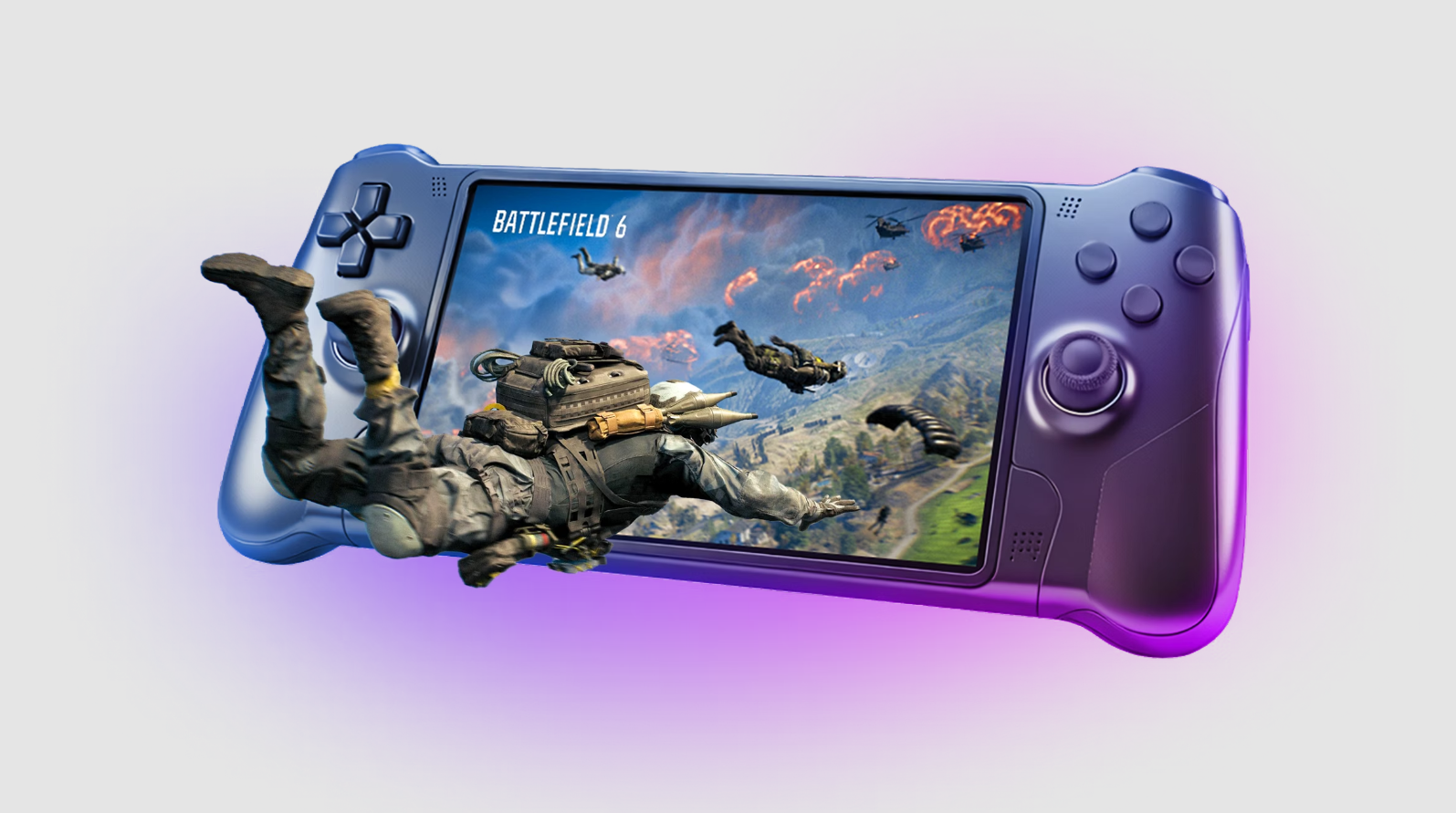
The biggest upgrade is the graphics side. Intel Arc G3 uses Intel’s newer Xe3 graphics architecture. It supports DirectX 12 Ultimate and ray tracing, which means it can handle modern game effects such as better lighting, shadows, and reflections.
But the feature Intel will talk about most is XeSS 3. This is Intel’s AI-powered performance technology. It includes upscaling, multi-frame generation, and low-latency tools.
Upscaling means the game can render at a lower internal resolution and then use AI to make the image look sharper on the screen. This helps improve frame rates. Multi-frame generation adds extra generated frames between real frames to make motion look smoother. Low-latency technology tries to keep controls responsive, so the game does not feel delayed.
This is especially useful on handhelds because small devices cannot always push native high-resolution gaming at high settings. A feature like XeSS 3 can help games look smoother without forcing the chip to work as hard all the time.
Xbox Mode And A More Console-Like Experience
One of the most interesting parts of Intel’s announcement is Xbox Mode for Windows 11 handhelds. Windows handhelds are powerful, but the software experience has often felt less smooth than a console. Users may need to deal with desktop menus, launchers, settings, and small touch targets.
Xbox Mode is meant to give Windows handhelds a more controller-friendly full-screen experience. It brings installed games together in a console-style interface, making the device feel easier to use from the couch, bed, or while travelling.
This could be a big deal. Many buyers do not only want higher frame rates. They want the handheld to feel simple. If Intel, Microsoft, and device makers can make Windows handhelds easier to operate, the category could become more attractive to casual gamers too.
Other Useful Features
Intel Arc G3 chips also support Wi-Fi 7, dual Bluetooth 6, and Thunderbolt 4. These may sound like spec-sheet extras, but they matter in real use.
Wi-Fi 7 can help with faster downloads and lower-latency online gaming, if the user has a compatible router. Thunderbolt 4 gives handheld makers the option to support fast storage, docks, monitors, and other accessories. A user could play handheld on the go, then connect the same device to a monitor and use it like a small gaming PC at home.
Intel also mentions precompiled shaders. In simple English, this can reduce the waiting and stutter that sometimes happen when a game prepares visual data. If supported properly, it can make some games load faster and feel smoother.
Competitors Intel Has To Beat
Intel’s biggest rival is AMD. The Ryzen Z1, Z1 Extreme, and newer Ryzen Z2 series have become common choices for handheld gaming PCs. AMD also has strong support from brands like Asus, Lenovo, and other handheld makers.
Valve’s Steam Deck is another major reference point, even though it uses a custom AMD chip and runs SteamOS. It may not always win on raw specs, but it offers a polished gaming experience and strong software integration. That is something Windows handhelds still need to improve.
Qualcomm could also become a future competitor if Arm-based Windows gaming improves. For now, though, the real battle is Intel Arc G3 versus AMD Ryzen Z-series chips.
Who Should Care About Intel Arc G3
Intel Arc G3 is mainly for people looking to buy a new premium Windows handheld in 2026. If you already own a Steam Deck or ROG Ally and are happy with it, this is not an automatic upgrade. Real-world reviews will matter.
But if you want a handheld that can run PC games, connect to external displays, support modern AI upscaling, and feel more like a console through Xbox Mode, Arc G3 devices may be worth watching.
The key questions will be battery life, heat, fan noise, price, and driver quality. Intel’s hardware looks promising on paper, but handheld gaming is unforgiving. A chip can have strong specs and still feel average if the software tuning is weak.
Conclusion With Key Takeaways
Intel Arc G3 chips show that Intel wants a serious place in the handheld gaming market. The company is not only adding better graphics. It is also focusing on power tuning, AI upscaling, Xbox Mode, day-zero drivers, Wi-Fi 7, and Thunderbolt 4.
The standard Arc G3 may suit more balanced handhelds, while Arc G3 Extreme is likely for premium devices that want stronger graphics performance. With Acer, MSI, and OneXPlayer already lined up, 2026 could become a more competitive year for handheld PCs.
Key takeaways
- Intel Arc G3 chips are built specifically for Windows handheld gaming PCs.
- The lineup includes Intel Arc G3 and Intel Arc G3 Extreme.
- Arc G3 Extreme gets stronger Intel Arc B390 graphics with 12 Xe cores.
- XeSS 3 can help improve frame rates and smoothness in supported games.
AMD remains the main competitor, so real-world reviews will decide how strong Arc G3 really is.
Facts Input- Intel Newsroom
Discover more from Newskart
Subscribe to get the latest posts sent to your email.

Comments are closed.