


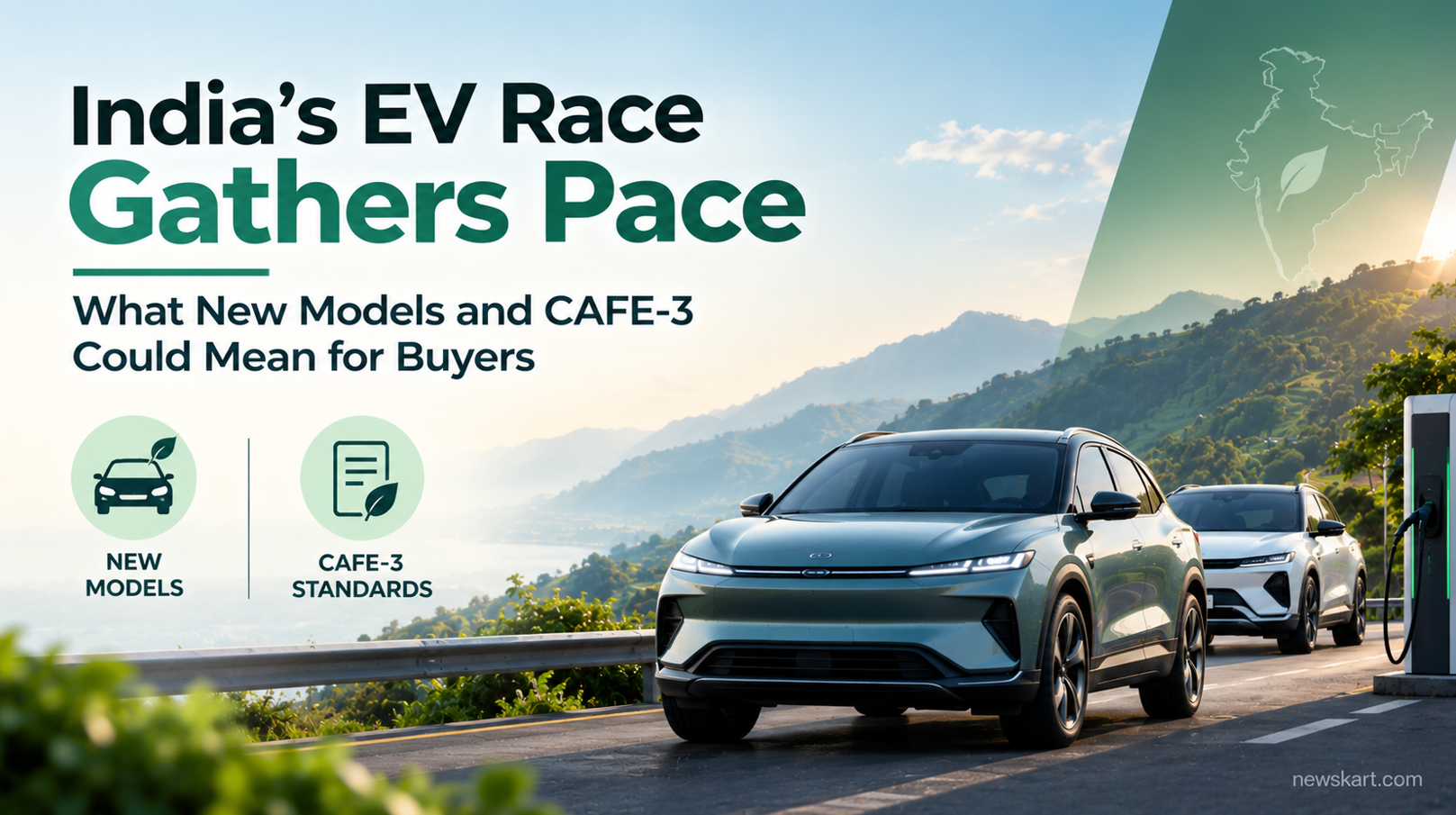
India’s electric car market is heading into a busy period. Tata Motors already has new EVs in its 2026 line-up, while Honda and Hyundai are preparing locally made electric models. At the same time, the government’s new CAFE-3 rules will give carmakers extra compliance credit for electric vehicles.
That credit is an incentive for manufacturers, not a direct discount for people buying a car. Still, it could influence which models companies build and how quickly more EVs reach showrooms.
Local EV plans take shape
Tata Motors has continued to add to its electric range. Its Sierra EV launched in 2026, while the company has also been updating its other EV offerings. This gives Tata a chance to build on its existing presence as competition grows from Mahindra, MG, Hyundai and other brands. Tata’s premium Avinya line, however, is now expected in 2027.
Honda is preparing its first electric SUV for India, based on the 0 Alpha concept. The locally manufactured model is planned for launch on December 2, 2026. The vehicle is expected to be made at Honda’s Tapukara plant in Rajasthan, with production intended for India and export markets.
Hyundai has also said its compact EV he1i is due by the end of 2026. The vehicle is expected to be made at the company’s Sriperumbudur plant in Tamil Nadu and will compete with electric SUVs such as the Tata Nexon EV and Mahindra XUV 3XO EV.
Local production can help companies rely more on Indian factories and suppliers. It may also make it easier to build vehicles suited to local roads and price expectations. But it does not guarantee a low price: battery costs, features, production volumes and taxes all affect what buyers pay.
What CAFE-3 changes
CAFE stands for Corporate Average Fuel Economy. In simple terms, the rules set fuel-efficiency and emissions targets across a carmaker’s overall passenger-vehicle range. India’s CAFE-3 rules are due to apply from April 2027 to March 2032, with targets tightening over that period.
Under the notified framework, battery electric vehicles count as three vehicles when a company’s fleet average is calculated. That gives carmakers a reason to add more EVs to their line-ups: selling electric models can help balance the emissions from petrol and diesel cars in the same fleet.
The distinction matters for buyers. CAFE-3’s EV credit is a benefit to manufacturers when they calculate regulatory compliance. It is not, by itself, a government purchase subsidy or a promise that EV prices will fall. The final price will still depend on each company’s costs and pricing decisions.
What it could mean for car buyers
More locally made models could give buyers a wider choice of electric SUVs and bring fresh competition on range, equipment and price. For example, someone comparing a compact electric SUV may soon have more options from established brands, rather than choosing from a smaller set of models.
The new rules may also encourage manufacturers to plan their electric ranges earlier. But buyers should compare the full ownership picture, including the purchase price, home or public charging access, warranty and expected service costs. The right choice will depend on how and where the car is used.
The road ahead
Tata, Honda and Hyundai are approaching the EV market from different positions, but local manufacturing and tighter fleet rules are pushing the industry in the same direction. Tata is expanding from an established EV base; Honda and Hyundai are preparing new locally made models. CAFE-3 adds pressure on carmakers to improve the overall efficiency of their ranges.
Disclaimer
Launch plans and dates are based on company statements and media reports available at the time of writing. Timelines and specifications may change. This article is for general information and is not investment advice.
Discover more from Newskart
Subscribe to get the latest posts sent to your email.
