


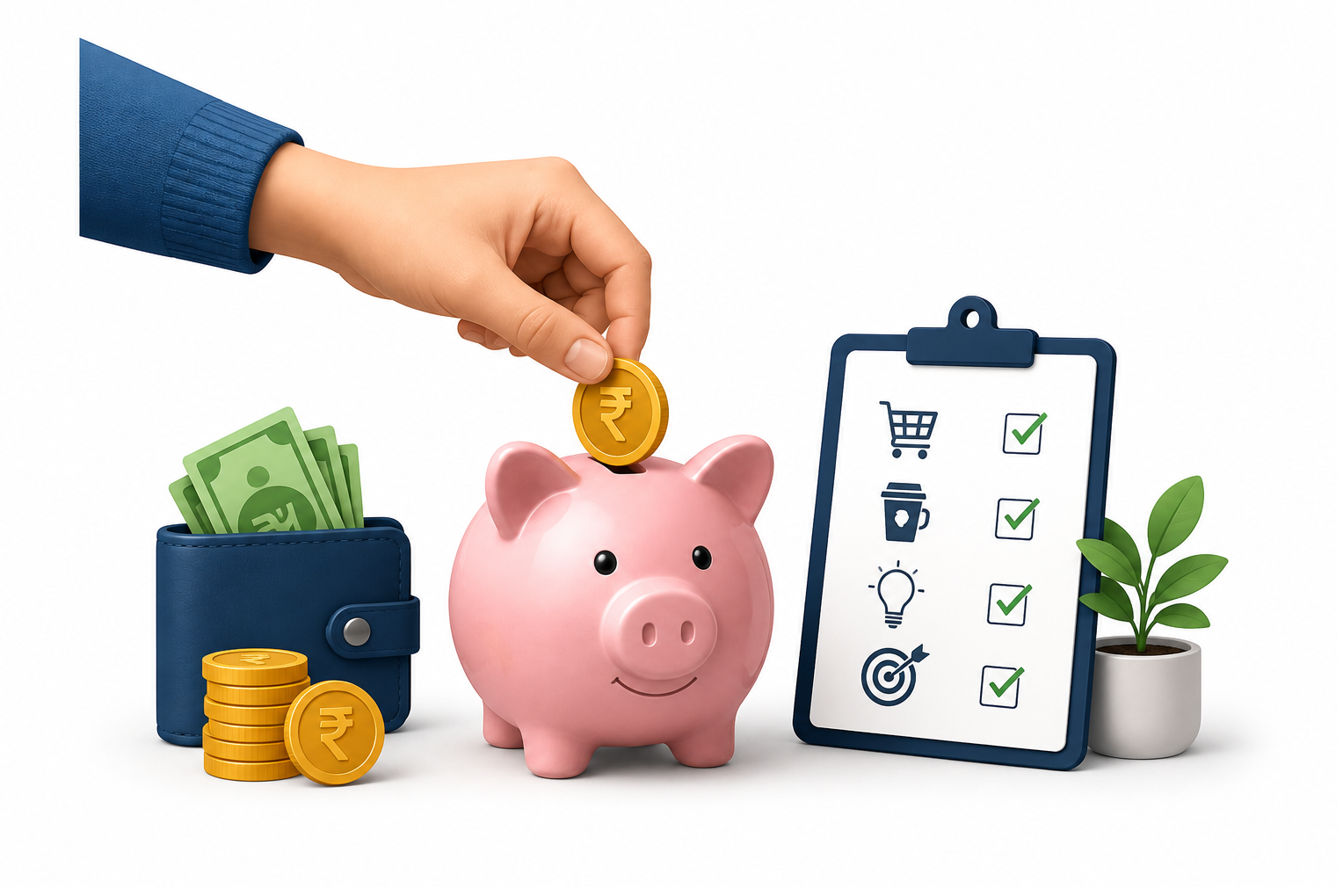
Saving money on a low salary itself appearing frustrating, especially when fixed bills eat up most of your income before the month. But the truth is, saving is still possible, even in tight situations. Just you need to focus on some facts given below and don’t try to save something big instead some small amount savings if done properly can make good corpus for your future needs.
You do not need a big salary to build financial stability. You need a system that helps you spend with intention, avoid money leaks, and protect yourself from emergencies. Small, consistent steps matter much more than occasional big efforts.
Start with a survival-first budget, not a perfect budget
Most low-income earners struggle because their budget is too idealistic. A practical budget starts by covering essentials needs such as rent, food, transport, utilities, medicines, and minimum debt payments first. Only after these spendings, you assign some money small saving schemes.
One useful rule is “save first, then spend the rest,” even if the saving amount is small but sometimes it appears impractical but you have to do that. If you wait to save whatever remains at month-end, there is usually nothing left. You can set an auto-transfer on salary day, even if it is just a modest amount. The habit is more important than the initial number.
You can track spending weekly or bi-weekly, not yearly. Small leaks like frequent delivery charges, app subscriptions, impulse shopping, or weekend overspending quietly damage low-salary budgets. If you cut three or four repeating leaks, that can create a meaningful monthly saving buffer.
Build savings in layers-emergency first, growth second
When money is limited, priority should be safety before investment risk. You should start with a mini emergency fund target, then gradually expand it. Many financial advisors recommend building emergency savings that can cover a few months of essential expenses, but if that feels too far away, begin with the first milestone and keep going.
You should keep emergency money in a safe, liquid place that is easy to access but separate from your daily spending account. The goal of this fund is not high returns. It is protection from borrowing at high interest during a crisis.
Once a basic emergency cushion is in place, begin small long-term investing according to your risk profile. You can do regular small contributions, and if done consistently, it can grow over time through compounding. This is how low-salary earners gradually move from survival mode to progress mode.
Daily habits that make the biggest difference
You can use cash or UPI payments for discretionary categories so you do not overspend silently on cards. You can plan your foods weekly to reduce food waste and last-minute expensive orders. You can try the well adopted “24-hour pause” before non-essential purchases to reduce impulsive buying. Whenever income increases, avoid immediate lifestyle inflation. Instead, you can split this like some part for better living, some part for higher savings. This one decision can transform your financial life over a few years.
In conclusion, saving on a low salary is difficult, but it is absolutely possible with disciplined systems. You do not need to do everything at once. But you can start with a simple budget, automate a small saving amount, build an emergency fund, and stay consistent over a period of time so that you can see the results. Financial progress on a small income is slow at first, but once habits stabilize, it becomes powerful and long-lasting.
Discover more from Newskart
Subscribe to get the latest posts sent to your email.

Comments are closed.