

How to Build Multiple Income Sources Without Chasing Every New Opportunity


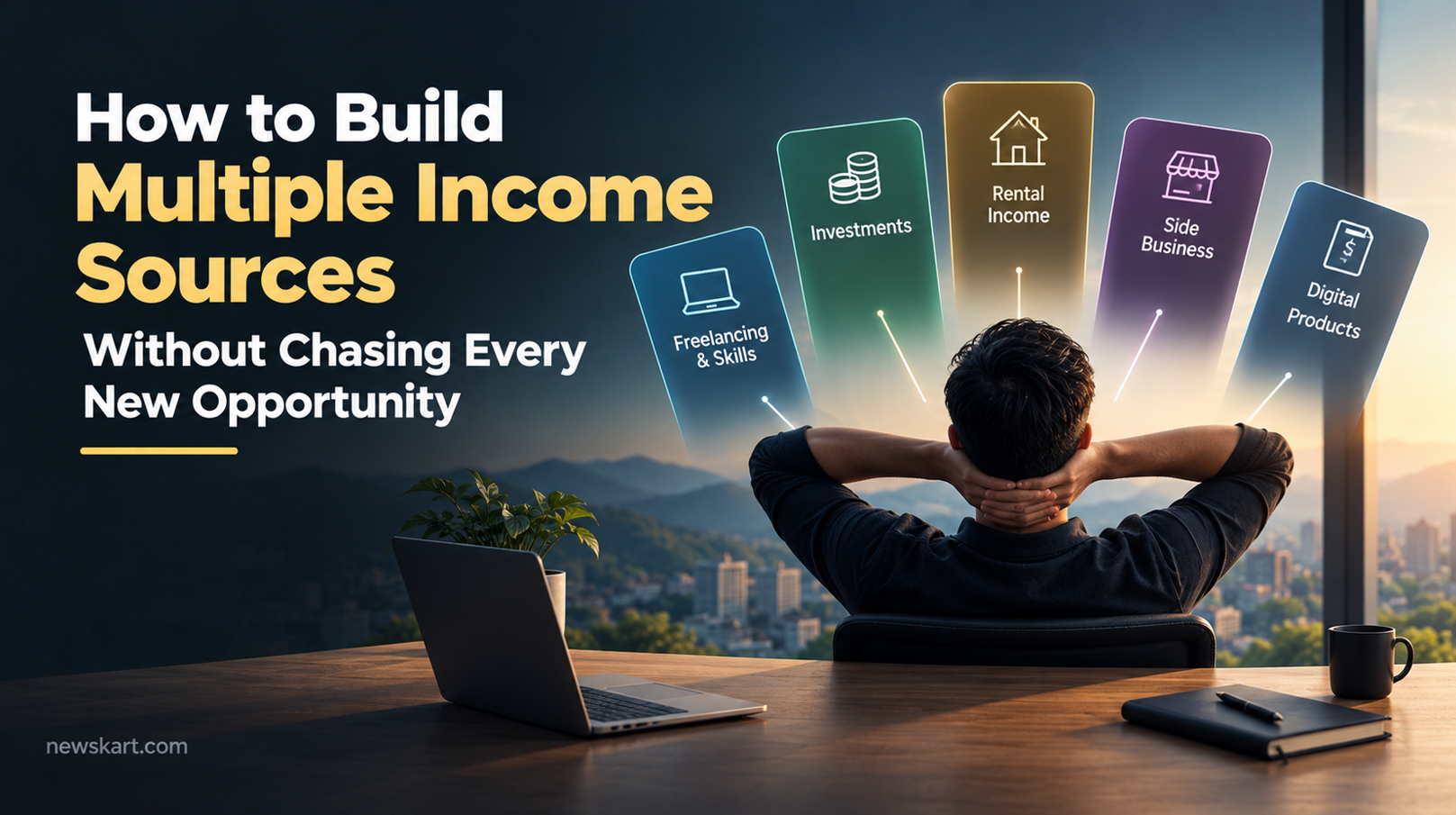
It is believed that relying on one salary can feel comfortable until an unexpected expense, job change or slowdown arrives. Building multiple income sources is not about becoming rich overnight. It is about making your financial life less dependent on one employer or one client.
The best approach is usually slow and practical. Start with what you already know, protect your main income, and add one new stream at a time.
Start with a strong primary income
Your job, profession or main business should remain the foundation. Before starting a side project, improve the income source you already have. This may mean learning a better software tool, asking for more responsibility, gaining a certification, or switching to a role with stronger long-term growth.
A graphic designer, for example, may earn a salary during the week while taking two small freelance projects each month. That is more realistic than leaving a stable job to chase uncertain online income.
The first goal is not to create five income streams. It is to create one dependable extra source.
Turn a useful skill into side income
Skill-based work is often the easiest place to begin because it needs little upfront money. Writing, video editing, tutoring, web design, bookkeeping, photography, translation and social-media management are examples.
Choose work that solves a real problem. A maths teacher can offer online weekend classes. A mobile repair expert can create paid workshops. A working professional with Excel skills can help small businesses organise their data.
Keep the side income separate from your salary account. This makes it easier to see whether the effort is actually worth the time.
Build investments gradually
Investment income can become another important pillar, but it takes patience. Do not invest money needed for rent, school fees, emergencies or loan payments.
First, build an emergency fund in a safe and easily accessible place. Then consider investments that match your goals, time frame and comfort with risk. SEBI’s investor guidance notes that spreading money across asset classes can reduce the impact of one poorly performing investment, although it cannot remove all market risk.
For beginners, a regular investment plan can be easier to manage than trying to predict the best day to invest. Mutual funds, fixed-income options, shares, gold and real estate all have different risks, costs and holding periods. Read the documents, understand the risk level and avoid investing merely because someone online says it is “guaranteed.”
Create assets that can earn repeatedly
A useful asset can keep generating income after the initial work is done. It could be a digital course, a simple e-book, a template, a YouTube channel, a blog, stock photographs or a small online product.
These are often called passive income sources, but most require serious effort before they earn anything. A blog may need months of consistent publishing. A digital course needs updates and customer support. Treat them as small businesses, not shortcuts.
Avoid common mistakes
Do not borrow money to start a risky investment. Do not put all your savings into one stock, cryptocurrency or business idea. Avoid expensive courses that promise instant earnings.
SEBI also warns investors to be careful of offers claiming assured or unusually high returns. Good opportunities can be explained clearly and do not need high-pressure sales tactics.
Conclusion and key takeaways
Multiple income sources can bring more flexibility and confidence, but they work best when built step by step. Protect your main income, use a skill to earn extra money, invest with care and develop one long-term asset. The aim is not to stay busy all the time. It is to create more financial choices over time.
Disclaimer
This article is for educational and informational purposes only. It does not provide financial, investment, tax, legal or professional advice. Investments carry risk, and returns are not guaranteed. Please assess your goals, risk tolerance and financial situation before making decisions, or consult a qualified financial adviser where needed.
Discover more from Newskart
Subscribe to get the latest posts sent to your email.
