


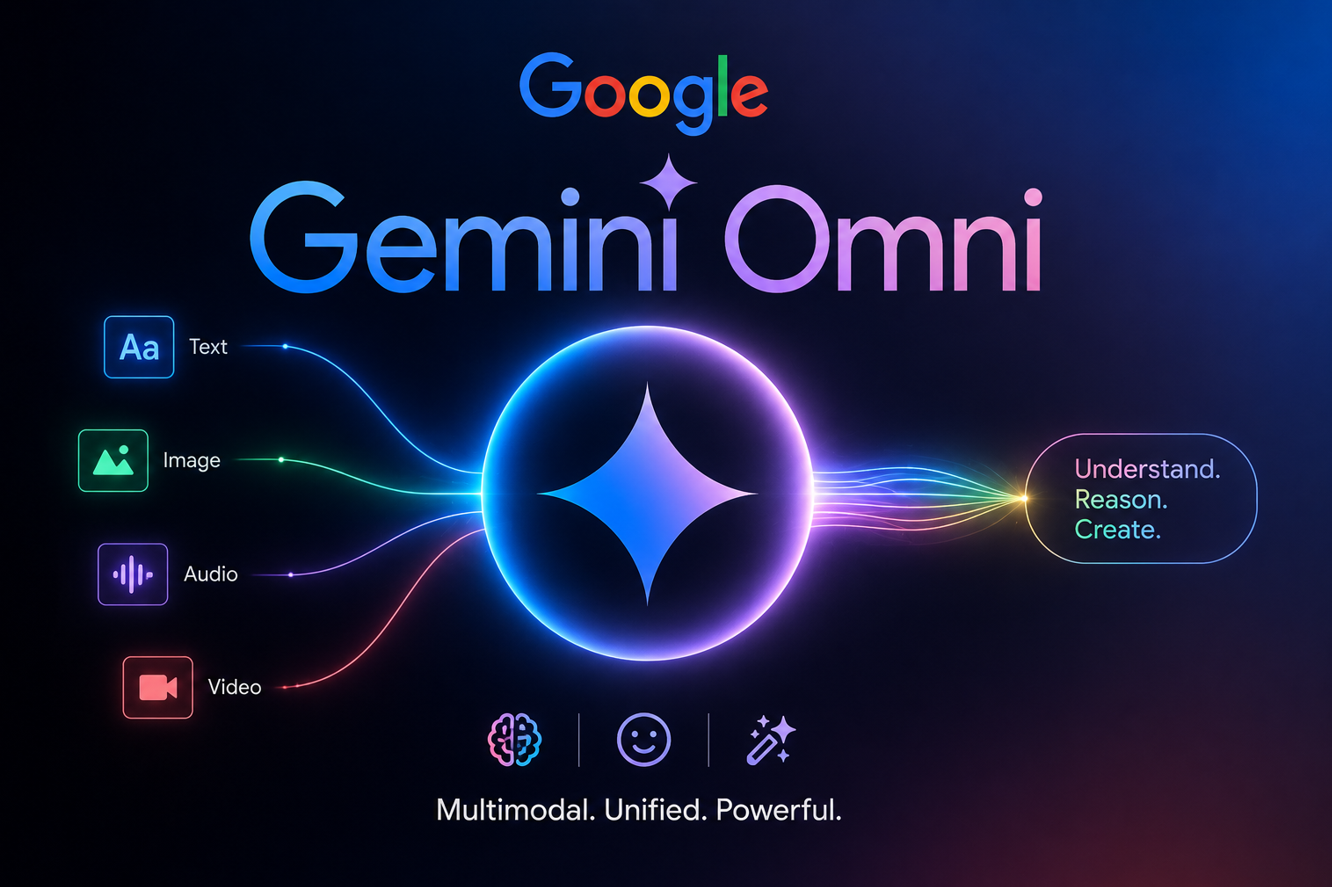
Google has introduced Gemini Omni, and it may be one of the most important AI launches from the company so far. The idea behind Omni is simple but ambitious which is that one AI system that can understand and create across text, images, audio, and video in a more unified way.
That is why many people are calling it Google’s next big step toward AGI-(artificial general intelligence) like capability. It is not AGI itself, but it moves closer to a model that can reason across many formats instead of treating each format as a separate tool.
For users, creators, and businesses, this matters because it can change how content is produced. Now you need not to switch between multiple apps for writing, image editing, sound design, and video generation, rather with the Gemini Omni the workflow becomes more conversational and centralized.
What Is Google Gemini Omni?
Gemini Omni is a new family of multimodal models announced by Google at I/O 2026. Google describes it as a system that can “create anything from any input,” meaning users can combine text, image, audio, and video prompts to generate output.
The first release in this family is Gemini Omni Flash, which is being rolled out through the Gemini app and Google creative tools for eligible subscribers.
In plain language, this is a major expansion from classic text-only chatbot behavior. Omni is designed not just to answer, but to build media in a more integrated way.
How Gemini Omni Works
Most older AI workflows feel like this-
- Write text prompt in one tool
- Generate image in another
- Edit video in a third
- Fix audio separately
Omni’s promise is to reduce that fragmentation.
You can give mixed inputs, for example:
- a reference image,
- a short voice note,
- and a text instruction,
and ask the model to generate a short video that follows all of them. Google says the system combines Gemini’s reasoning capabilities with rendering abilities from media-generation technology. That mix is important because media quality alone is not enough. The model also needs to understand context and sequence so scenes feel coherent.
Key Features Highlighted at Launch
Based on Google’s launch materials and coverage, major highlights include below points-
- Any-to-any prompt style: Text, image, audio, and video can be part of one request.
- Video-first generation focus: Omni is especially positioned around short video creation and editing.
- Omni Flash rollout: First model variant focused on speed and broad access.
- Creative workflow integration: Availability through Gemini app and Google Flow, with YouTube Shorts-related workflows also discussed in coverage.
- Safety layer emphasis: Google says some higher-risk features (like deeper speech-track edits) are still under testing before broad release.
Is This Really a Step Toward AGI?
It depends on how we define AGI. If AGI means human-level intelligence across all tasks, Omni is not that. But if we use a practical definition, “AI that can reason and act across multiple real-world modalities with fewer tool boundaries,” then yes, this is a meaningful step. Why because the model is becoming less single-format, it can operate in richer context windows with mixed inputs and it shifts from “answering” to “creating and editing” across formats. That is closer to a general-purpose digital intelligence layer than earlier generation assistants.
Practical Use Cases – Who Can Benefit Now?
1) Content creators
A creator can upload rough visuals, add a voice note for tone, and generate a polished short-form video concept quickly.
2) Small businesses
A local brand can create product promo clips, social edits, and seasonal campaign drafts without a full production team.
3) Educators
Teachers can convert lesson notes and diagrams into short explainer visuals for classroom use.
4) Marketing teams
Teams can test multiple creative angles rapidly before investing in high-cost studio production.
5) Product prototyping
Startups can mock ad flows, onboarding visuals, or feature explainers much faster during early testing.
Competitor Context: Where Google Stands
Gemini Omni enters a highly competitive area where OpenAI’s multimodal stack, Adobe’s creative AI ecosystem, and fast-moving video AI tools from other global players are the key competitors.
Google’s potential advantage is ecosystem depth which includes-
- Gemini app distribution
- YouTube ecosystem links
- Cloud and developer infrastructure
- existing consumer product touchpoints
But competition remains strong. Success will depend on-
- output quality consistency,
- usability,
- speed,
- pricing/access,
- and trust in safety controls.
Conclusion
Gemini Omni is one of Google’s most ambitious AI product which is not AGI, but it clearly pushes AI toward a more unified, multimodal “general creator” direction. For everyday users, the key shift is practical which is that AI is moving from chat assistance to full media production workflows. For businesses, this could lower content costs and speed up experimentation. For the AI industry, it raises the bar again in the race to build more capable and more usable general-purpose models.
Discover more from Newskart
Subscribe to get the latest posts sent to your email.

Comments are closed.