


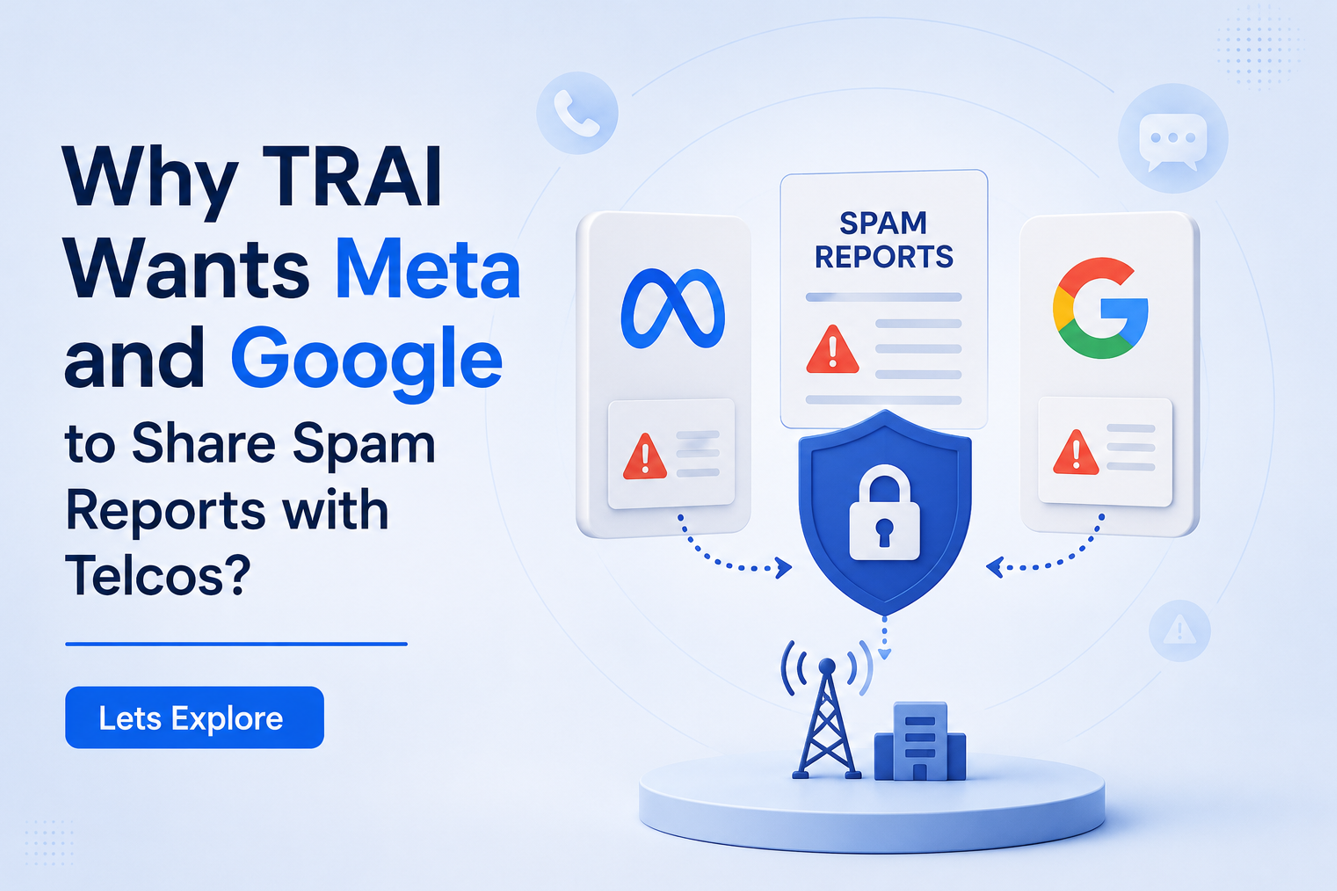
TRAI is reportedly in talks with Meta and Google to connect spam reports from tech apps with telecom operators’ complaint systems. The idea is to make spam tracking stronger, faster and less scattered.
Today, a user may report a suspicious business message on WhatsApp or mark a call as spam on an Android phone dialer. But that report usually stays within the app or platform where it was made. Telecom operators may not get that signal in time, even if the same phone number is being used for bulk spam or fraud calls.
TRAI wants to fix this gap. By linking app-level spam reports with telco systems, the regulator hopes to create a more complete view of repeat offenders and stop them before they reach more users.
What TRAI is trying to do
TRAI wants spam data from platforms such as WhatsApp and Google’s phone dialer to be connected with telecom operators’ existing complaint infrastructure.
The proposed system may connect third-party app reports with the telecom industry’s Distributed Ledger Technology platform and TRAI’s Do Not Disturb portal. The DLT system is already used by telcos to manage registered headers, templates and enterprise telemarketing communication.
In simple words, TRAI wants spam reports from different places to talk to each other. If a number is flagged on WhatsApp, reported through a phone dialer and also appears in telco complaint data, authorities can identify the pattern faster.
Why Meta and Google are important
Meta and Google are important because they sit on large volumes of user-reported spam signals.
Meta owns WhatsApp, Facebook and Instagram. WhatsApp is widely used in India for personal chats, business communication, customer support and payments-related updates. Google’s Android ecosystem and native phone dialer are also used by millions of phone users.
This means both companies can see spam patterns that telecom operators may not see directly. For example, a fraudster may send investment messages on WhatsApp and then ask users to call a mobile number. Telcos may only see call activity, while WhatsApp may see user reports about the same number.
If these signals are shared in a controlled and lawful way, spam control can become more effective.
Why spam is moving beyond SMS and calls
India has tightened rules around commercial SMS and calls over the years. Registered businesses use approved headers and templates, and telcos screen commercial messages through DLT systems.
Because of these checks, many grey-market telemarketers and scammers have shifted to internet-based channels. They may use messaging apps, fake business profiles, online ads, shortened links and social media pages.
This is why users now get fraud attempts from many directions. A fake job offer may come through WhatsApp. A loan scam may begin from an online ad. A trading scam may use a social media page, a phone number and a messaging group together.
TRAI’s concern is that spam is no longer a single-channel problem. It needs a shared response.
How telcos can use spam reports
If telecom operators receive verified spam intelligence from apps, they can compare it with their own network data.
They can check whether a number is making unusually high call volumes, sending bulk SMS, receiving repeated complaints, or being used by unregistered telemarketers. If the same number is reported across multiple platforms, action can be quicker.
This may help telcos block repeat offenders, warn users, suspend suspicious numbers, or escalate cases for further investigation.
For users, the benefit could be simple – fewer fraud calls, fewer fake business messages and faster action after reporting spam.
What is the role of DND and DLT
- DND, or Do Not Disturb, allows users to reduce unwanted commercial communication. Users can also report spam through official channels.
- DLT, or Distributed Ledger Technology, is used in India’s telecom system to manage commercial communication more transparently. Businesses sending promotional or service messages must register certain details, including headers and message templates.
The problem is that app-based spam does not always pass through the same checks as normal SMS. By linking app-level reports with DND and DLT systems, TRAI may be trying to close this gap.
What users may gain from this move
If the system is built well, users may get better protection from repeated spam and fraud attempts.
For example, if many people report the same number for fake loan messages on WhatsApp, that number can be checked against telecom data. If it is also making bulk calls or sending suspicious SMS, it can be flagged more seriously.
This can help protect senior citizens, students, small business owners and first-time internet users who are often targeted through fake offers and urgent messages.
It may also make reporting more meaningful. Users often feel that reporting spam does nothing. A shared system can make every valid report more useful.
Privacy will be the biggest concern
While the idea sounds useful, privacy safeguards are very important. Spam data sharing should not mean sharing private chats, personal messages or unnecessary user details.
The safer approach would be to share limited signals, such as reported phone numbers, spam category, complaint count, time pattern and platform-level risk indicators. Any deeper data sharing should follow legal process and privacy rules.
There should also be checks against wrong action. A genuine business number should not be blocked only because of a few mistaken reports. Users and businesses should have a way to appeal if they are wrongly flagged.
What this means for Meta, Google and telcos
For Meta and Google, this may increase pressure to work more closely with telecom regulators and operators in India. These companies already run their own spam and abuse detection systems, but TRAI wants that intelligence to help the wider telecom ecosystem.
For telcos such as Jio, Airtel and Vodafone Idea, this could improve spam detection. They may get more signals from outside the traditional telecom network.
For regulators, the challenge will be coordination. Different companies use different systems, privacy rules and reporting formats. Building a common framework will take careful planning.
Conclusion – Key takeaways
TRAI wants Meta and Google to share spam reports with telcos because spam has moved beyond normal calls and SMS. Scammers now use WhatsApp, Android dialers, ads, links and phone numbers together.
By connecting app-level spam reports with telco complaint systems, DLT infrastructure and DND tools, TRAI hopes to identify repeat offenders faster and reduce unwanted commercial communication.
The idea can help users, but it must be handled carefully. Strong privacy protection, clear rules and fair review systems will be necessary. If done well, this could become an important step in making India’s digital communication safer.
Facts Input- Adgully
Discover more from Newskart
Subscribe to get the latest posts sent to your email.

[…] Why TRAI Wants Meta and Google to Share Spam Reports with Telcos? Lets Explore […]