


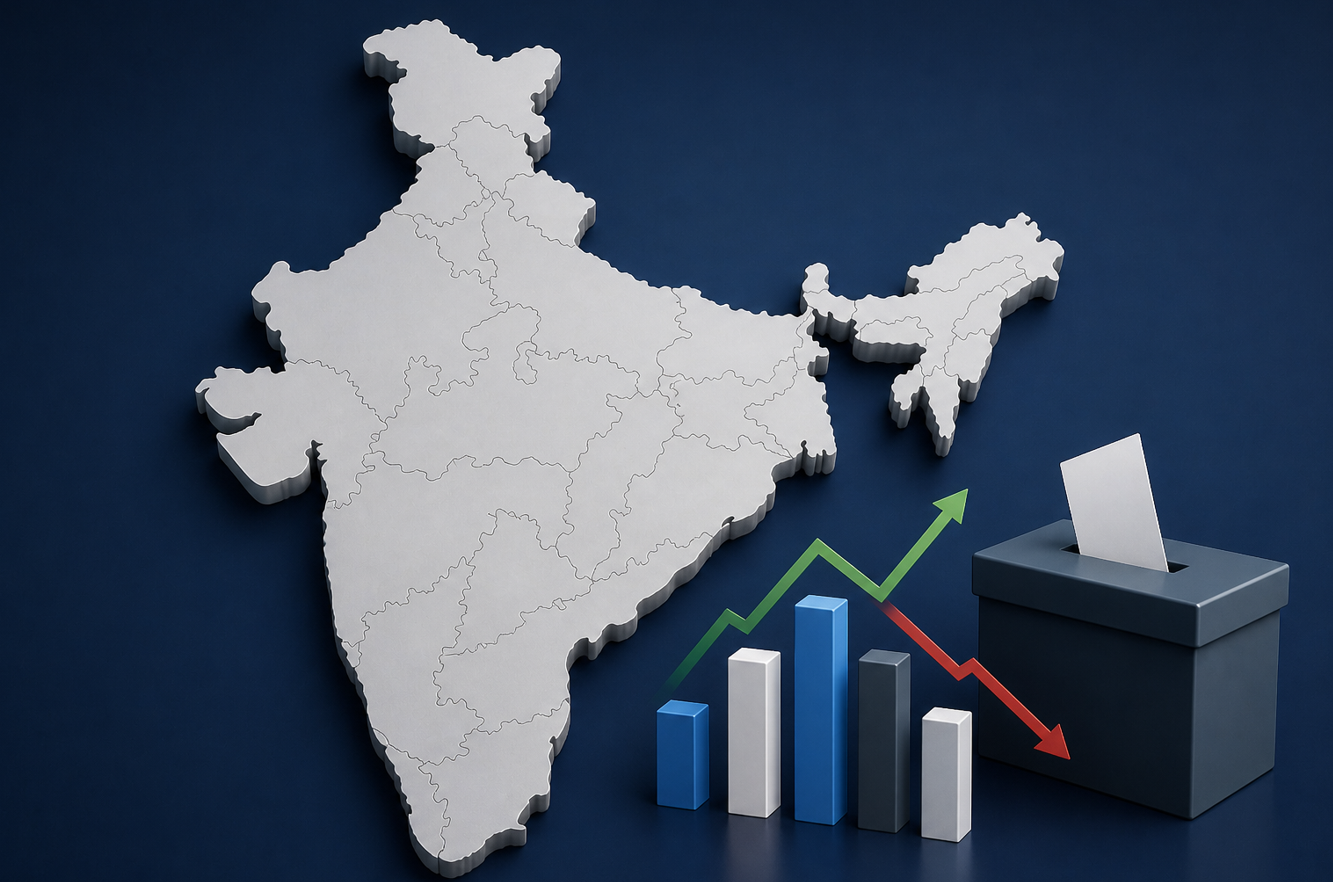
India’s 5-state counting day on May 4, 2026 did more than declare winners. It reset political equations in different ways across West Bengal, Tamil Nadu, Kerala, Assam, and Puducherry. Instead of one national pattern, the verdict produced multiple regional stories, each with its own message.
For voters, this matters because state elections directly shape public services, welfare delivery, local jobs, and business policy. For political parties, this result day is a strategy checkpoint before the next major national cycle. The biggest takeaway is simple: voter behavior is becoming more state-specific, and narrative alone is no longer enough.
What Changed in the Five-State Verdict
The strongest shock came from West Bengal, where live updates and major media tracking showed the BJP moving ahead decisively and crossing the majority line in trends before final seat tallies stabilized. This marks a major power shift in a state long associated with Trinamool dominance.
In Tamil Nadu, the contest became far more competitive than expected. Reports through the day highlighted the strong performance of TVK in several stretches, changing the usual two-pole conversation and forcing a rethink of future alliance politics.
In Kerala, counting updates pointed to a revival for the Congress-led side, indicating voter appetite for change after a sustained Left phase. Even where margins were tight, constituency-by-constituency movement suggested anti-incumbency operated unevenly but effectively in key areas.
In Assam, the BJP-led bloc appeared to hold ground strongly, signaling that governance messaging and local organization still carried weight despite anti-incumbency expectations. This is politically important because it contrasts with turbulence seen in some other states.
In Puducherry, NDA-linked momentum remained visible in counting updates, with leadership continuity signals strengthening through the day.
Why These Results Matter Beyond Party Wins
The first big change is narrative fragmentation. This was not a single-wave election. Different states voted for different outcomes based on local priorities, leadership trust, and constituency-level candidate factors.
The second change is alliance pressure. Parties that underperformed now face immediate decisions on leadership, coalition architecture, and grassroots rebuilding. Parties that performed well must translate victory into governance outcomes quickly, because state mandates can shift fast in high-expectation environments.
The third change is policy direction. New or returning governments now control spending choices in health, education, local infrastructure, and welfare execution. That means this verdict will affect daily governance, not just political headlines.
For markets and businesses, these results also matter. Stable mandates generally improve implementation confidence in state-level projects, while fractured outcomes can delay policy execution. So investors and local industries will be watching cabinet formation and early policy announcements closely.
Final Take: A Multi-Speed Political Message from Voters
The 5-state election results of 2026 delivered one clear lesson and that is that Indian voters are increasingly outcome-driven and region-focused. They are willing to reward incumbents in one state, reject them in another, and elevate new forces where they see alternative potential.
So what changed? Power changed in some places, competition deepened in others, and future alliances became less predictable almost everywhere. For citizens, the next phase is the real test- whether new mandates improve governance quality, speed up implementation, and deliver practical benefits on the ground.
Discover more from Newskart
Subscribe to get the latest posts sent to your email.

Comments are closed.