

River Mobility Raises $120 Million Series C To Scale EV Manufacturing And New Scooter Models


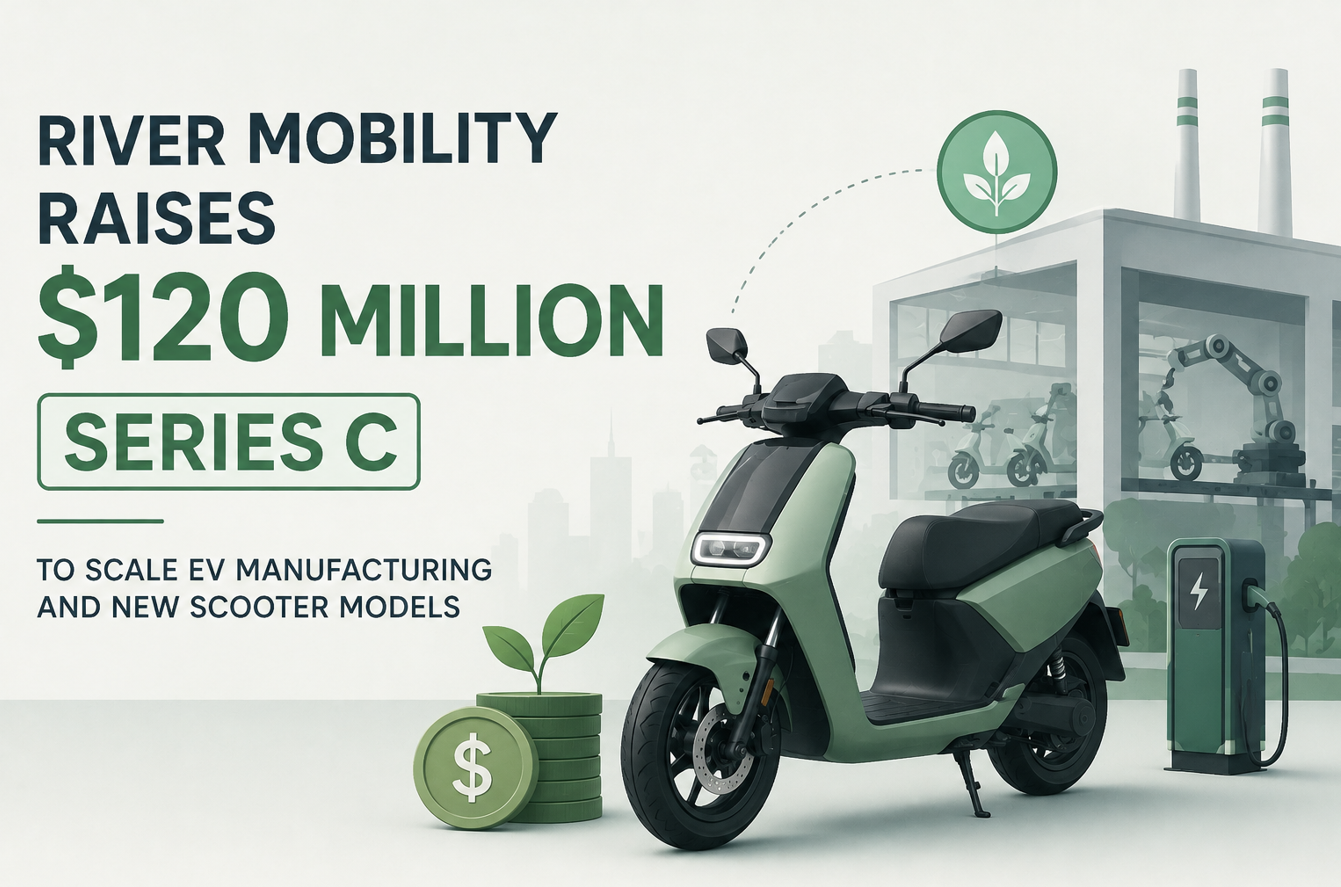
Bengaluru-based EV startup River Mobility has raised $120 million in a Series C funding round to support its next phase of growth. The company is best known for the River Indie, a utility-focused electric scooter designed for both work and daily personal use.
This is a big moment for River because India’s electric two-wheeler market is becoming more competitive every month. Buyers now have options from TVS, Bajaj, Ather, Ola Electric, Hero Vida, Simple Energy and several newer brands. In such a crowded space, River needs more manufacturing capacity, more stores, stronger R&D and fresh products.
According to Times of India, River plans to use the new capital to boost production capability, expand research and development, grow its workforce and explore new domestic and international markets. Earlier reports had also said the company was in talks with Indian investors for a large Series C round to build a new plant, launch new models and expand distribution.
What River Mobility does
River Mobility builds electric two-wheelers for urban users. Its main product is the River Indie, which the company calls the “SUV of scooters.”
The idea behind Indie is simple. Most scooters are built mainly for city commuting. River wants its scooter to be more practical for people who need space, strength and flexibility. This includes small business owners, delivery users, working professionals, shop operators and families.
The scooter has a utility-focused design, with features such as large storage, wide footboard space, crash guards, pannier mounts and a strong road presence. It is not trying to look like every other sleek electric scooter. It has a more rugged personality.
River’s official website says the Indie has won Red Dot awards for concept design in 2024 and product design in 2025.
Founders and founding year
River Mobility was founded in March 2021 by Aravind Mani and Vipin George.
Both founders came with experience in the EV and mobility space. Earlier reports say Mani worked on commercial and strategy at Ultraviolette, while George had worked across design and R&D roles at companies including Ultraviolette and Honda.
That background matters because electric scooters are not just software products. They need good design, battery engineering, supplier management, service planning, safety testing and manufacturing discipline.
Why this $120 million funding matters
The $120 million Series C round matters because River is moving from early product validation to scale.
In the first stage, an EV startup must prove that people like the product. In the next stage, it must prove that it can make thousands of vehicles every month, deliver them on time, service them properly and still control costs.
This is where many EV startups struggle.
Manufacturing needs serious capital. A company must invest in plants, tooling, quality systems, battery testing, suppliers, logistics, service centres and people. If demand grows faster than production, customers wait too long. If production grows without quality control, service complaints rise.
River’s fresh capital can help it build a stronger operating base.
Aim and purpose of River Mobility
River’s main aim is to build practical electric scooters for India and other similar markets.
The company is not only chasing style or speed. Its product thinking is more about utility. A scooter should help people commute, carry goods, run daily errands and support small work needs.
For example, a bakery owner may need a scooter that can carry supplies. A field sales worker may need storage for samples and documents. A parent may need a stable scooter for school runs and shopping. River is trying to serve such mixed-use buyers.
The larger purpose is to make electric mobility useful for real Indian conditions, not just for premium early adopters.
How River may use the money
The new funding can support River in four main areas.
- First, manufacturing expansion. Earlier reports said River was exploring a new manufacturing facility as its current capacity would soon reach limits. More production capacity will be important if the company wants to grow beyond a niche presence.
- Second, new product development. River has spoken earlier about launching new models every year from FY27. A wider product range can help it reach more price points and customer segments.
- Third, retail expansion. Moneycontrol earlier reported that River had more than 40 stores and aimed to reach over 350 stores by March 2028. EV buyers often want test rides, local service support and trust before purchase, so stores matter.
- Fourth, R&D. Better batteries, improved range, safety, software, connected features and reliability will decide long-term customer satisfaction.
River Indie and market positioning
River currently sells one main model, the Indie.
The scooter is priced in the broad Rs. 1 lakh to Rs. 1.5 lakh range, depending on variant, city, benefits and market conditions. It competes with Ather 450 series, TVS iQube, Bajaj Chetak, Hero Vida, Ola Electric scooters and Simple Energy models.
River’s positioning is slightly different. Ather is seen as tech-focused. TVS and Bajaj bring legacy trust. Ola pushes aggressive pricing and scale. River is trying to stand out through utility, design and multi-use practicality.
That can work well if the company finds the right customer base. Not every buyer wants the fastest scooter. Many want storage, comfort, durability and dependable service.
Why investors are interested
India’s EV two-wheeler market is still in a long growth phase.
Petrol prices, running-cost savings, better charging access, state policies and growing environmental awareness are pushing more buyers toward EVs. Electric scooters are especially important because two-wheelers dominate India’s personal mobility market.
Investors like companies that can build strong EV brands before the market becomes fully mature.
River has already attracted large global backers in earlier rounds, including Yamaha Motor, Al-Futtaim Automotive, Lowercarbon Capital, Toyota Ventures, Maniv Mobility, Marubeni Ventures and Mitsui. Earlier reports also linked Anicut Capital, Claypond Capital and Elev8 Venture Partners to the large Series C funding discussions.
If more Indian investors are now backing River, it also shows rising domestic confidence in the EV manufacturing story.
Competitors
River operates in one of India’s toughest EV categories.
TVS iQube and Bajaj Chetak have strong parent brands and service networks. Ather Energy has built a premium tech-led EV identity. Ola Electric has scale and pricing aggression. Hero Vida has the Hero MotoCorp ecosystem. Simple Energy and other startups are also trying to win performance-focused buyers.
River’s challenge is to scale without losing product quality or brand clarity.
Its opportunity lies in creating a practical, utility-first EV scooter brand. If it can serve business users, families and urban commuters with a reliable product, it can create a loyal customer base.
Future of River Mobility
River’s future will depend on three things.
- The first is production. The company must make more scooters without quality issues.
- The second is service. EV buyers care deeply about battery health, spare parts, software, warranty and quick repairs. A good service network can become a major advantage.
- The third is product range. One scooter can build identity, but more models are needed for scale. River will need products across different price points, battery ranges and use cases.
The company may also look at exports. Earlier reports said River was considering markets such as Sri Lanka, Nepal, Southeast Asia and Africa over time. These markets may also need practical electric two-wheelers for mixed personal and work use.
Conclusion with key takeaways
River Mobility’s $120 million Series C funding gives the Bengaluru EV startup fresh strength at an important stage. The company has already built a differentiated product with the River Indie. Now it needs to scale manufacturing, expand stores, launch more models and prove that it can compete with larger EV players.
Founded in 2021 by Aravind Mani and Vipin George, River is trying to build electric scooters that are useful, durable and suited to Indian urban life. The funding can help it move from a promising EV startup to a stronger manufacturing-led mobility company.
Key takeaways –
- River Mobility has raised $120 million in Series C funding.
- The company was founded in March 2021 by Aravind Mani and Vipin George.
- River sells the Indie electric scooter, positioned as a utility-focused EV two-wheeler.
- The funding will support manufacturing, R&D, hiring, distribution and market expansion.
- River competes with Ather, TVS iQube, Bajaj Chetak, Ola Electric, Hero Vida and Simple Energy.
Discover more from Newskart
Subscribe to get the latest posts sent to your email.

Comments are closed.