


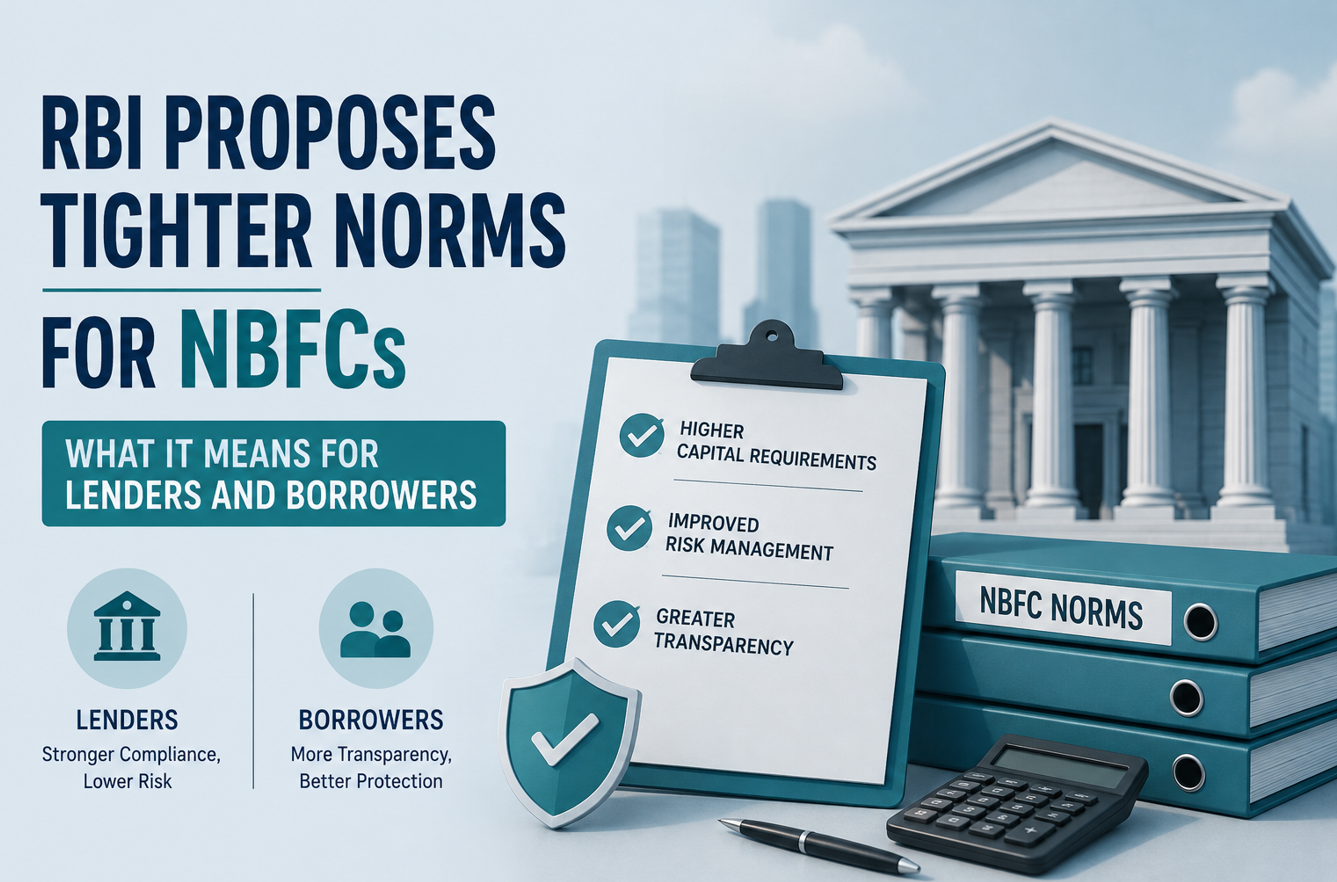
The Reserve Bank of India has proposed tighter rules for non-banking financial companies, better known as NBFCs. The biggest change being discussed is that NBFCs may not be allowed to offer revolving credit facilities freely unless they have specific approval.
This may sound technical, but the impact can be very real. Many borrowers use credit lines, app-based loans, buy-now-pay-later products and flexible repayment products offered by NBFCs. If RBI’s proposal becomes final, such products may become more structured, more transparent and possibly less risky.
The move is part of RBI’s wider effort to make lending safer, clearer and more responsible. NBFCs have become an important part of India’s credit system, especially for people and small businesses that may not always get easy bank loans. But fast growth also brings risk, and that is what the regulator wants to control.
What are NBFCs
NBFCs are financial companies that offer loans and other credit services, but they are not banks.
They lend to individuals, small businesses, vehicle buyers, gold loan customers, housing borrowers, MSMEs, consumer durable buyers and many others. Some popular examples of NBFCs include Bajaj Finance, Shriram Finance, Muthoot Finance, LIC Housing Finance, Tata Capital and Mahindra Finance.
NBFCs are important because they reach customers faster and often serve segments where banks may be slower. For example, a small shopkeeper may get a business loan from an NBFC more easily than from a large bank. A customer buying a mobile phone on EMI may also be financed by an NBFC.
What RBI has proposed
RBI has proposed that NBFCs should mainly offer term loans and should not provide revolving credit facilities without approval.
A term loan has a fixed amount, fixed tenure and a repayment schedule. For example, if you borrow Rs. 1 lakh for 24 months, you repay it through fixed EMIs.
A revolving credit facility is different. It works more like a credit card or credit line. A borrower gets a limit, uses money when needed, repays it, and can use the limit again. This can be convenient, but it can also become risky if borrowers keep using credit without clear repayment discipline.
RBI’s concern seems to be that open-ended credit can create hidden debt stress for borrowers and higher risk for lenders.
Why RBI wants tighter norms
The main reason is financial discipline.
In recent years, digital lending has grown fast. Many NBFCs and fintech-linked lenders now offer instant loans, credit lines, consumer loans and app-based borrowing. This has helped many people get credit quickly, but it has also created concerns around over-borrowing, unclear charges and aggressive recovery practices.
RBI wants lending to be more transparent. Borrowers should know how much they are borrowing, how much they must repay, by when, and at what cost.
The regulator also wants to reduce risk in the financial system. If many borrowers take flexible credit and later fail to repay, NBFCs can face stress. Since NBFCs borrow from banks and markets, their stress can spread to other parts of the financial system.
How this may impact NBFCs
The impact on NBFCs can be significant.
- First, NBFCs may have to redesign some loan products. Credit lines, flexible EMI products and revolving credit products may need regulatory approval or restructuring.
- Second, growth may slow in some consumer lending segments. Products that depend on repeat borrowing may become harder to offer.
- Third, compliance costs may rise. NBFCs may need stronger systems, clearer documentation, better borrower checks and tighter monitoring.
- Fourth, profitability may be affected for companies that earn heavily from revolving credit or flexible lending products.
This is why shares of some financial companies reacted negatively after the proposal was reported. Investors worry that stricter rules may reduce business flexibility.
How this may impact borrowers
For borrowers, the impact can be mixed.
The good part is that loans may become safer and clearer. Borrowers may get more structured repayment plans, fewer surprises and better protection from confusing credit products.
A term loan is easier to understand. You know the loan amount, EMI, interest rate and end date. This helps people plan better.
The difficult part is that flexible credit may become less available. Some borrowers who use credit lines for short-term cash needs may find fewer options. Small businesses that depend on revolving credit for working capital may also feel some pressure if NBFCs tighten such products.
For example, a shop owner who uses a digital credit line to buy stock and repay after sales may need to move to a fixed-tenure working capital loan instead.
Interest rate transparency may improve
Another important discussion is around loan pricing.
Reports say RBI is also looking at more uniform interest rate norms for banks and NBFCs. This means borrowers may get clearer information on how their loan interest rate is decided and how it changes.
This can be useful because many borrowers do not fully understand processing fees, interest rates, penal charges and repayment costs.
Better transparency can help people compare loans more fairly. A borrower can ask, “What is the real cost of this loan?” instead of only looking at the EMI amount.
Recovery practices are also under focus
RBI has also been tightening rules around loan recovery.
Recent updates on recovery practices include stronger borrower protection, limits on harassment, recorded communication and clearer conduct rules for recovery agents. RBI has also issued rules around device-locking in cases where phones, laptops or tablets are financed through loans.
This matters because borrowers should not be treated unfairly even if they miss payments. Lenders have the right to recover dues, but recovery must be lawful and respectful.
Who will benefit from tighter norms
Responsible borrowers may benefit because loan products can become clearer and less risky.
First-time borrowers may benefit because they may get simpler repayment structures.
The financial system may benefit because NBFCs will have to manage risk more carefully.
Banks may also benefit indirectly because many banks lend to NBFCs. If NBFC lending becomes safer, bank exposure to NBFCs also becomes less risky.
However, some borrowers who depend on flexible credit may face reduced access in the short term.
Possible downside
The main downside is reduced credit availability for some customers.
NBFCs often serve borrowers who are ignored by traditional banks. If rules become too tight, some lenders may become cautious. This could affect small borrowers, gig workers, small businesses and customers with thin credit history.
There is also a risk that people may move toward informal lenders if formal credit becomes harder to access. That would not be healthy.
So the final rules must balance safety with access. India needs responsible lending, but it also needs enough credit for small businesses and households.
Conclusion with key takeaways
RBI’s proposed tighter norms for NBFCs are aimed at making lending safer, clearer and more disciplined. The biggest proposed change is around restricting NBFCs from offering revolving credit facilities without approval and pushing them toward structured term loans.
For NBFCs, this may mean product changes, higher compliance and slower growth in some lending categories. For borrowers, it may mean clearer loans and better protection, but possibly fewer flexible credit options.
Key takeaways –
- RBI has proposed tighter norms for NBFC lending.
- NBFCs may be restricted from offering revolving credit without approval.
- Term loans may become the main lending format for NBFCs.
- Borrowers may get clearer repayment structures and better transparency.
- Some customers may face reduced access to flexible credit products.
Discover more from Newskart
Subscribe to get the latest posts sent to your email.

[…] technology alone does not guarantee fair treatment. Lenders still need to follow RBI rules, privacy standards and respectful collection practices. A platform like Rezolv can support better […]