


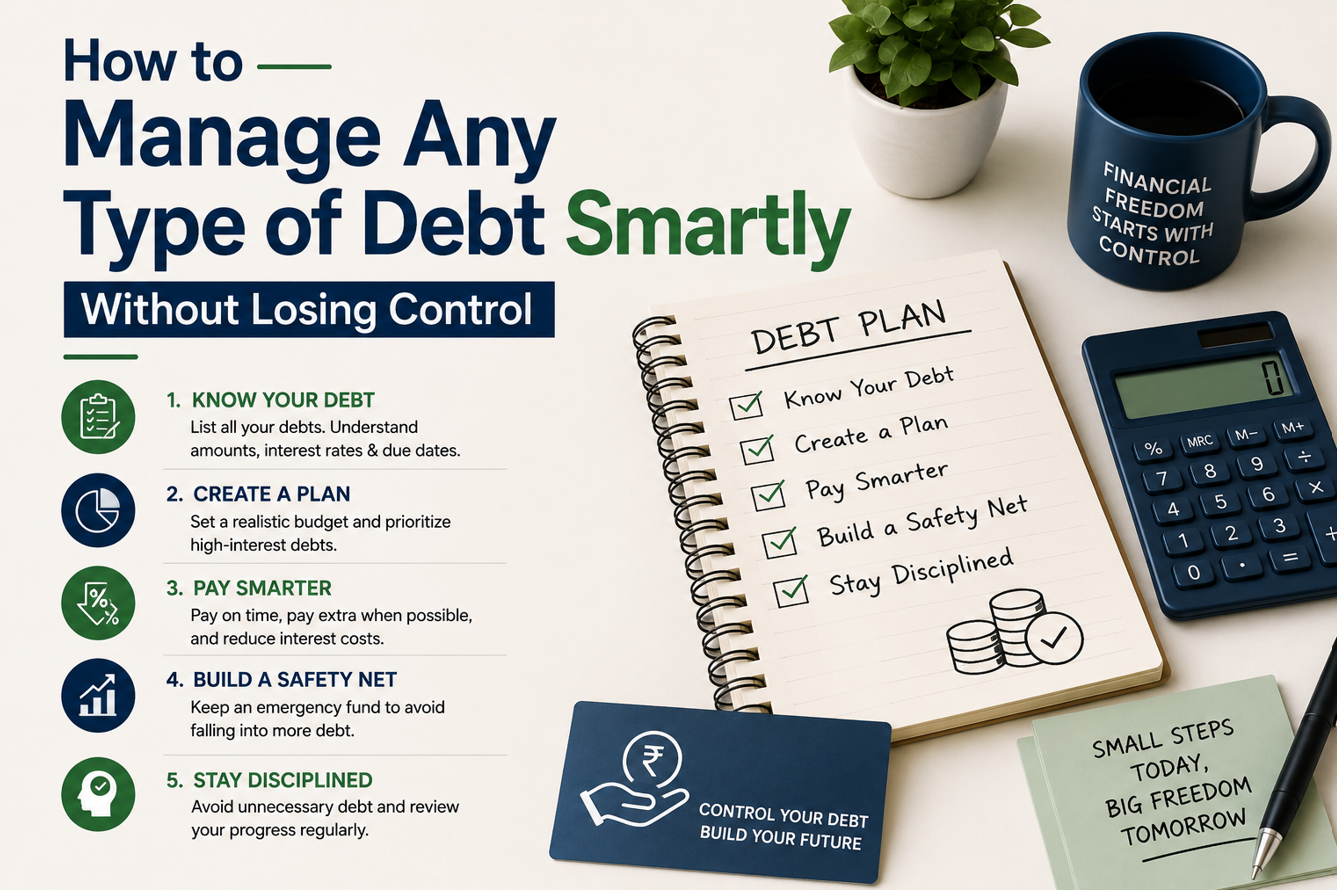
Debt is not always bad. A home loan can help you buy a house. An education loan can support a better career. A business loan can help someone expand work. Even a credit card can be useful if used carefully.
The problem starts when debt grows faster than income. One missed EMI becomes two. A credit card bill turns into revolving interest. A personal loan is taken to repay another loan. Slowly, the borrower starts feeling trapped.
The good news is that most debt problems can be managed if you act early, stay organized and make a clear repayment plan.
Understand what kind of debt you have
The first step is to list every loan and outstanding amount. Do not guess. Write it down.
Include credit card dues, personal loans, home loans, car loans, education loans, gold loans, buy-now-pay-later dues, app loans, money borrowed from friends or family, and business loans.
For each debt, note five things – outstanding amount, interest rate, EMI, due date and remaining tenure.
This simple list gives you a clear picture. Many people feel stressed because they do not know the exact number. Once you see the full debt position, you can plan better.
Separate good debt and risky debt
Not all debt is equal.
A home loan or education loan can be called productive debt if it supports a long-term goal and the EMI is affordable. A business loan can also be useful if it helps generate income.
Risky debt includes high-interest credit card dues, instant app loans, personal loans taken for lifestyle spending, and repeated borrowing for shopping, travel or status purchases.
Credit card debt is especially dangerous when you pay only the minimum amount due. The unpaid balance continues to attract high interest, and the bill can grow quickly.
Use the debt priority method
Once you know all your debts, decide which one to attack first.
There are two common methods.
- The first is the high-interest method. Here, you pay off the debt with the highest interest rate first while paying minimum dues on others. This saves more money over time.
- The second is the small-balance method. Here, you pay off the smallest loan first. This gives quick motivation because one debt disappears from your list.
For most people, the high-interest method is financially better. But if you feel emotionally stuck, the small-balance method can help you build confidence.
Control credit card debt first
If you have credit card debt, treat it as urgent.
Stop using the card until the outstanding amount is under control. Pay more than the minimum due. If possible, convert the outstanding balance into a lower-interest EMI plan after checking all charges.
Also avoid cash withdrawals from credit cards unless it is an emergency. These can attract high charges and interest from the date of withdrawal.
A simple rule works well – use a credit card only when you already have money in your bank account to pay the full bill.
Build a repayment budget
Debt management needs a monthly budget. It does not have to be complicated.
Start with income. Then subtract fixed expenses like rent, EMIs, school fees, insurance, utilities and groceries. After that, check what is left for savings, extra repayment and personal spending.
If debt is high, reduce optional expenses for a few months. This may include food delivery, subscriptions, impulse shopping, expensive outings and unnecessary upgrades.
The aim is not to live miserably. The aim is to create breathing space.
Avoid taking new loans to look comfortable
Many people take a new loan to feel temporary relief. This can work only if the new loan has a lower interest rate and a clear repayment plan.
But borrowing repeatedly to pay old debt can become a cycle.
For example, taking a personal loan to close credit card debt may be sensible if the interest rate is much lower and you stop using the card. But taking another credit card or app loan to pay EMI is a warning sign.
If you are borrowing every month just to survive, it is time to speak to your lender or a financial advisor.
Talk to lenders before defaulting
If you know you cannot pay an EMI, do not wait silently.
Contact the lender early. Ask about restructuring, temporary relief, lower EMI options, extended tenure or settlement terms. Banks and NBFCs may not always agree, but early communication is better than ignoring calls.
Defaulting can hurt your credit score and make future loans harder or costlier.
If you face harassment from recovery agents or unfair practices, you can raise a complaint with the lender and later approach the RBI Integrated Ombudsman if the issue is not resolved.
Protect your credit score
Your credit score matters because lenders use it to judge repayment behaviour. A good score can help you get loans more easily and sometimes at better rates.
To protect your score, pay EMIs and credit card bills on time. Keep credit card usage low. Avoid applying for too many loans at once. Check your credit report regularly for errors.
If your score is already low, do not panic. It can improve over time with regular repayment and controlled borrowing.
Create an emergency fund
One reason people fall into debt is lack of emergency savings.
A medical bill, job loss, car repair or family emergency can force someone to borrow at high interest. Even a small emergency fund can reduce this risk.
Start with one month of expenses. Then slowly build toward three to six months of basic expenses. Keep this money in a safe and easy-to-access place, not in risky investments.
Use prepayment carefully
If you receive a bonus, tax refund or extra income, use part of it to reduce expensive debt.
Prepay credit card dues and personal loans first. For home loans, check prepayment rules and compare whether your money is better used for loan reduction or investment.
Do not empty your emergency fund fully for prepayment. Debt reduction is important, but you still need cash for unexpected needs.
Be careful with loan apps and informal debt
Instant loan apps can look convenient, but some may charge high fees or use aggressive recovery methods. Borrow only from regulated banks, NBFCs or trusted lenders.
Also be careful with informal borrowing from friends, relatives or local lenders. It may not affect your credit score, but it can affect relationships and mental peace.
Before taking any loan, ask yourself – what is the interest rate, what is the total repayment amount, what happens if I miss a payment, and do I really need this loan?
When to seek help
You should seek help if your EMIs are more than half your monthly income, you are missing payments often, you are using one loan to pay another, or you feel constant stress because of debt.
A qualified financial advisor can help you prepare a repayment plan. In serious cases, legal advice may also be needed, especially if there are settlement disputes or harassment issues.
Do not feel ashamed. Debt stress is common, and early action is always better than silence.
Conclusion with key takeaways
Debt can be useful when it supports a real goal and stays within your repayment ability. But unmanaged debt can quickly damage savings, credit score and peace of mind.
The smartest way to manage debt is to know your numbers, prioritize high-interest loans, pay on time, avoid fresh borrowing and build emergency savings.
Key takeaways
- List all debts with interest rate, EMI, due date and balance.
- Pay high-interest debt first, especially credit card dues.
- Do not pay only the minimum amount on credit cards for long.
- Avoid taking new loans unless there is a clear benefit.
- Speak to lenders early if repayment becomes difficult.
- Protect your credit score with timely payments.
- Build an emergency fund to avoid future borrowing.
Disclaimer
This article is for general information only and should not be treated as financial advice. Loan terms, interest rates, tax rules and credit policies can change. Please speak with a qualified financial advisor before making major borrowing or repayment decisions.
Discover more from Newskart
Subscribe to get the latest posts sent to your email.

[…] So, can financial freedom be achieved early in life? Yes, but not by luck, shortcuts or viral tips. It usually comes from steady saving, smart spending, patient investing and avoiding bad debt. […]
[…] How to Manage Any Type of Debt Smartly Without Losing Control […]