


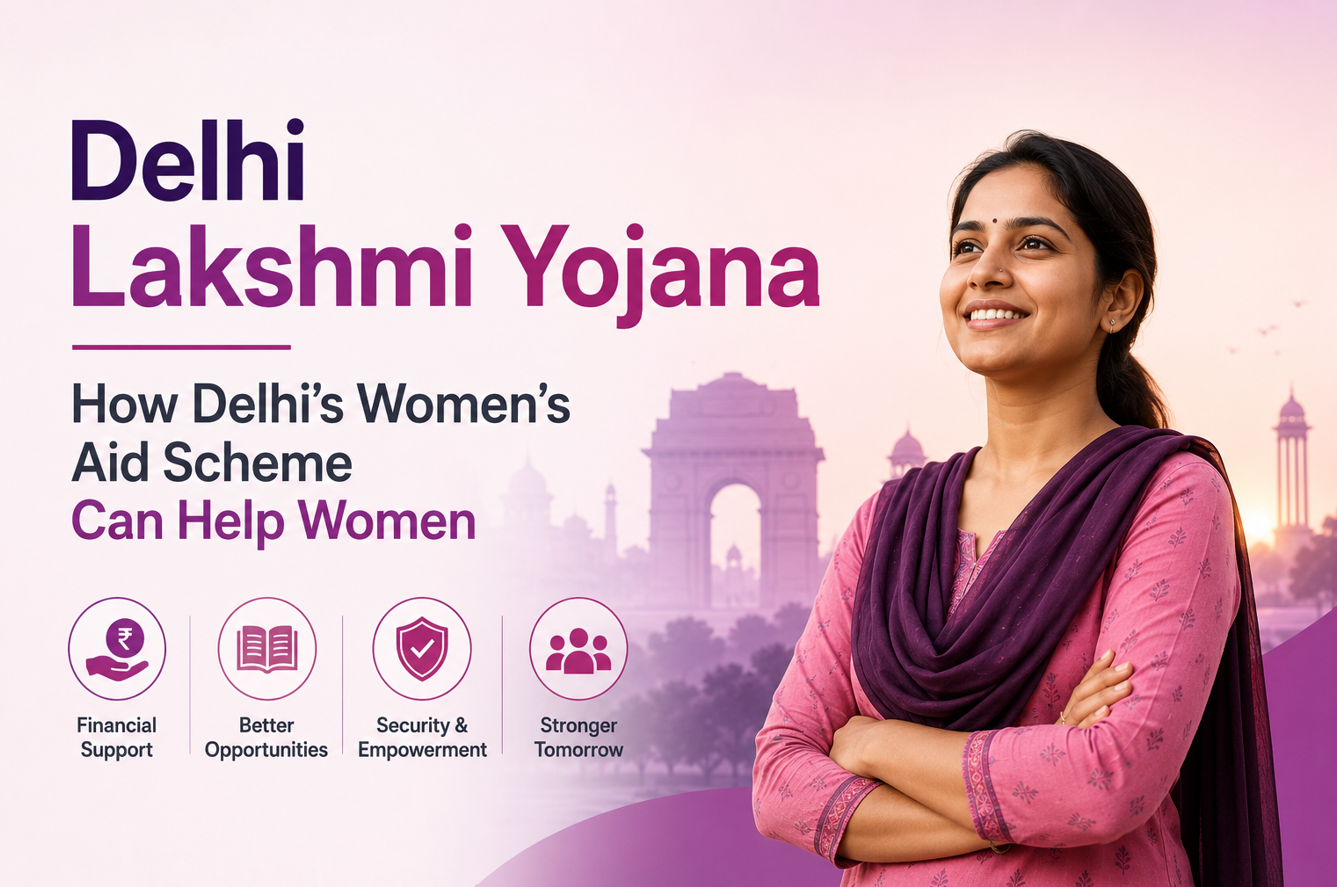
Delhi’s women’s financial aid scheme has now got an official name – Delhi Lakshmi Yojana. The scheme was earlier discussed as Mahila Samriddhi Yojana, but the Delhi government has reportedly renamed it as Delhi Lakshmi Yojana.
Eligible women in Delhi will receive Rs. 2,500 per month as financial assistance. The government is expected to launch the scheme around Raksha Bandhan, with reports pointing to August 28, 2026 as the likely rollout date.
For many women, Rs. 2,500 may not look like a huge amount. But for a household managing rent, school fees, medicines, travel and groceries, a fixed monthly support can make daily life a little less tight.
What is Delhi Lakshmi Yojana
Delhi Lakshmi Yojana is a proposed monthly financial assistance scheme for eligible women in Delhi.
The scheme is expected to provide Rs. 2,500 per month through direct bank transfer. That means the money should go straight into the beneficiary’s bank account, reducing the chances of middlemen or cash handling issues.
It is being positioned as a women-focused welfare scheme, mainly for poor and needy women who meet the eligibility rules.
The full final guidelines are still awaited, so women should not depend only on WhatsApp forwards or local rumours. The final rules will matter.
Why the scheme has been introduced
The purpose of the scheme is to give women some direct financial support.
In many households, women manage daily expenses but may not always have independent income. A monthly amount in their own bank account can help with small but important needs.
It can support food expenses, children’s school items, local travel, medicines, mobile recharge, household essentials or savings.
The bigger idea is women’s economic confidence. When money comes directly to a woman’s account, it can give her more say in household decisions.
Who may be eligible
Final eligibility rules should be checked after the official notification. However, recent reports suggest the government may keep stricter rules to ensure the benefit reaches genuinely needy women.
Reported conditions may include long-term Delhi residence, income or wage limits, ration card linkage and no serious criminal background. Some reports also say families owning a four-wheeler may be excluded.
There may also be a family definition for eligibility, covering husband, wife, minor sons and unmarried daughters.
These details are important because welfare schemes often face two problems – genuine people being left out and ineligible people getting benefits. Clear eligibility rules can reduce both.
Documents women may need
The final document list is not officially complete yet, but applicants may need basic identity, residence and bank-related documents.
Likely documents may include Aadhaar card, voter ID, ration card, bank account details, residence proof, income proof, mobile number and passport-size photo.
If the scheme uses direct benefit transfer, the bank account should be active and linked properly. Women should also make sure their name, mobile number and address details match across documents as far as possible.
How it can help women in Delhi
The scheme can help in small but real ways.
A woman running a household may use the money for monthly ration gaps. A widow or single woman may use it for medicines. A mother may use it for school transport or tuition support. A working woman in a low-income job may use it for bus, metro or phone expenses.
The amount can also help women avoid small informal borrowings. Many low-income households borrow small sums at high cost for emergencies. A regular cash transfer can reduce that pressure.
It may also support women who want to start tiny home-based work, such as stitching, food preparation, beauty services or small reselling. Rs. 2,500 alone cannot build a business, but it can help buy basic material or cover phone and travel costs.
Why direct bank transfer matters
Direct transfer is important because it gives the beneficiary more control.
If money goes directly into a woman’s account, it becomes easier to track. It also reduces the risk of local-level leakage.
But this will work well only if accounts are active, banking access is easy and women know how to check transactions. The government may need help desks, camps and simple guidance for women who are not comfortable with digital banking.
Expected rollout and application process
The scheme is expected to be launched around August 28, 2026, though the final date should be confirmed through official Delhi government channels.
The application process may be online, offline or a mix of both. Delhi may use portals, local centres, camps or department offices to collect applications.
A smooth process will be important. If forms are too complicated, many eligible women may struggle. The government should ideally publish a simple checklist, helpline number and application tracking system.
Possible challenges
- The first challenge is verification. Delhi has a large population, including migrants and people living in rented homes. Proving long-term residence may be difficult for some genuine applicants.
- The second challenge is awareness. Many women may hear half-correct information before the official launch. This can lead to confusion and fake agents.
- The third challenge is budget pressure. A monthly scheme for a large number of women needs steady funding. Payments should be regular, not delayed.
- The fourth challenge is exclusion. If rules are too strict, some needy women may miss out. If rules are too loose, the scheme may become financially difficult to manage.
How women should prepare
Women who may be eligible should start by keeping basic documents ready. Check whether the bank account is active. Make sure Aadhaar, mobile number and bank details are correct.
Do not pay money to anyone promising guaranteed approval. Government welfare scheme applications should be done only through official channels or authorized centres.
Also wait for the official notification before submitting sensitive documents. Fake websites and agents often appear when a new scheme is announced.
Conclusion – Key takeaways
Delhi Lakshmi Yojana is expected to provide Rs. 2,500 per month to eligible women in Delhi. The scheme was earlier discussed as Mahila Samriddhi Yojana and has now reportedly been renamed.
If implemented well, it can help women with household expenses, personal needs, small savings and financial confidence. The direct bank transfer model can make the support cleaner and easier to track.
The final impact will depend on clear eligibility rules, easy applications, regular payments and strong protection against fake agents. For now, women should keep documents ready and wait for the official launch guidelines.
Discover more from Newskart
Subscribe to get the latest posts sent to your email.

Comments are closed.