

Cabinet Approves Rs. 1.25 Lakh Crore Semiconductor Mission 2.0 to Power India’s Chip Ambitions, Lets Explore


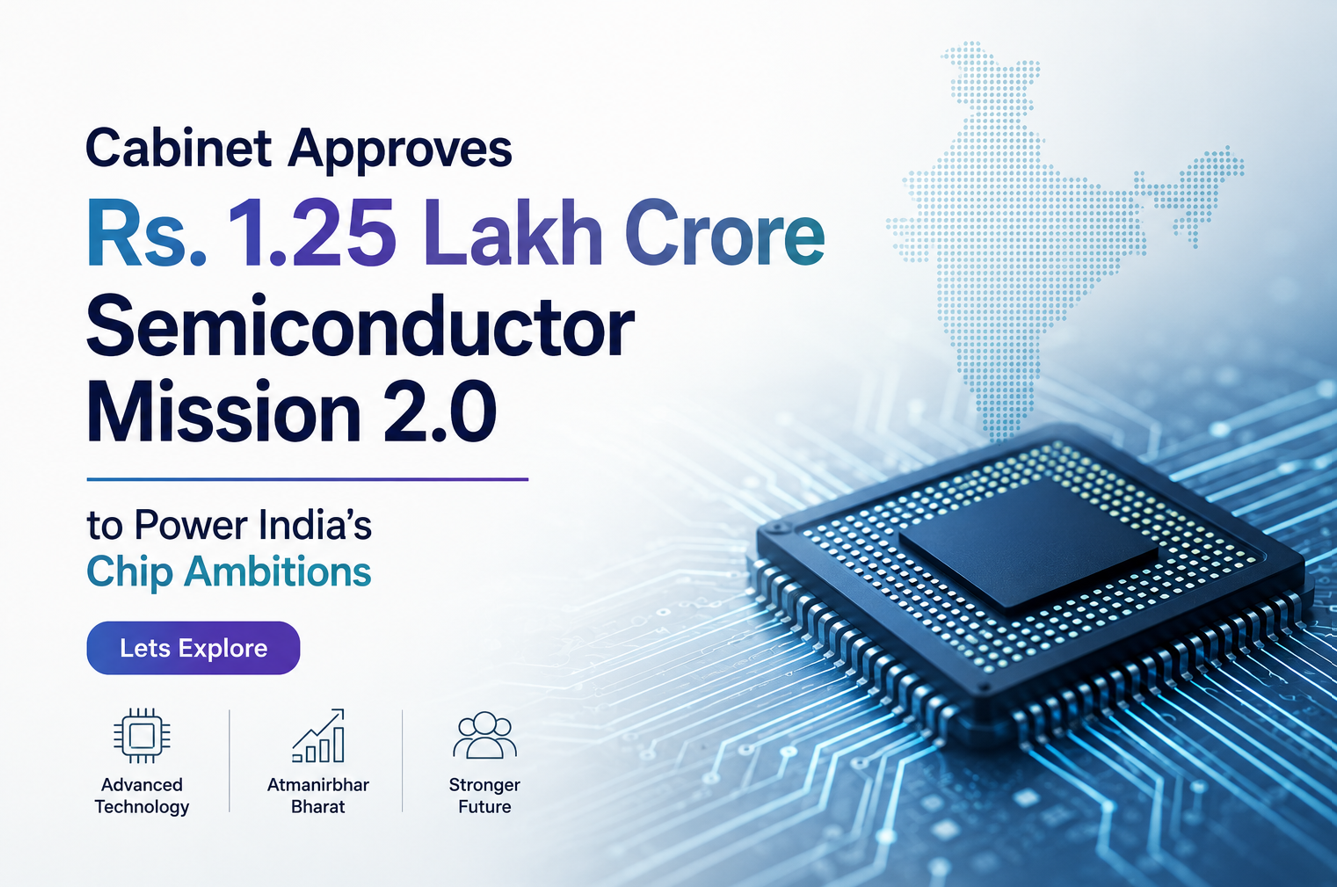
India’s semiconductor dream has just received a much bigger push. The Union Cabinet has approved India Semiconductor Mission 2.0, with an allocation reported at around Rs. 1.25 lakh crore to Rs. 1.27 lakh crore.
This is not a small policy update. Chips sit inside phones, cars, laptops, defence systems, medical devices, data centres, EVs and almost every modern machine. When chip supply breaks, entire industries slow down. India learnt that during the global semiconductor shortage.
With Semiconductor Mission 2.0, the government wants India to move from being a large electronics market to becoming a serious chip manufacturing and design base.
What is Semiconductor Mission 2.0
Semiconductor Mission 2.0 is the next phase of India’s chip-building plan. The first India Semiconductor Mission was approved in 2021 with an outlay of Rs. 76,000 crore.
That first phase helped attract large projects in chip assembly, testing, packaging and fabrication. Now the second phase is expected to go deeper. The focus is not only on one or two big factories, but on the full ecosystem around chips.
That means fabs, packaging units, design companies, chemicals, gases, tools, materials, talent, research and startups.
In simple words, India does not want to only assemble chips. It wants to build the full chip supply chain step by step.
Why this matters for India
Semiconductors are a strategic product. Countries that control chip manufacturing and design have more power in technology, defence, manufacturing and digital infrastructure.
India imports a large share of its semiconductor needs. As demand grows in EVs, smartphones, AI servers, telecom gear and defence electronics, dependence on imports can become risky.
Semiconductor Mission 2.0 is meant to reduce that risk. It can help India attract global chip companies, support Indian design startups and create high-skill jobs.
This is also linked to Make in India. If India wants to manufacture more phones, cars, appliances, drones and industrial electronics, it also needs a stronger component base.
What the money may support
The new allocation is expected to support chip fabrication units, display fabs, compound semiconductors, assembly and testing units, design-linked incentives and ecosystem development.
A chip fab is the facility where semiconductor wafers are manufactured. These are very expensive and difficult to build. They need clean rooms, stable power, water, specialized machines and highly trained engineers.
Packaging and testing units are also important. Once chips are made, they need to be assembled, tested and prepared for use in devices. This part of the chain is where India has already seen early momentum.
The mission may also support semiconductor-grade materials such as chemicals and gases. These are less talked about, but without them, chip factories cannot run smoothly.
How this helps startups and design companies
India already has strong chip design talent. Many global semiconductor companies have engineering teams in India. The challenge is turning that talent into more Indian intellectual property and local companies.
Semiconductor Mission 2.0 can help fabless startups. A fabless company designs chips but does not own a factory. This model is common globally because fabs are extremely costly.
With better incentives, Indian startups can design chips for EVs, IoT devices, defence, telecom, AI hardware and industrial systems.
For example, a startup may design a low-power chip for smart meters or a controller for electric scooters. If India supports design, testing and production access, such companies can grow faster.
Impact on jobs
This mission can create jobs, but not only factory jobs. Semiconductor projects need engineers, technicians, researchers, equipment specialists, chemical experts, supply chain managers and quality teams.
There will also be indirect jobs in construction, logistics, maintenance, electronics manufacturing and local supplier networks.
The bigger gain may be skill development. If India builds chip talent now, it can serve both domestic and global demand over the next decade.
Why auto and EV sectors should care
Cars are becoming computers on wheels. Modern vehicles use chips for infotainment, safety systems, battery management, ADAS, engine control, sensors and connected features.
Electric vehicles need even more electronics. Battery management systems, motor controllers, charging systems and vehicle software all depend on chips.
For Indian automakers, a stronger local semiconductor ecosystem can reduce supply risk over time. It may not make chips cheaper overnight, but it can improve availability and localization.
That matters for companies building EVs, two-wheelers, commercial vehicles and premium cars in India.
Competitors and global context
India is entering a tough global race. Taiwan, South Korea, the US, China, Japan and Europe already have deep semiconductor ecosystems.
Taiwan’s TSMC leads advanced chip manufacturing. South Korea has Samsung and SK Hynix. The US has Intel, NVIDIA, AMD and many chip design leaders. China is investing heavily to reduce dependence on foreign technology.
India is not going to replace these players quickly. The more realistic goal is to build strength in selected areas first – packaging, testing, mature-node chips, design, power electronics, compound semiconductors and electronics supply chains.
That is a sensible route. Every country does not need to lead every chip category on day one.
Challenges ahead
Money alone will not build a chip ecosystem. Semiconductor manufacturing needs execution discipline.
India must provide reliable power, water, land, logistics, clear approvals and skilled workers. Delays can become costly because chip projects run on tight global timelines.
The second challenge is talent. India has many engineers, but semiconductor manufacturing needs specialized training. Universities, companies and government programmes will need to work together.
The third challenge is supply chain depth. A fab cannot operate alone. It needs suppliers of gases, chemicals, wafers, equipment parts and clean-room services.
The fourth challenge is patience. Semiconductor projects take years. The real results of Mission 2.0 may show gradually, not immediately.
What it means for consumers
Consumers may not see phone or car prices drop tomorrow. That is not how semiconductor policy works.
But over time, stronger local chip capability can help India build more reliable electronics supply chains. It can support faster production of phones, vehicles, appliances, telecom equipment and industrial devices.
It may also encourage more global companies to manufacture advanced products in India.
Conclusion – Key takeaways
The Cabinet’s approval of Semiconductor Mission 2.0, with an allocation of over Rs. 1.25 lakh crore, is a major step in India’s technology and manufacturing strategy.
The mission aims to build a deeper chip ecosystem, covering fabs, packaging, testing, design, materials, talent and startups.
The opportunity is large, but so is the challenge. India will need steady execution, skilled workers, global partnerships and strong local suppliers. If done well, Semiconductor Mission 2.0 can help India move closer to becoming a serious player in the global electronics and chip supply chain.
Facts Input- IndianExpress, PIB-Gov India
Discover more from Newskart
Subscribe to get the latest posts sent to your email.

[…] has also been working on AI City in Lucknow, the UP AI Mission, electronics manufacturing clusters, semiconductor-related opportunities and centres of […]