


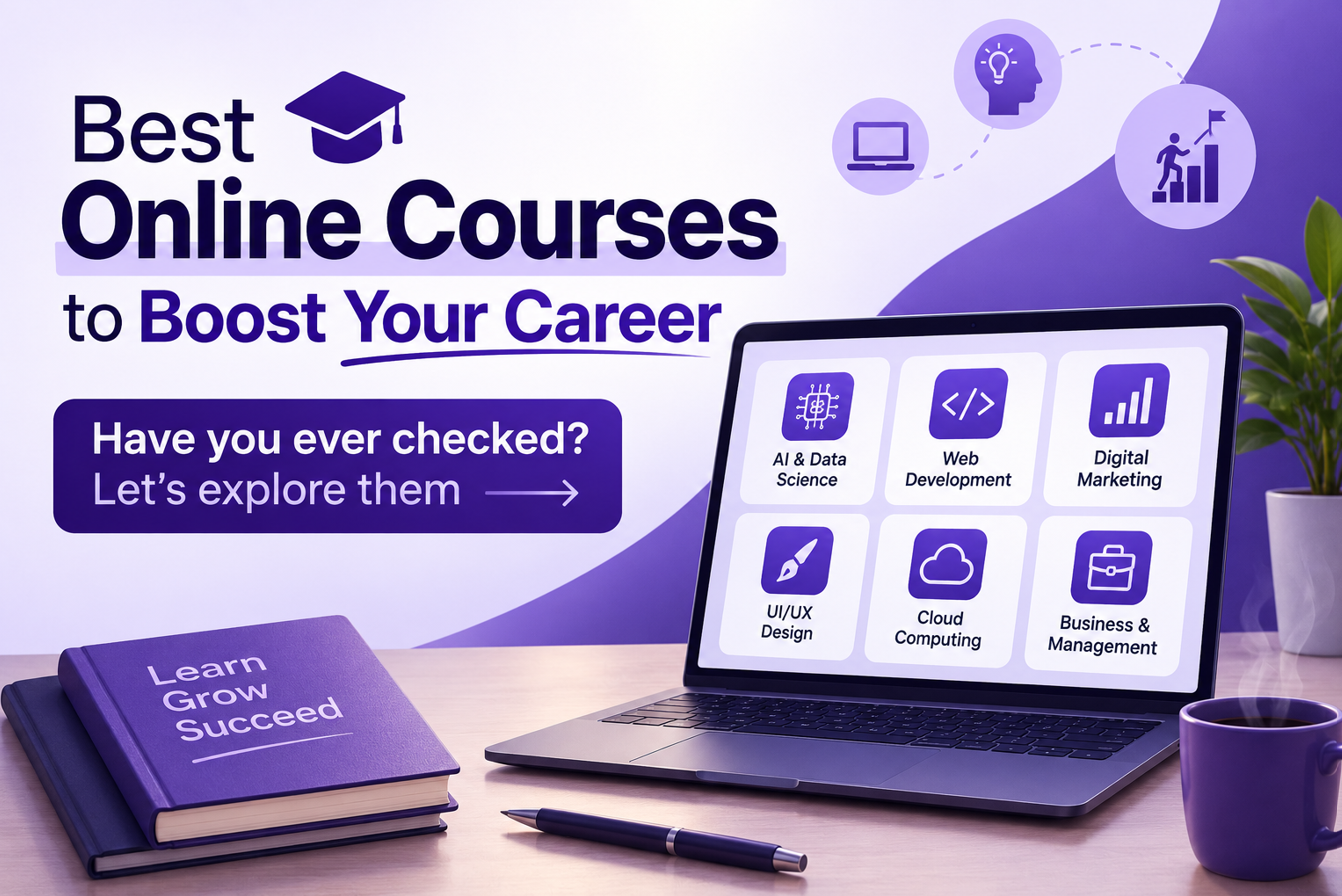
Online courses have become a smart way to learn new skills without leaving your job, college or home. But the problem is not a lack of courses. The real problem is choosing the right one.
Every platform promises career growth. Every course says it is useful. But not every certificate will help you get a better job, freelance project or promotion. The best online course is the one that gives you a practical skill, real assignments and something you can show in your resume or portfolio.
This guide on the best online courses to boost your career is written for beginners, students, freshers and working professionals who want clear options without confusion.
How to choose the right online course
Before buying or enrolling in any course, ask one simple question – what will I be able to do after completing it?
A good course should teach a skill you can use. It should include projects, examples, practice tasks or case studies. A course that only gives videos and a certificate may not be enough.
Also check the teacher’s background, course reviews, duration, language, fee, refund policy and whether the content is updated. If you are learning technology, avoid outdated courses. A coding or AI course from five years ago may not match today’s job market.
AI and productivity tools
AI is one of the most useful areas to learn in 2026. You do not have to become an AI engineer to benefit from it. Many professionals can use AI tools for research, writing, design ideas, data cleaning, customer support, coding help and business planning.
Beginners can start with courses on AI basics, prompt writing, AI tools for office work and responsible AI use. Technical learners can go deeper into machine learning, Python, model building and AI app development.
This skill is useful for content writers, marketers, developers, analysts, teachers, entrepreneurs and even finance professionals.
Data analytics
Data analytics is a strong career skill because companies want people who can understand numbers and explain them clearly.
A good beginner course should cover Excel, SQL, data cleaning, charts and dashboard basics. After that, learners can move to Power BI, Tableau or Python.
For example, a commerce graduate can learn Excel and Power BI, then create a sales dashboard using sample data. This kind of project looks much stronger on a resume than simply writing “data analytics certificate.”
Digital marketing
Digital marketing is a good option for students, freelancers, small business owners and working professionals who want flexible career options.
Useful topics include SEO, Google Ads, social media marketing, email marketing, content writing, analytics and landing page basics. SEO means improving website content so it can appear better in search results.
The best digital marketing courses include live projects or practical assignments. You can practice by creating a small blog, running a sample campaign or making a content plan for a local business.
Coding and web development
Coding is still one of the most valuable online learning paths. Beginners can start with HTML, CSS and JavaScript. After that, they can learn React, Node.js, Python, Java or mobile app development.
Do not try to learn everything at once. Pick one path. If you want websites, learn frontend development. If you like logic and backend systems, learn Python, Java or Node.js. If you want mobile apps, explore Android, iOS or cross-platform tools.
A strong project matters more than a long certificate list. Build a portfolio website, expense tracker, booking page, student dashboard or small e-commerce project.
Finance and accounting
Finance courses are useful for commerce students, working professionals, startup employees and anyone interested in money management.
Good options include financial modelling, Excel for finance, accounting basics, GST basics, income tax basics, stock market fundamentals, valuation and budgeting.
For job seekers, Excel and financial reporting are especially practical. A person who can prepare clean reports, understand cash flow and explain numbers clearly can be useful in many companies.
Cybersecurity
Cybersecurity is becoming important because businesses, banks, insurance companies, startups and government services are becoming more digital.
Beginners can start with networking basics, online safety, ethical hacking basics, cyber law awareness and security tools. Later, they can explore security analyst, cloud security or penetration testing paths.
This field needs patience. It is not only about hacking. It is about protecting systems, finding risks and responding carefully when something goes wrong.
Cloud computing
Cloud computing is useful for people interested in IT, software development, DevOps, cybersecurity and data engineering.
Courses on AWS, Microsoft Azure or Google Cloud can help learners understand servers, storage, databases, networking and deployment. A beginner should first understand basic cloud concepts before rushing into advanced certification.
Cloud skills are useful because many companies now run their websites, apps and business tools on cloud platforms.
Communication and business writing
Many people ignore communication skills, but this is one of the easiest ways to grow faster at work.
Good communication courses teach email writing, presentation skills, interview speaking, client communication and business writing. These skills help in almost every role, including sales, HR, finance, marketing, tech and management.
For example, a developer who can explain a technical issue clearly to a non-technical manager becomes more valuable. A finance executive who can write a simple report for leadership also stands out.
Project management
Project management courses are helpful for people who coordinate teams, deadlines, clients or operations.
Beginners can learn task planning, time management, team communication, risk tracking and project documentation. Later, professionals can explore formal certifications if their industry values them.
This skill is useful in IT, construction, marketing, operations, events, education and consulting.
Best platforms to explore
For Indian learners, SWAYAM and NPTEL are strong options for academic and technical courses, especially because many courses come from reputed institutions. Skill India Digital can also be useful for job-linked and vocational learning.
For global learning, Coursera, edX, Udemy, LinkedIn Learning and Google Career Certificates offer many career-focused courses. Coursera and edX often include university or company-backed programmes. Udemy is popular for affordable practical courses, but quality can vary by instructor.
Do not choose a platform only because it is famous. Choose the course that fits your goal, level and budget.
Free or paid courses
Free courses are good for exploring a topic. Paid courses may be useful when they offer structured learning, projects, mentor support, assessments or recognized certificates.
If you are unsure about a field, start free. Watch a few lessons, try a small project and see whether you enjoy it. Once you are serious, you can invest in a better course.
A smart approach is to spend less in the beginning and more only when the skill starts making sense.
Conclusion – Key takeaways
The best online courses to boost your career in 2026 are the ones that teach practical skills. AI, data analytics, digital marketing, coding, finance, cybersecurity, cloud computing, communication and project management are strong options.
Do not collect certificates just to fill your resume. Learn one skill properly, build a project, update your profile and apply it in real work.
A good course can open the door, but your practice will move you forward.
Disclaimer
This article is for general career guidance only. Course quality, fees, certificates and job outcomes can vary by platform, instructor, country and employer. Always check the latest course details before enrolling or consult with the academic consultant.
Discover more from Newskart
Subscribe to get the latest posts sent to your email.

Comments are closed.