

Bajaj Finserv Launches Finserv Intelligence – Why Its Rs. 2,000 Crore AI Bet Matters


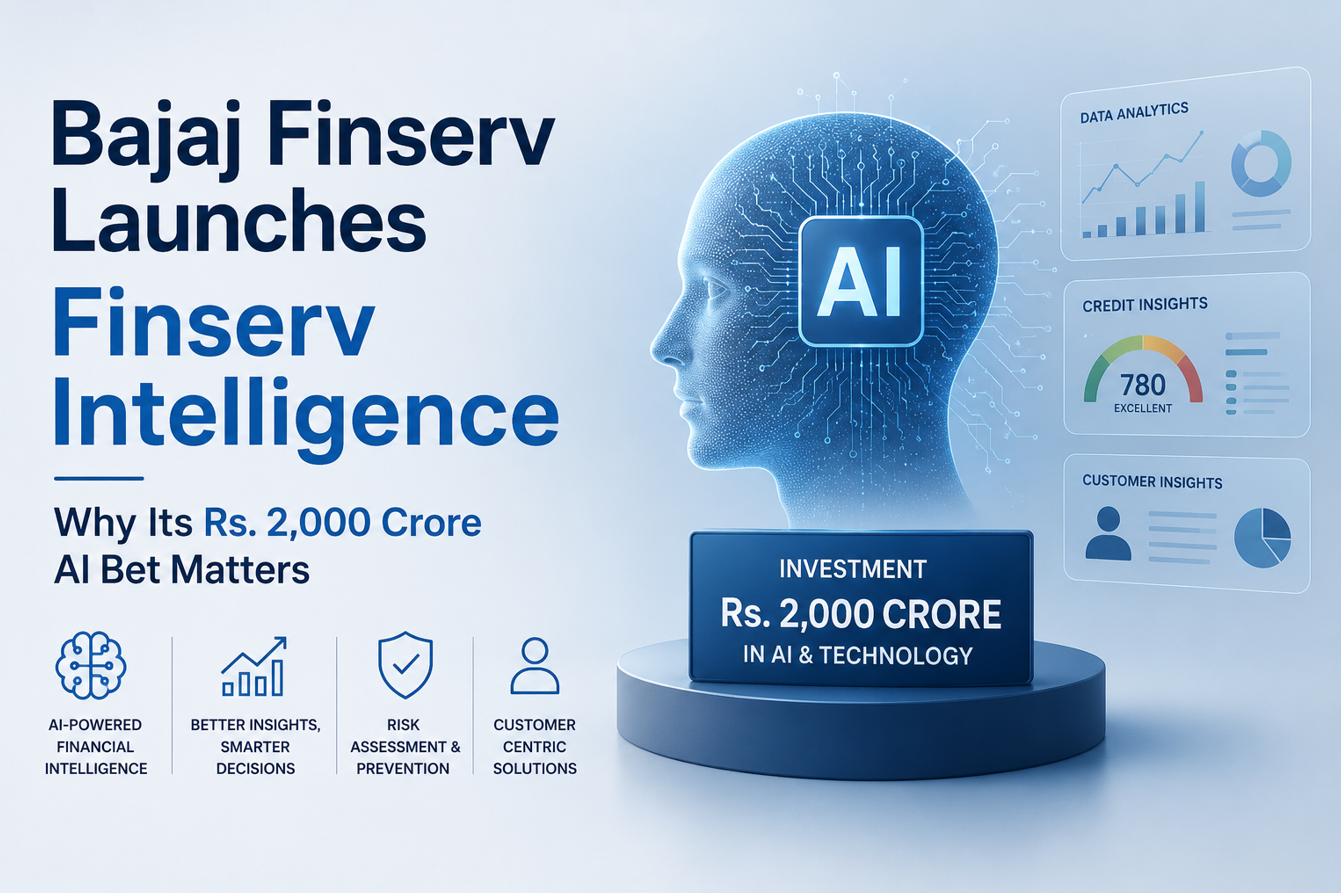
Bajaj Finserv has launched Finserv Intelligence, a new group-wide research and innovation initiative focused on artificial intelligence, cybersecurity, quantum technologies, fintech and consumer technology platforms. The company plans to invest around Rs. 1,500 crore to Rs. 2,000 crore over the next five years. This is not a small experiment. Bajaj Finserv is one of India’s biggest financial services groups, and when a company of this size creates a long-term AI and deep-tech platform, it says something about where the financial industry is heading.
The idea is simple but ambitious. Bajaj Finserv wants to build high-tech, low-cost and scalable solutions from India, not only for its own businesses but also for wider markets. In simple words, it wants AI and deep-tech tools that can work at Indian scale.
What Is Finserv Intelligence
Finserv Intelligence is an applied research and innovation platform. It is not just a normal startup investment fund. It combines internal research, partnerships with academic institutions and investments in early-stage companies. The platform will focus on areas such as AI, cybersecurity, quantum technologies, fintech and consumer technology. These are not random buzzwords. For a financial services company, all these areas are becoming important.
AI can help with lending, insurance, customer service, fraud detection and personalization. Cybersecurity is critical because financial companies handle sensitive customer data. Quantum technologies may affect future security, computing and risk modelling. Fintech and consumer platforms can help Bajaj reach more users through digital products.
The company has also partnered with IIT Bombay to create a joint research centre focused on AI, cybersecurity and quantum technologies. This is important because deep-tech needs patient research, not only quick app development.
How the Model Works
The model appears to have three layers.
- First, Bajaj Finserv will build its own research capability. This means teams inside the group can work on long-term technology problems that may help lending, insurance, payments, wealth, healthtech and customer platforms.
- Second, it will invest in startups and early-stage companies that have strong scaling potential. This gives Bajaj access to new ideas without having to build everything from scratch.
- Third, it will work with academic institutions like IIT Bombay. This can help bring research talent, technical depth and fresh thinking into the system.
This combination makes sense. Big companies often understand business problems deeply but move slowly. Startups move fast but may lack scale. Universities create strong research but may need industry use cases. Finserv Intelligence tries to bring these three worlds closer.
For example, a startup may build a voice AI tool for customer support. Bajaj can test it across millions of customer interactions. IIT researchers may help improve the model’s accuracy, security or language ability. If it works, the solution can scale faster.
Why AI Matters for Financial Services
Financial services is one of the best places to use AI because the industry deals with huge amounts of data, repetitive processes and risk decisions. A lender needs to decide who can get a loan. An insurer needs to price risk. A customer support team needs to answer questions quickly. A fraud team needs to detect unusual behaviour before money is lost.
AI can help in all these areas, but it must be used carefully. A wrong AI decision in finance can affect real people. It can reject a loan unfairly, flag a genuine user as suspicious or create privacy concerns.
That is why Bajaj’s deep-tech push should not only be judged by how much money it invests. It should also be judged by governance, transparency and safety.
The opportunity is big. AI can make financial products cheaper and faster. It can help rural and semi-urban users get support in local languages. It can reduce manual paperwork. It can detect fraud more quickly.
But the responsibility is equally big. Financial AI must be explainable, secure and fair.
Why This Is Important for Indian Startups
For Indian AI and deep-tech startups, Bajaj Finserv’s initiative can become a useful source of patient capital. Deep-tech companies often need more time than consumer internet startups. A cybersecurity platform, AI infrastructure tool or quantum-related technology may take years to mature. Regular venture capital sometimes pushes for faster growth than deep-tech can deliver.
A corporate platform like Finserv Intelligence can help if it brings capital, real use cases and large-scale deployment opportunities. This is especially useful in India because many startups struggle to find big enterprise customers early. If Bajaj gives startups a chance to test products in real financial environments, it can help them improve faster.
It can also create a new kind of startup partnership model. Instead of only buying software from vendors, large Indian companies may start co-building deep-tech solutions with startups and research labs.
Competitors and the Bigger Market
Bajaj Finserv is not alone in using AI. Banks, insurers, NBFCs and fintech companies across India are already experimenting with AI for customer service, underwriting, collections, fraud detection and personal finance. Its competitors include large financial groups such as HDFC Bank, ICICI Bank, Axis Bank, SBI, Kotak Mahindra Bank, Jio Financial Services, PhonePe, Paytm, Policybazaar and other fintech companies. Many of them are also investing in AI, data platforms and digital products.
But Bajaj’s approach is notable because it is setting aside a large five-year investment range and giving the initiative a clear identity. That can help it attract startups, researchers and talent.
The bigger race is not only between banks and NBFCs. It is between financial companies that can use technology responsibly at scale and those that cannot.
Is This Model Worth Watching
Yes, Finserv Intelligence is worth watching because it sits at the meeting point of finance, AI and deep-tech research.
The investment size is large enough to matter. The five-year timeline gives it breathing room. The IIT Bombay partnership gives it research credibility. And Bajaj Finserv’s large customer base gives it real-world deployment potential.
Still, success is not automatic. Many corporate innovation programmes sound impressive but become slow, bureaucratic or too disconnected from actual customer problems. Finserv Intelligence will need speed, strong technical leadership and clear use cases.
If it works, it could create useful AI tools for India’s financial system. If it becomes only a branding exercise, the impact will be limited.
Conclusion and Key Takeaways
Bajaj Finserv’s Finserv Intelligence is a serious AI and deep-tech bet. The company plans to invest Rs. 1,500 crore to Rs. 2,000 crore over five years across startups, internal research and academic partnerships. The model is interesting because it combines capital, research depth and real business deployment. For India’s AI ecosystem, that combination can be powerful.
Key takeaways
- Bajaj Finserv has launched Finserv Intelligence.
- The initiative will invest Rs. 1,500 crore to Rs. 2,000 crore over five years.
- Focus areas include AI, cybersecurity, quantum technologies, fintech and consumer technology platforms.
- Bajaj Finserv has partnered with IIT Bombay for a joint research centre.
- The model combines internal research, startup investments and academic collaboration.
- Competitors and peers include major banks, fintechs and financial services groups investing in AI.
The initiative could help India build scalable financial AI, but governance and responsible use will be important.
Discover more from Newskart
Subscribe to get the latest posts sent to your email.

Comments are closed.