

Zoho Backed Netrasemi’s 12nm AI Chip Marks a Big Step for Make in India Semiconductors Era


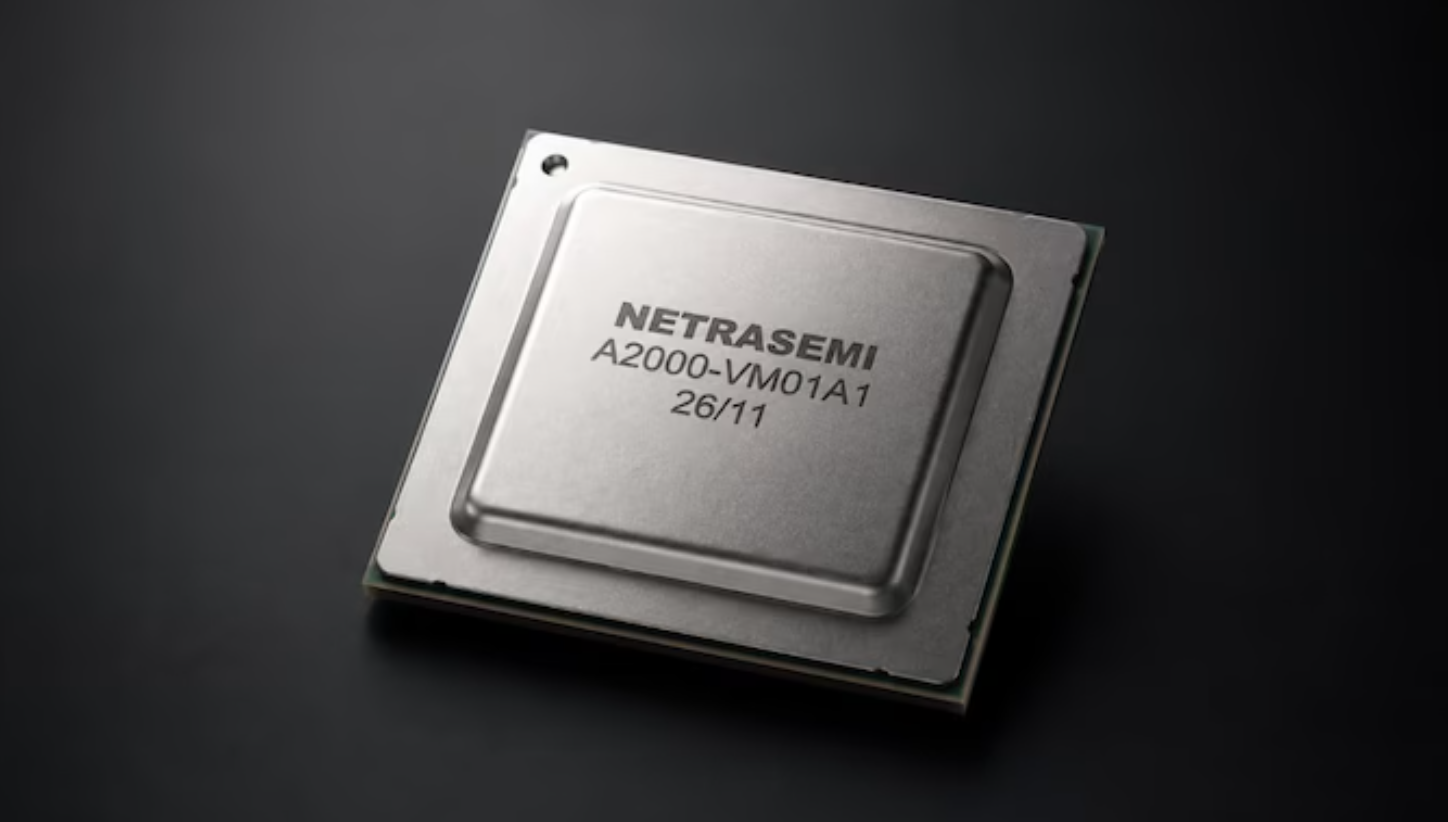
India’s semiconductor dream has often sounded big on paper, but slow in real life. That is why Zoho backed Netrasemi’s 12nm AI chip feels important. The Kerala-based startup has successfully tested its A2000 Edge AI system-on-chip, and early customer trials have started. This is not a chip meant for laptops or gaming PCs. It is designed for edge AI devices such as smart cameras, drones, robots, industrial machines and surveillance systems. In simple words, it helps devices think locally instead of sending every piece of data to the cloud.
That may sound like a small technical shift, but it can change how AI works in the real world. Faster response, lower power use and better data privacy are all possible when intelligence moves closer to the device.
What Is Netrasemi’s 12nm AI Chip
Netrasemi’s A2000 is an Edge AI system-on-chip, also called an SoC. A system-on-chip means several important computing parts are placed inside one chip. The A2000 includes an in-house neural processing unit, vision cores, image signal processor, crypto engines and other hardware blocks built for AI and video analytics. The chip has been fabricated on TSMC’s 12nm process node.
Netrasemi was founded in 2020 by Jyothis Indirabhai, Sreejith Varma and Deepa Geetha. The company is based in Thiruvananthapuram, Kerala, and focuses on AI chips for smart IoT and edge devices.
The startup is backed by Zoho and Unicorn India Ventures. It has also received support under government-linked semiconductor programmes such as the Design Linked Incentive scheme and Chip-to-Startup programme.
The important thing here is that Netrasemi is a fabless semiconductor company. That means it designs the chip in India, while manufacturing happens through a foundry partner. In this case, reports say the chip is being fabricated by TSMC in Taiwan.
Why Edge AI Matters
Most people know AI through chatbots, image generators or cloud-based tools. But many AI use cases do not need a giant data centre every time. Think of a smart camera at a factory gate. It may need to detect a person, vehicle or safety issue instantly. If the video has to travel to a cloud server and come back with a decision, there can be delay. It may also use more bandwidth and raise privacy concerns.
With edge AI, the device can process data locally. A camera can understand movement. A drone can recognise an object. A robot can react faster. An industrial machine can detect faults without waiting for the cloud. This is where the Netrasemi 12nm AI Chip becomes useful. It is built for compact, power-sensitive devices that need AI processing without becoming too expensive or power-hungry.
For India, this matters because many future products will need embedded intelligence. Smart traffic systems, defence drones, factory automation, medical devices and agriculture equipment can all benefit from local AI processing.
Why This Is a Make in India Milestone
India wants to move from being a large electronics market to becoming a serious electronics design and manufacturing ecosystem. Chip design is a major part of that journey. The A2000 shows that Indian startups can build specialised semiconductor products for real use cases. It is not just a software layer or imported hardware with Indian branding. The core chip architecture and design work come from an Indian team.
This is why the “Make in India” angle matters. Even though fabrication is happening through TSMC, the design capability is being built in India. In semiconductors, design itself is a high-value activity. Countries do not become chip powers overnight by building factories alone. They also need engineers, IP, tools, testing systems and product companies.
Netrasemi’s progress also proves that government schemes can help when combined with private risk capital. Zoho’s backing is especially interesting because it shows Indian software companies are now supporting deeptech hardware bets.
If India wants a new era in AI hardware, it needs more companies like this. Not every startup has to build a general-purpose chip. Some can build chips for cameras, drones, factories, EVs, medical devices or telecom systems.
Where This Chip Could Be Used
The A2000 is aimed at edge devices that need smart vision and real-time analytics.
- In surveillance, it can help cameras detect movement, people, vehicles or unusual activity without sending every video stream to the cloud. This can reduce bandwidth cost and improve response time.
- In drones, edge AI can help with object detection, navigation and inspection. For example, a drone checking power lines or farm fields can process visual information during flight.
- In robotics, the chip can help machines recognise surroundings and react faster. This is useful in warehouses, factories and service robots.
- In industrial automation, the chip can support machine vision, quality checks and equipment monitoring. A production line camera can detect defects more quickly when AI processing happens locally.
This is the practical side of the story. The chip is not exciting only because it is Indian. It is exciting because it is built for real products that industries already need.
Competitors and the Road Ahead
Netrasemi is entering a tough global market. Edge AI already has strong players such as Nvidia Jetson, Google Coral, Hailo, Ambarella, Qualcomm, MediaTek and other AI chip companies. In India, the semiconductor startup space is also growing. Companies like Mindgrove Technologies, InCore Semiconductors, C2i Semiconductors and others are working on different parts of the chip ecosystem.
Netrasemi’s challenge will be execution. Designing and testing a chip is a big achievement, but commercial success needs more. The company must prove reliability, software support, developer tools, pricing, customer adoption and supply consistency.
For AI chips, hardware alone is not enough. Developers need software kits, documentation, reference boards and easy integration. If companies find it difficult to build products around the chip, adoption can slow down.
Still, the opportunity is strong. Many customers want alternatives to imported AI hardware, especially for surveillance, defence, industrial and smart infrastructure use cases. If Netrasemi can deliver stable products, it can become a serious name in India’s semiconductor story.
Conclusion and Key Takeaways
Zoho backed Netrasemi’s 12nm AI chip is a meaningful step for India’s semiconductor ecosystem. The A2000 is designed for edge AI, smart cameras, drones, robotics and industrial automation.
It shows that India’s chip ambitions are slowly moving from policy talk to actual silicon. The chip is designed in India, backed by Indian investors, supported by government semiconductor programmes and targeted at real-world AI devices.
Key takeaways
- Netrasemi has successfully tested its A2000 Edge AI SoC.
- The chip is built on TSMC’s 12nm process node.
- Netrasemi was founded in 2020 by Jyothis Indirabhai, Sreejith Varma and Deepa Geetha.
- The startup is backed by Zoho and Unicorn India Ventures.
- The A2000 is built for smart cameras, drones, robotics, surveillance and industrial automation.
- It is a Make in India milestone for chip design, even though fabrication is currently done overseas.
The real test will be commercial production, customer adoption and software ecosystem support.
Facts Input- ET, India Today, and Official Site
Discover more from Newskart
Subscribe to get the latest posts sent to your email.

Comments are closed.