


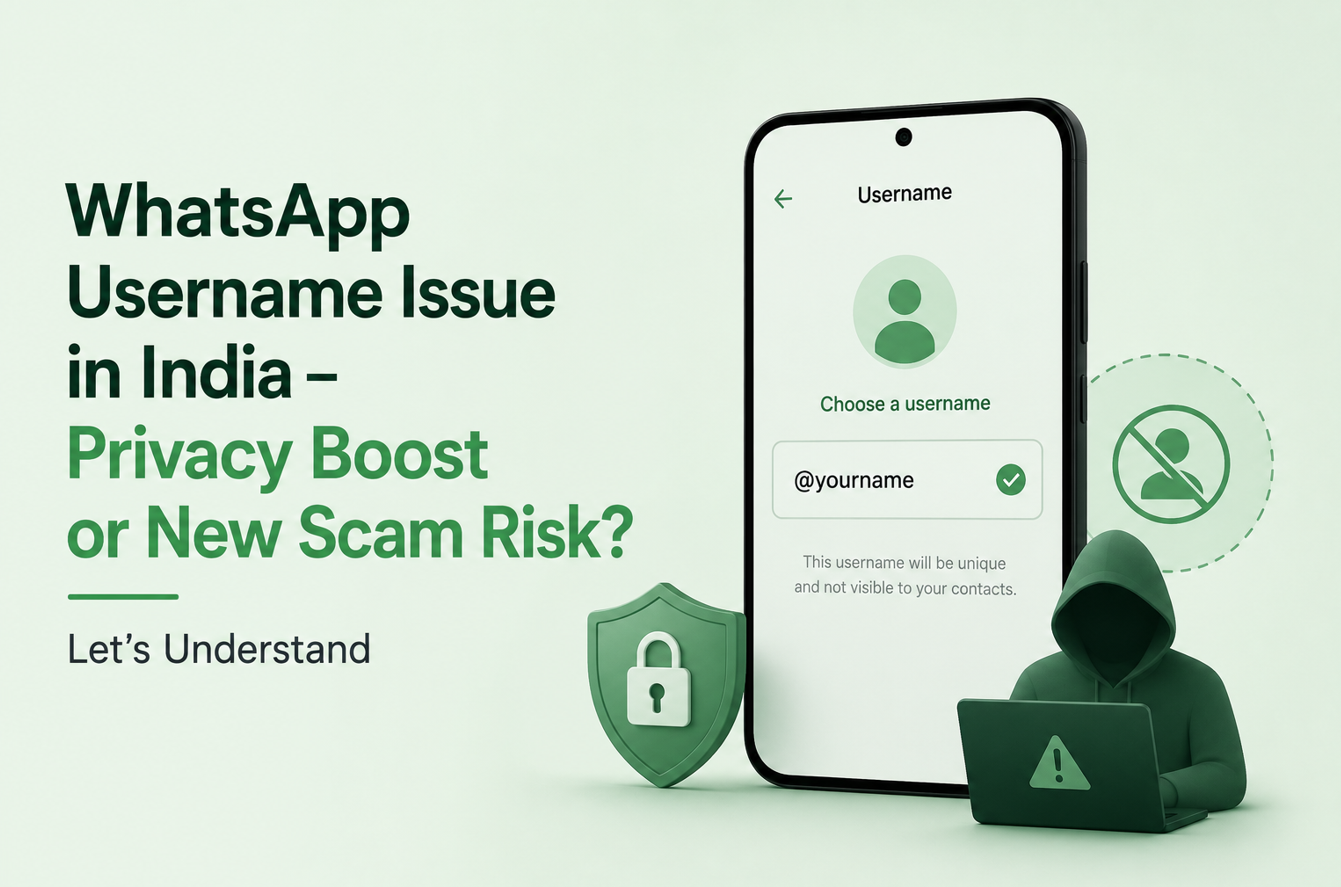
WhatsApp is working on a username feature that could let people chat without sharing their phone number. On paper, this sounds useful. Many users do not want to give their mobile number to a shop, delivery person, buyer, seller, client, or someone they met online.
But in India, the feature has quickly become a debate. The government has raised concerns that usernames may create new risks around scams, fake identities, and cyber fraud. WhatsApp says the feature is being built with safety controls, but officials want more clarity before a wider rollout.
So, what exactly is the WhatsApp username issue in India? And why are people worried about a feature that is supposed to improve privacy? Let’s break it down in simple language.
What is the WhatsApp username feature
Right now, WhatsApp is mainly linked to a phone number. If someone wants to contact you on WhatsApp, they usually need your mobile number.
The upcoming username feature changes that. It allows users to reserve a unique name, similar to how handles work on social platforms. Once the feature is active, a person may be able to share a username instead of sharing their phone number.
For example, instead of giving your mobile number to a small business customer or an online buyer, you could share a username. This can help protect your phone number from being passed around.
Reports say WhatsApp will not have a public username directory. That means people will not be able to search random names and find users easily. A person will need to know the exact username to contact someone. WhatsApp is also expected to offer an optional username key, which adds another layer before someone can message you.
Why India is concerned
India is one of WhatsApp’s biggest markets, and the app is deeply used for personal chats, business communication, payments, customer support, housing groups, school updates, and local services.
That is why even a small change can have a large impact.
The Indian government has reportedly asked Meta-owned WhatsApp not to roll out the username feature until further consultation. Officials have also asked the company to explain how the feature will work and how it will prevent misuse.
The concern is simple. If people can hide behind usernames, scammers may try to create fake accounts that look like banks, government offices, delivery companies, celebrities, or business owners.
For a country already dealing with online fraud, fake job offers, fake loan apps, phishing links, and impersonation scams, this risk cannot be ignored.
The privacy benefit is real
It is important to be fair and we should look at both the sides. The username feature may be risky but it also solves a real privacy problem which is to protect your phone number fr0m sharing it with others.
A phone number is personal. In India, one mobile number is often linked with banking, UPI, Aadhaar-related services, work contacts, delivery apps, and family communication. Once your number is shared widely, it can be hard to control who contacts you.
A username can reduce that exposure.
For example, a home baker selling cakes through WhatsApp may not want to share her personal number with every new customer. A teacher taking enquiries may prefer a username. A freelancer may want to talk to clients without giving away a private mobile number too early.
In these cases, usernames can make WhatsApp safer and more convenient.
The risk of impersonation
The biggest risk is fake identity.
Scammers may create usernames that look close to trusted names. For example, a fraudster may use a username that appears similar to a bank, government service, e-commerce company, or popular creator.
A small spelling change can fool people. Many users may not notice the difference between a real business and a fake username, especially during a rushed payment or support conversation.
This could lead to scams like fake refund messages, fake account verification, fake parcel delivery charges, or fake customer care chats.
WhatsApp is expected to reserve some high-profile usernames to reduce this problem. But India has millions of local businesses, shops, influencers, agents, schools, coaching centres, and service providers. Protecting every name will be difficult.
Fraud may become harder to trace
Another concern is traceability. When a scam happens through a phone number, investigators may have at least one visible identifier to begin with. A username may make the first layer of identity less clear for normal users.
This does not mean WhatsApp accounts will stop using phone numbers internally. A phone number is still required to register on WhatsApp. But if users only see a username during first contact, they may find it harder to judge whether the person is genuine.
For example, if someone messages you as a “bank support” username and asks for an OTP, you may not immediately see the phone number behind the account. This can create confusion for less tech-savvy users.
Risk for small businesses
Small businesses may face a new kind of brand confusion.
A local salon, tuition centre, travel agent, car dealer, or mobile repair shop may not reserve its username quickly. Someone else could try to take a similar name and misuse it.
Even if WhatsApp adds controls, name disputes can become messy. India has many businesses with similar names across different cities. Deciding who gets a username may not always be simple.
This is why businesses should be alert once the feature becomes available. They should claim their official username early and clearly tell customers how to identify the real account.
Risk for ordinary users
For normal users, the main danger is unwanted contact and fake trust.
A username can protect your phone number, but it can also become another public identity if shared carelessly. If you post your username on social media, public forums, or classified listings, unknown people may try to contact you.
WhatsApp’s optional username key may help here. If enabled, someone may need both your username and the key before messaging you. This can reduce random contact.
Users should also avoid choosing usernames that reveal too much personal information. A username with full name, birth year, city, workplace, or school name can make it easier for strangers to guess details about you.
Competitors are also under attention
The debate is not limited to WhatsApp. Messaging apps like Telegram and Signal already use username-style features or have moved toward phone-number privacy options.
Reports say Indian authorities are also looking at similar features on other messaging platforms. This shows the issue is bigger than one app.
The real question is how India should balance privacy and safety. Users want privacy from strangers, but the government also wants platforms to prevent fraud, impersonation, and misuse.
What users should do
If WhatsApp usernames launch in India, users should treat them carefully.
- Choose a simple username, but avoid adding sensitive personal details. Do not use your birth year, bank name, address, or full identity in a way that strangers can misuse.
- Enable extra safety features if available, including the username key, two-step verification, privacy settings, and profile photo controls.
- Never trust a username alone. If someone claims to be from a bank, government office, delivery company, or business, verify through the official website, app, or known phone number.
- Never share OTPs, UPI PINs, passwords, card details, or remote-access app permissions through WhatsApp.
For businesses, the best step is to reserve the official username early and display it consistently on the website, store board, invoices, and verified social pages.
Conclusion with key takeaways
The WhatsApp username issue in India is not a simple privacy versus government debate. Both sides have valid points.
Users need better privacy because phone numbers are too personal to share everywhere. At the same time, usernames can create new risks if scammers use them to hide, impersonate, or confuse people.
The feature can be useful if it comes with strong safeguards, clear business verification, easy reporting, and user education. Until then, Indian users should stay careful and avoid trusting any account only because its username looks official.
Key takeaways
- WhatsApp usernames may let users chat without sharing phone numbers.
- India has raised concerns about scams, fake identities, and impersonation.
- The feature may help protect personal phone numbers.
- The biggest risks are fake business accounts, phishing, and user confusion.
- Users should enable extra security controls and verify unknown contacts.
- Businesses should claim official usernames early when the option is available.
Facts Input- ToI, ToI, AP, The Verge
Discover more from Newskart
Subscribe to get the latest posts sent to your email.

[…] owns WhatsApp, Facebook and Instagram. WhatsApp is widely used in India for personal chats, business […]