

India’s CNG, Hybrid And EV Share Hits 42 Percent In August, A Big Signal For Car Buyers


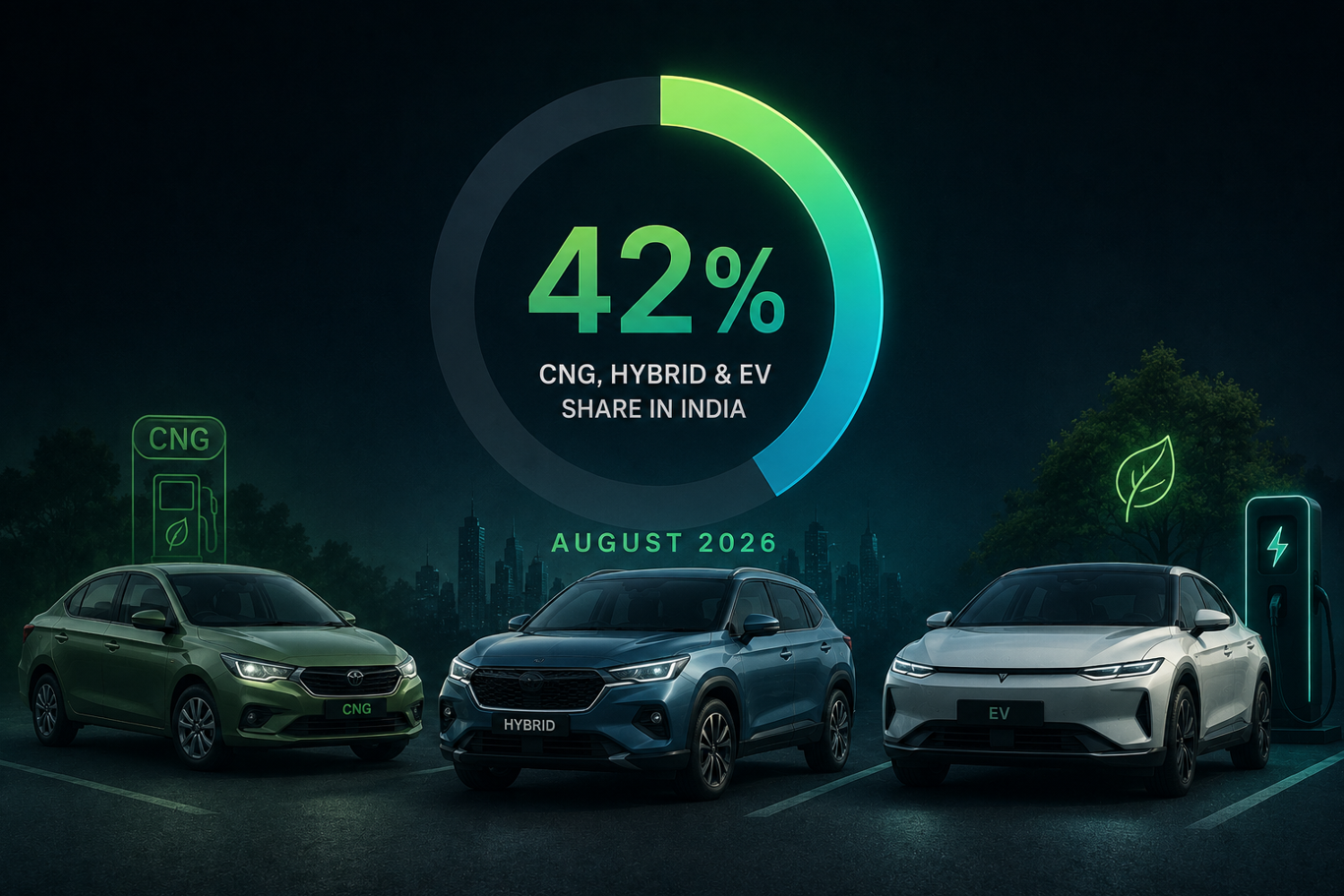
India’s car market is changing faster than expected. In August 2026, CNG, hybrid and electric cars together reportedly touched around 42 percent share in the passenger vehicle market. That means almost four out of every ten new car buyers are now looking beyond regular petrol and diesel.
This is not just an auto industry number. It affects common people directly. It changes what car companies launch, how much buyers spend on fuel, and what kind of vehicles may hold better value in the coming years.
Why buyers are moving beyond petrol and diesel
The biggest reason is running cost. Petrol and diesel prices still matter a lot to Indian families. A buyer who drives 40 to 60 km daily will quickly notice the difference between a petrol car and a CNG, hybrid or EV.
CNG is popular because it is cheaper to run in many cities. Hybrids are gaining attention because they offer better mileage without needing charging. EVs are growing because more models are available now, and home charging can make daily use quite affordable.
There is also concern around E20 petrol, which is petrol blended with 20 percent ethanol. Many buyers are asking dealers whether it can affect mileage or older vehicles. While not every concern is proven, the discussion has made some people more open to CNG, hybrid and electric options.
What this means for common people
For everyday buyers, the benefit is choice. Earlier, many people had to pick mainly between petrol and diesel. Now, there are more options for different needs.
A city user with fixed daily travel may find an EV useful because charging at home can reduce running cost. A taxi operator or delivery worker may prefer CNG because refuelling is quick and cheaper than petrol in several markets. A family that travels both in city traffic and on highways may like a hybrid because it gives better mileage without range anxiety.
The shift can also push companies to offer better features at better prices. When more people buy CNG, hybrid and EV models, carmakers have a reason to produce more of them. Over time, this can improve availability, service support and resale confidence.
Benefits of this move
- The first benefit is lower fuel spending for many users. CNG and EVs usually help reduce day-to-day running cost, while hybrids save fuel in traffic-heavy driving.
- The second benefit is cleaner air. EVs have no tailpipe emissions, while CNG generally burns cleaner than petrol or diesel. Hybrids still use petrol, but they can reduce fuel use by switching between engine and electric assistance.
- The third benefit is lower oil dependence. India imports a large share of its crude oil needs. If more vehicles use electricity, CNG or more efficient hybrid systems, the country can reduce some pressure from imported fuel over the long term.
What it means for car manufacturers
For automakers, the message is simple. They cannot depend only on petrol models anymore.
Maruti Suzuki already has a strong CNG portfolio and is also moving into EVs. Tata Motors leads India’s electric passenger vehicle space. Mahindra, JSW MG Motor, Hyundai, Toyota and Kia are also competing with EVs, hybrids or cleaner powertrain options.
This competition is good for customers. It can bring more models, better battery warranties, improved mileage claims, wider CNG choices and more practical cars in the Rs. 8 lakh to Rs. 25 lakh price range.
The practical side buyers should check
This shift does not mean every buyer should blindly pick an EV, CNG or hybrid. The right choice depends on use.
Before buying, check your daily running, fuel station access, charging option, service network, battery warranty, boot space in CNG cars and resale value. For example, an EV makes more sense if you can charge at home or office. A CNG car is useful only if CNG pumps are easily available near your route.
Conclusion with key takeaways
The rise of CNG, hybrid and EV cars to around 42 percent market share shows that Indian buyers are becoming more practical. They want lower running costs, cleaner options and long-term value.
Key takeaways –
- CNG, hybrid and EV cars are now close to petrol cars in market share.
- Common people may benefit from lower fuel bills and more vehicle choices.
- EVs suit daily city users with charging access.
- CNG is useful for high-running buyers where pump access is good.
- Hybrids are a balanced option for buyers who want mileage without charging.
Reference- Autocar Professional, Financial Express, Autocar India, The New Indian Express, Business Standard
Discover more from Newskart
Subscribe to get the latest posts sent to your email.

Comments are closed.