

India-UK CETA Takes Effect Today – Auto Tariffs to Drop, But Cheaper Cars May Take Time


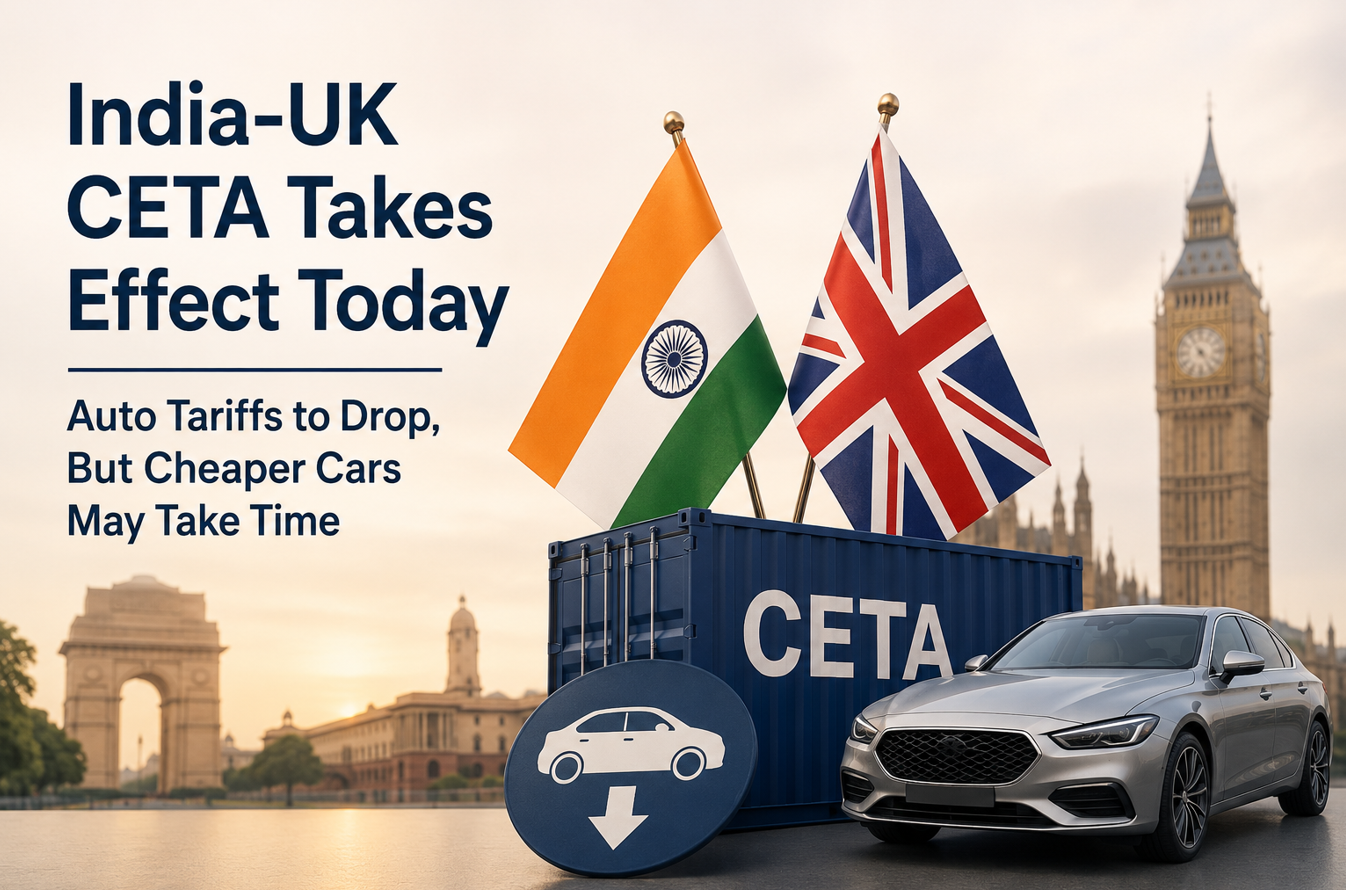
The India-UK Comprehensive Economic and Trade Agreement, better known as CETA, takes effect from today, July 15, 2026. The deal is expected to change trade between the two countries across goods, services, jobs, investment and technology.
For car buyers, the biggest headline is auto tariffs. Imported British cars may slowly become cheaper as India cuts duties under a quota-based system. But this does not mean every Jaguar, Land Rover, Mini or other UK-made car will suddenly become affordable from today.
The tariff cut will happen in a controlled way. It will depend on import quotas, vehicle category, rules of origin, company pricing and how quickly automakers pass on the benefit.
What is India-UK CETA
CETA is a trade agreement between India and the United Kingdom. It is designed to make trade easier by reducing duties, improving market access and supporting business movement between both countries.
For India, the deal can help exporters in sectors like textiles, leather, footwear, marine products, gems and jewellery, engineering goods, pharmaceuticals and services. For the UK, the deal improves access for products such as cars, whisky, medical devices, cosmetics and some advanced manufacturing goods.
The deal also matters because the UK is one of India’s important trade partners. A smoother trade route can help companies on both sides plan better.
Why auto tariffs are getting attention
India has some of the highest import duties on fully built imported cars. This has always made premium imported cars expensive for Indian buyers.
Under the India-UK CETA, tariffs on some UK-made cars will come down, but only within agreed quotas. Reports suggest that duties may drop from over 100 percent to around 30 percent initially for a fixed number of vehicles, and then reduce further in later years.
This gives British automakers a chance to bring more cars to India at better prices, while also protecting India’s local auto manufacturing market from sudden import pressure.
In simple words, India is opening the door, but not removing the gate completely.
Will cars become cheaper immediately
Some imported UK-made cars may become cheaper, but buyers should not expect an instant price crash.
Car prices depend on many things – import duty, GST, cess, logistics, dealer margins, currency movement and company strategy. Even if duty reduces, the final price cut may vary by model.
For example, if a UK-made luxury SUV qualifies under the quota, the company may reduce the ex-showroom price. But it may also use part of the benefit to manage costs, upgrade features or improve margins.
So yes, CETA can make some British cars more competitive in India. But the effect will be gradual and selective.
Which automakers may benefit
The biggest beneficiaries could be British and UK-linked brands such as Jaguar Land Rover, Mini, Bentley, Rolls-Royce, Aston Martin and McLaren, depending on eligibility and sourcing.
Jaguar Land Rover is especially important because it is owned by Tata Motors but has major manufacturing operations in the UK. If eligible models get lower duties under the CETA quota, JLR could improve its India pricing strategy for select imported models.
However, India already has local assembly for several luxury cars. Companies may continue to balance imported models with locally assembled ones.
Impact on Indian automakers
Indian automakers may not face a sudden threat because the tariff cuts are quota-based. This means only a limited number of imported cars can enjoy lower duty each year.
Mass-market brands such as Maruti Suzuki, Hyundai, Tata Motors, Mahindra, Kia and Toyota are unlikely to face immediate pressure from UK imports because most UK-made cars are premium or luxury models.
The bigger impact may be indirect. Lower duties on premium imports can push luxury brands to bring more global models to India. This may increase competition in the upper end of the market.
For Indian companies, the deal may also open export opportunities in components, EV parts, engineering goods and services.
What buyers should watch
If you are planning to buy a premium imported car, do not rush only because CETA starts today. Wait for official price announcements from carmakers.
Check whether the model is made in the UK, whether it qualifies under the agreement, and whether the company has passed on any duty benefit.
Also compare the imported version with locally assembled rivals. Sometimes a locally assembled German luxury car may still be better priced than an imported British model, even after tariff cuts.
Benefits beyond cars
The India-UK CETA is not only about automobiles. It can help Indian exporters get better access to the UK market. Sectors like apparel, footwear, leather goods, gems and jewellery, marine products and processed foods may benefit from lower duties.
Indian professionals and service providers may also gain from improved business mobility and service-sector cooperation. IT, finance, consulting, education, healthcare and legal services could see fresh opportunities over time.
For the UK, the deal can help exporters of whisky, cars, cosmetics, medical devices and high-value manufactured products.
Why the deal matters for India
India is trying to become a stronger global manufacturing and export hub. Trade agreements can help Indian companies sell more products abroad, reduce tariff barriers and build deeper supply chains.
The UK deal also sends a message that India is willing to negotiate large trade agreements, but on terms that protect sensitive sectors.
Auto is a good example. India has agreed to lower duties, but through quotas and phased reductions. That gives consumers more choice while giving domestic manufacturers time to adjust.
Concerns and challenges
- The first challenge is implementation. Trade agreements look good on paper, but companies need clear rules, fast customs processes and proper certification.
- The second challenge is pricing transparency. If carmakers get lower duty but buyers do not see meaningful benefits, the public may question the value of the tariff cut.
- The third challenge is balancing imports with Make in India. India wants foreign brands to sell here, but it also wants them to manufacture and invest locally.
For auto companies, CETA may become a test of strategy. Should they import more, assemble locally, or use India as an export base? The answer may differ by brand.
Conclusion – Key takeaways
India-UK CETA takes effect from today, July 15, 2026, and auto tariffs are one of its most visible parts. Select UK-made cars may become cheaper under a quota-based duty reduction system, but price benefits will depend on model eligibility and company decisions.
For buyers, the advice is simple – wait for official price cuts before making a decision. For automakers, the deal opens a new premium import route while keeping local manufacturing relevant.
Beyond cars, the agreement can support trade in goods, services, jobs and investment. If implemented well, CETA can become an important bridge between India’s growth market and the UK’s advanced industry base.
Facts Input- ET Auto
Discover more from Newskart
Subscribe to get the latest posts sent to your email.

Comments are closed.