

Govt Clears Rs. 503 Crore for 4,874 EV Chargers Under PM E-Drive-Why This Matters Now


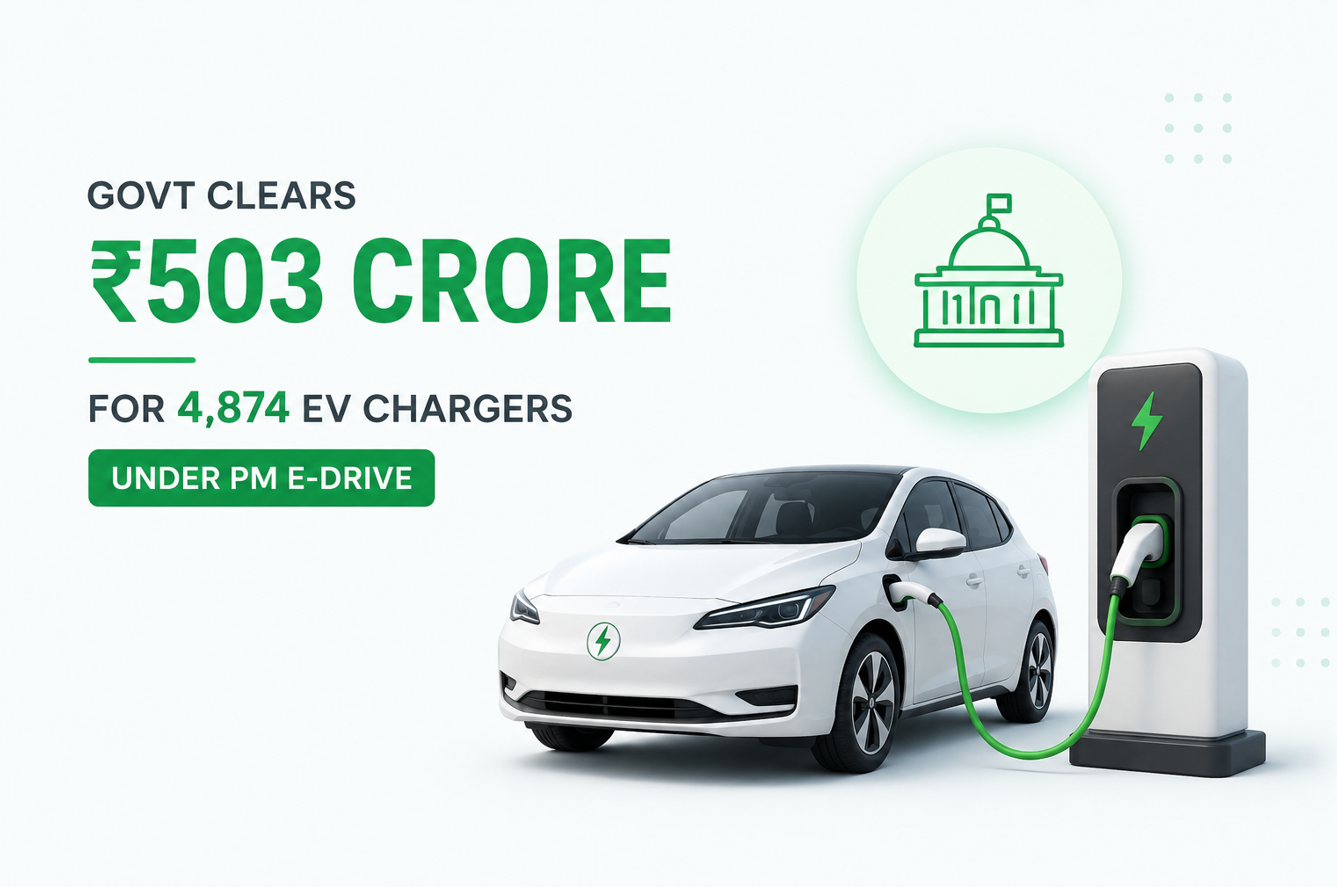
India’s EV journey has reached another important milestone. The government has approved proposals worth Rs. 503.86 crore to set up 4,874 public EV charging stations under the PM E-Drive scheme. On paper, this looks like an infrastructure update. In reality, it addresses one of the biggest practical roadblocks in EV adoption which is charging confidence (you can charge the EV when in the inter-city transit).
For many buyers, the decision to switch to electric is not just about vehicle price or running cost. It is about whether charging is available when and where they need it. This approval directly targets that fear.
What has been approved under PM E-Drive?
The announcement was made at a national conference in Bengaluru on May 12, 2026 by the Ministry of Heavy Industries. The approved chargers will be deployed across multiple states and through central public sector oil companies such as IOCL, BPCL, and HPCL.
This new approval is part of the broader PM E-Drive framework, which has a larger outlay for EV promotion and includes a dedicated charging infrastructure component. Earlier operational guidelines also laid out subsidy-backed deployment for public charging across cities, highways, and government-linked locations.
In simple terms, this is not a random one-off project. It is a phased expansion linked to a national EV plan.
Why this matters for users, industry, and India’s EV future
The biggest benefit is reduced range anxiety. As charging points become more visible and predictable, EV ownership becomes less stressful, especially for first-time buyers and intercity users. Second, better charging access can support growth across vehicle categories, not just electric cars. Two-wheelers, three-wheelers, buses, and even commercial fleets benefit when charging networks are denser and easier to access. Third, this creates stronger confidence for automakers and fleet operators. Infrastructure expansion often influences how aggressively companies launch new EV models or scale electrified transport operations.
Finally, it supports policy credibility. India has already announced big EV targets and incentive schemes. Visible ground-level charging rollout helps translate those policy intentions into daily-life usability.
Conclusion
The Rs. 503 crore approval for 4,874 charging stations is significant because it tackles the “last-mile trust issue” in EV adoption. If execution stays timely and location planning is practical, this move can make EV ownership feel normal rather than experimental for millions of Indians.
Discover more from Newskart
Subscribe to get the latest posts sent to your email.

Comments are closed.