


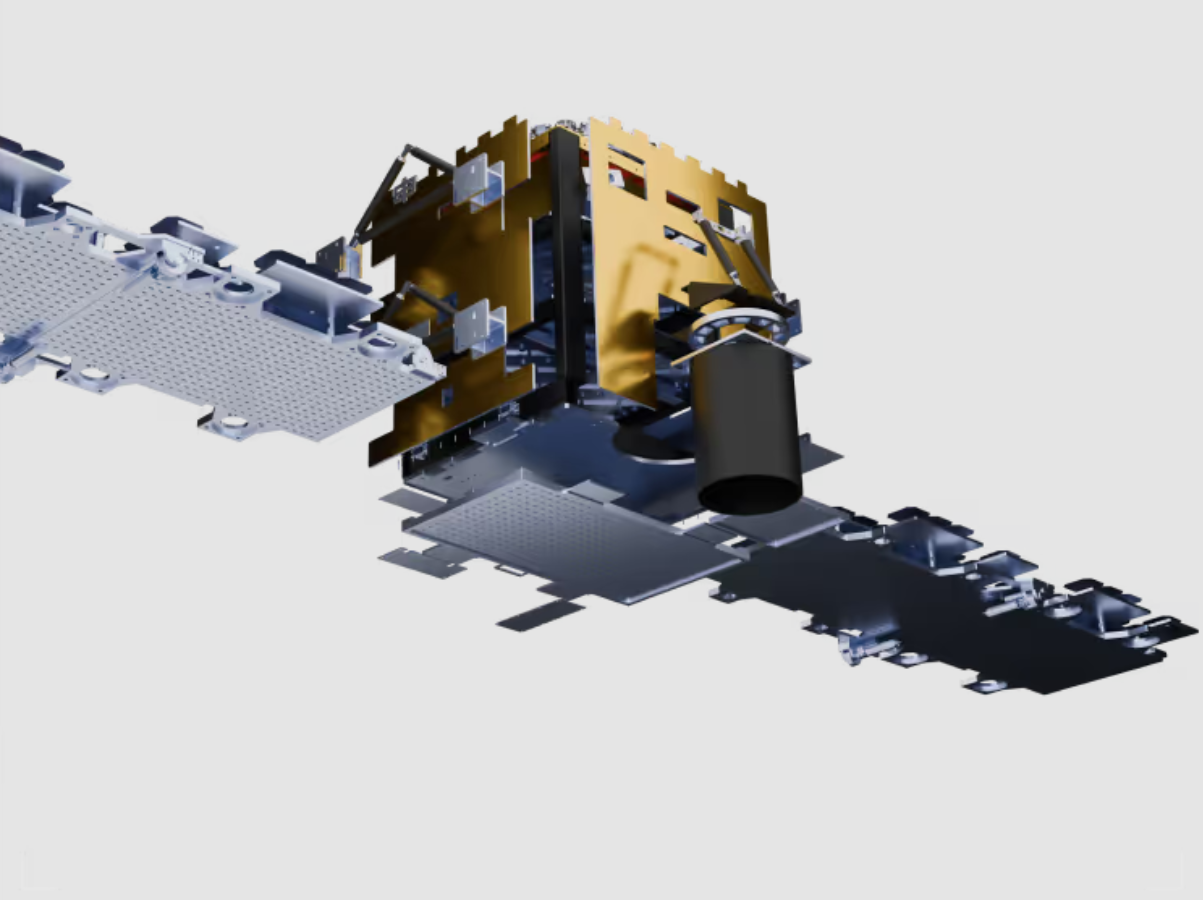
India’s private space sector just crossed an important milestone. Bengaluru-based startup GalaxEye has launched its first OptoSAR satellite, called Drishti, aboard a SpaceX Falcon 9 rocket. For India’s startup ecosystem, this is a serious proof point that private deep-tech companies can build globally relevant space technology.
What makes this mission special is not only the launch vehicle or international visibility. It is the technology combination onboard Drishti. This satellite is being described as the world’s first operational platform that combines optical imaging and synthetic aperture radar in one system. In simple terms, that means better Earth observation in difficult weather and low-light conditions, where conventional optical satellites usually struggle.
What Happened and Why It Is Technically Important
On 3 May 2026, GalaxEye’s Mission Drishti lifted off from California on a SpaceX Falcon 9 mission. The startup says this is India’s largest privately developed Earth observation satellite in its category and a major step toward a larger constellation roadmap.
The OptoSAR concept matters because each sensor type solves different problems. Optical cameras provide clear, intuitive images in daylight and cleaner skies. Radar imaging, on the other hand, can work through cloud cover and in darkness. By combining both, users can get more reliable observation outputs across varied conditions.
That capability has practical use in sectors where timing and visibility are critical: disaster response, defence and border surveillance, agriculture analytics, maritime monitoring, and infrastructure tracking. If commissioning and data rollout go as planned, the platform could offer decision-grade imagery more consistently than single-mode systems in many scenarios.
Why This Launch Gives New Hope to India’s Space Startups
For Indian startups, Drishti is not just a technical demonstration. It is a confidence signal for investors, policymakers, and customers who want to see “build-and-launch” success, not only pitch-stage promise.
First, it shows that startups in India can execute complex hardware programs over multiple years and reach orbit with commercially meaningful payloads. Second, it strengthens the narrative that India’s private space sector is moving from supportive ecosystem to output-driven ecosystem. Third, it gives younger spacetech founders a visible example that advanced satellite missions are possible from Indian startup teams, even in capital-intensive domains.
There is also a strategic angle. If private players can provide reliable geospatial intelligence, India’s broader Earth observation capability improves beyond government-only infrastructure. This can create a stronger domestic ecosystem for data services, analytics products, and sovereign-use applications.
Still, the real test starts after launch. Commercial success depends on commissioning stability, data quality, customer conversion, and repeat demand. A successful orbit insertion is a major step, but long-term credibility will come from how fast and how well GalaxEye translates this mission into consistent service delivery.
In that sense, Drishti represents both achievement and responsibility. The achievement is clear: India’s private spacetech has reached a new benchmark. The responsibility now is execution at scale.
Final Takeaway
The launch of GalaxEye’s Drishti satellite is a strong moment for India’s innovation story. It combines deep-tech ambition, startup execution, and global collaboration in one mission. For India’s spacetech founders and investors, this event offers practical optimism: breakthrough products from private teams are no longer theoretical. If mission performance and commercial rollout hold up in the coming weeks, Drishti could become more than a symbolic milestone. It could become a foundational case study for how India’s next generation of space startups builds globally relevant technology from Bengaluru to orbit.
Image credit- Official Site
Discover more from Newskart
Subscribe to get the latest posts sent to your email.

[…] and build globally relevant technology with commercial intent. Recently, Bengaluru based startup GalaxEye launched Drishti, the world’s first OptoSAR satellite, via SpaceX Falcon 9 which also shows that Indian startups […]