

Ecoil Raises $2.5 Million: Why This Fundalogical-Led Round Could Be a Big Moment for India’s Biofuel Supply Chain


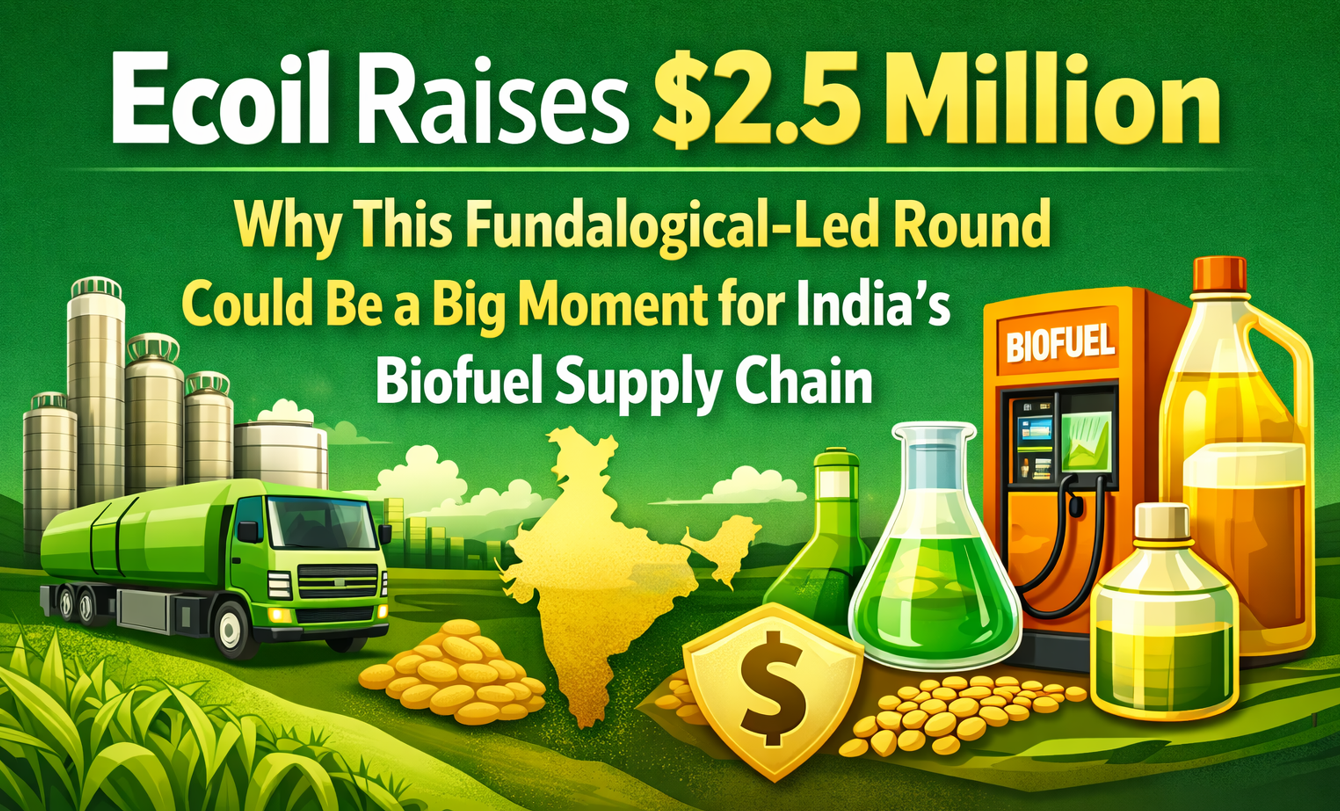
India’s clean energy conversation usually focuses on solar, EVs, and green hydrogen. But one fast-growing area is getting serious investor attention now: converting used cooking oil into cleaner fuels. On 7 April 2026, clean energy startup Ecoil announced a $2.5 million funding round led by Fundalogical Ventures. Reports also said other investors joined, including impact-focused backers and existing supporters.
At first glance, this may look like a small funding headline. But if you look deeper, this round is about solving a real infrastructure gap in India: how to reliably collect, track, and route used cooking oil (UCO) into compliant biofuel channels.
What Happened in This Funding Round?
As reported on 7 April 2026, Ecoil raised around $2.5 million in fresh capital, led by Fundalogical Ventures. Market reports also mention participation from Caspian Impact Investment, Momentum Capital, and existing investor The Chennai Angels.
The company’s focus is simple but important: build a technology-led network that collects UCO from restaurants, hotels, and food businesses, then channels that material into cleaner fuel value chains like biodiesel and sustainable aviation fuel (SAF).
In short, Ecoil is trying to organize a supply chain that has historically been fragmented and hard to scale.
Why This Matters for India Right Now
India’s energy transition is not only about creating new fuels. It is also about securing dependable feedstock (raw material) pipelines for those fuels. Used cooking oil is one such feedstock. But in practice, UCO sourcing faces three major problems:
- Supply is scattered across thousands of small outlets.
- Quality and traceability can vary widely.
- Informal diversion reduces reliable industrial availability.
A startup that can solve these operational issues at scale can unlock value for multiple stakeholders: refineries, biofuel producers, regulators, and public health systems. That is why this funding round matters. Investors are effectively backing execution in logistics, traceability, and compliance, not just a climate narrative.
Where Ecoil Could Use the New Capital
Based on reported statements, Ecoil plans to use fresh funds to expand operations, strengthen technology, and enter more markets. For a startup in this segment, that usually means:
- expanding supplier onboarding across new cities,
- improving collection and route optimization,
- building stronger quality tracking and audit systems,
- integrating enterprise buyers and processors more deeply,
- improving visibility dashboards for compliance and reporting.
In practical terms, scale in this business comes from network density and operational reliability, not just branding.
Conclusion
Ecoil’s funding is a signal that supply-chain infrastructure in clean energy is becoming investable, urgent, and strategically important in India. The company now has fresh capital to scale collection, strengthen technology, and build wider market presence. The opportunity is large, but execution will be the deciding factor.
If Ecoil can scale with discipline, this round could become a meaningful case study in how climate startups create impact by fixing foundational bottlenecks, not by chasing headlines.
Facts Input- IR
Discover more from Newskart
Subscribe to get the latest posts sent to your email.

Comments are closed.