

Chariot-1 Takes the Mic – India’s New Sovereign AI Model Aims to Understand and Speak Local Languages


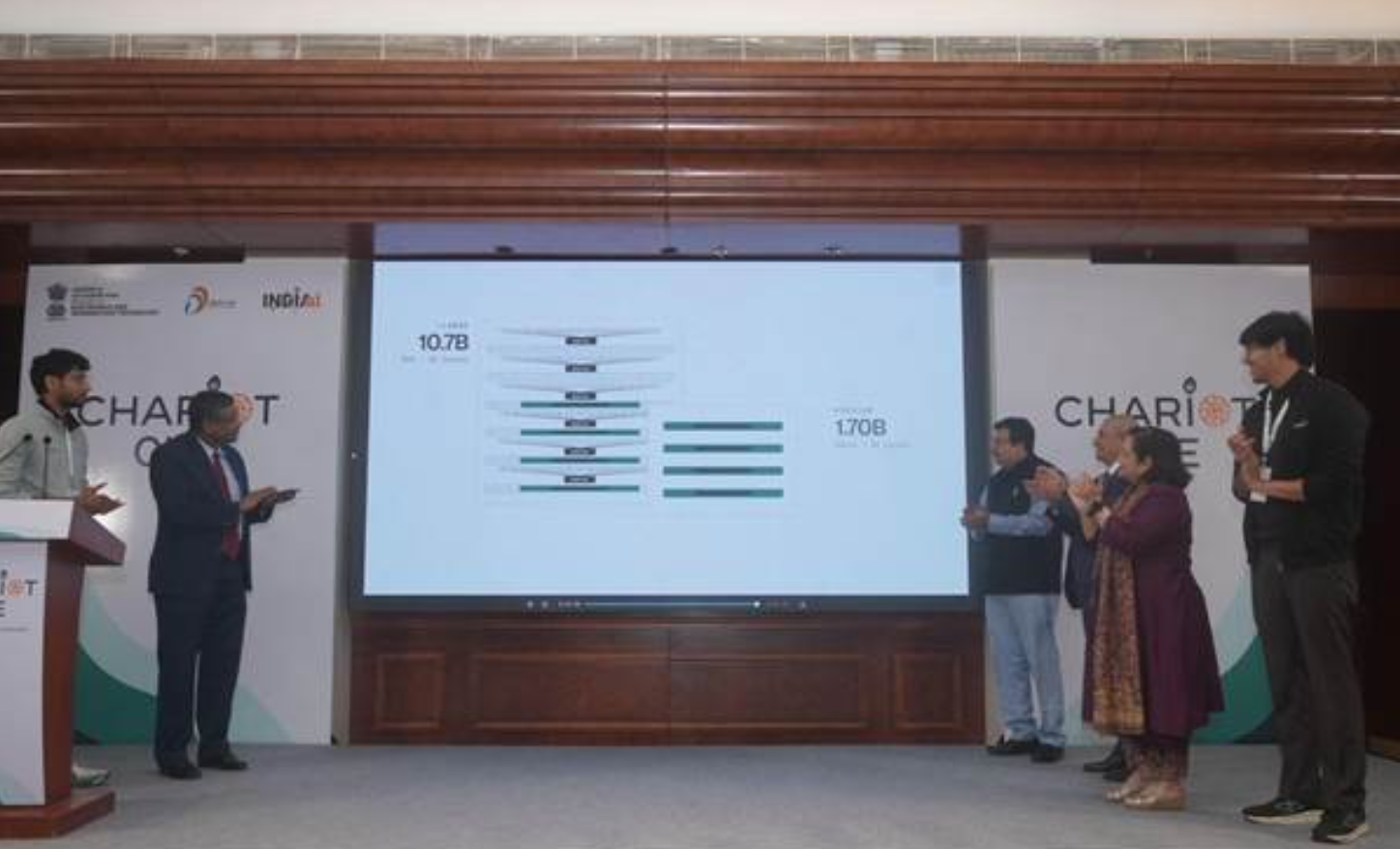
India’s push to build homegrown artificial intelligence has gained a new voice. MeitY Secretary S. Krishnan has launched the Chariot-1 Foundation Models, developed by Chariot Artificial Intelligence Pvt. Ltd. under the IndiaAI Mission.
Chariot-1 is designed for more than typing and replying. It aims to handle text generation, speech recognition and text-to-speech through a shared AI foundation. In simple terms, the same underlying system is meant to help machines read, understand and speak across English and Indian languages.
What is Chariot-1 and why does sovereign AI matter
A foundation model is a large AI system that can be adapted for many tasks. Instead of building separate systems for every job, developers can use one model as a base for chat, transcription, voice responses and other tools.
The word sovereign AI means that the technology is developed, operated and improved within the country. For India, this can help build AI that better understands local languages, accents, mixed-language communication and Indian use cases.
Chariot-1 has been developed in India and supports English plus 10 Indian languages, according to launch reports. The model is being built by Delhi-based Chariot, led by co-founders Parth Sarthi and Suvrat Bhooshan. Chariot is among the first four teams selected under the IndiaAI Mission to develop sovereign foundation models.
Capability and practical uses
Chariot-1 combines three important capabilities:
- Text generation – creating written responses, summaries or content
- Automatic speech recognition – turning spoken words into text
- Text-to-speech – converting written text into spoken audio
This can be useful in practical settings. A customer-care service could listen to a caller speaking Hindi, convert the request into text, understand the question and reply in a natural voice. An education app could read a lesson aloud in a regional language. A business could create voice reminders or product updates without recording every message in a studio.
Chariot says its model uses an approach called IndicShift, a shared system for processing Indian scripts. The company and IndiaAI Mission say this can reduce the number of text units, called tokens, needed to process Indian-language text. Fewer tokens can mean lower computing needs and faster responses.
Benefits for developers and businesses
The biggest benefit is language access. India has many languages, dialects and speech patterns, but most large AI products were built first for English-speaking users.
Chariot’s text-to-speech product supports Indian-language and mixed-language content such as Hinglish. This may help businesses make their apps, helplines and learning material more accessible to people who prefer speaking in their own language.
The company also says its text and audio inputs are processed in India. This may matter to organizations that need more control over where sensitive customer information is handled.
Still, businesses should test the model carefully before using it for important tasks. AI-generated voice or text can make mistakes, especially with names, medical information, legal content or regional expressions.
Chariot-1 price and access
The foundation-model launch did not include separate public pricing for the full Chariot-1 model family.
However, Chariot’s public text-to-speech service has a free plan with 10,000 credits, roughly equal to 10 minutes of audio. Paid plans start at Rs. 499 per month, while a startup plan is priced at Rs. 4,999 per month. These prices apply to the company’s text-to-speech service, not necessarily to every Chariot-1 capability.
Developers can try the service through Chariot’s web platform and API. Commercial usage rights are included with paid plans.
Competitors and the road ahead
Chariot enters a fast-moving voice AI market. Global competitors include ElevenLabs, Google Cloud Text-to-Speech, Microsoft Azure AI Speech and OpenAI’s voice tools. In India, Sarvam AI is also building Indian-language AI products and speech models.
Chariot says its internal tests compare its text-to-speech model with systems from ElevenLabs, Sarvam and Microsoft. These are company-reported results, so independent testing will be important before declaring any model the overall winner.
The real test for Chariot-1 will be how well it performs with everyday Indian speech — mixed languages, different accents, noisy calls and local context. If it works reliably at scale, it could become useful for education, public services, banking, healthcare support, media and customer service.
Image- PIB
Discover more from Newskart
Subscribe to get the latest posts sent to your email.
