

UN Chief Pushes for Global AI Guardrails – Why the World Needs Common Rules Now


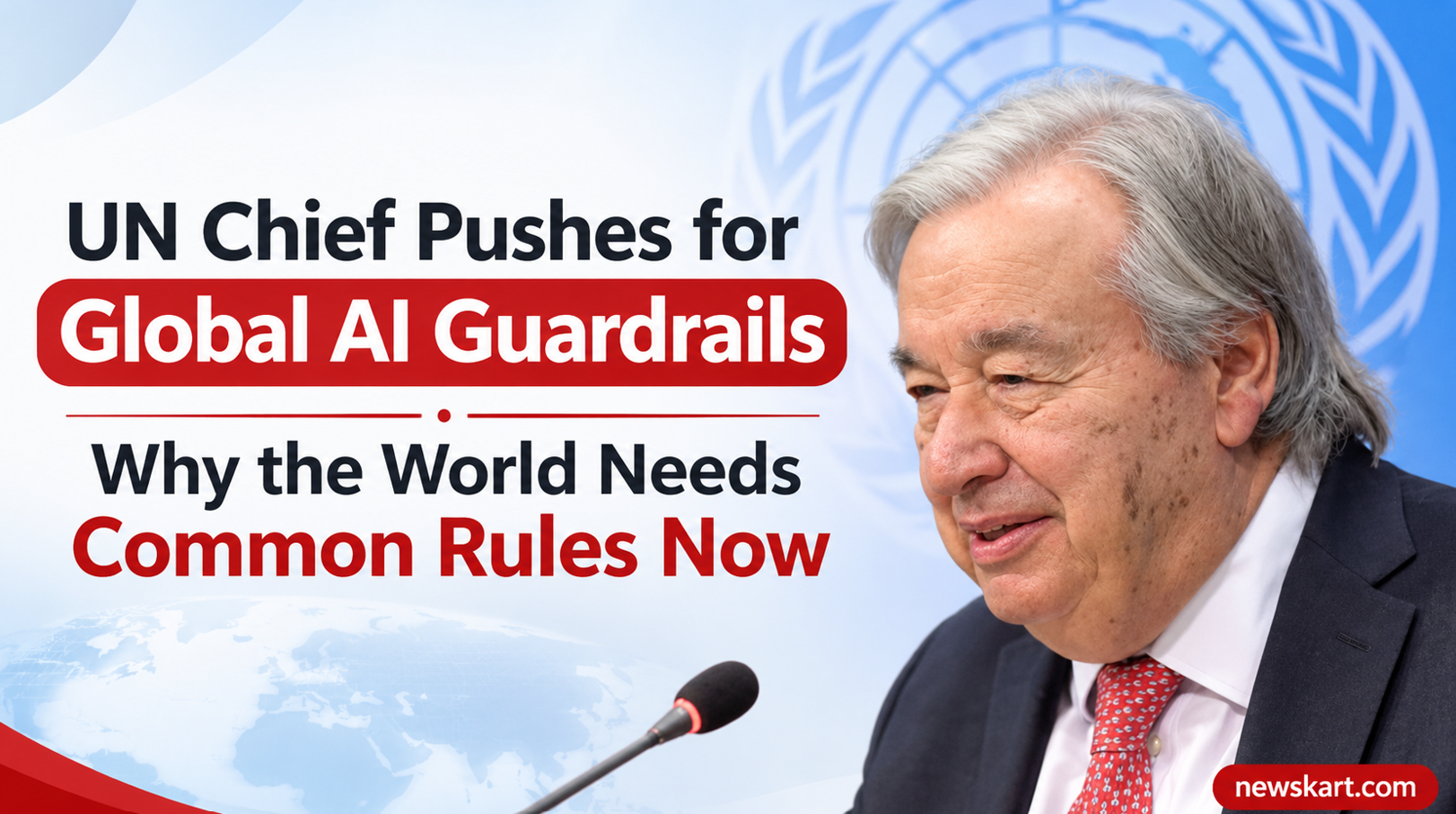
Artificial intelligence is moving faster than most governments can regulate it. That is why United Nations Secretary-General Antonio Guterres is urging countries to work together on common AI guardrails.
At the Bridgetown Special Summit on AI Safety in Barbados, Guterres called for discussions on a global framework to manage AI risks. His central message was simple: AI is used across borders, so safety rules cannot depend only on what one country decides.
What are AI guardrails?
AI guardrails are rules and checks designed to keep AI systems safe, fair and under human control. They can include testing before a powerful model is released, clear disclosure about how a system works, protection for personal data and human review for high-risk decisions.
For example, if an AI tool helps a hospital sort patient cases, a doctor should remain responsible for the final medical decision. In the same way, an AI system used by a bank should not reject a loan application without a person being able to review the result.
The UN chief has called for shared safety measures, common testing methods, basic transparency requirements and independent evaluation of advanced AI models.
Why global cooperation is necessary
AI tools created in one country can be used by people and businesses across the world within minutes. A fake video, a cyberattack tool or an unsafe automated system does not stop at a national border.
If countries create completely different rules, companies may move risky work to places with weaker oversight. This is sometimes called a “race to the bottom” on safety. Guterres has warned against this approach and said global cooperation is essential.
Common standards could help governments identify serious risks earlier. They may also help smaller and developing countries participate in AI policy instead of only following rules made by a few powerful nations or technology companies.
The potential benefits
Good AI rules do not have to slow useful innovation. Clear standards can make businesses and users more confident about adopting AI in areas such as education, farming, healthcare and public services.
A school using AI learning software, for example, would benefit from clear privacy protections for student data. A farmer using an AI weather tool needs reliable information, not a system that gives untested advice.
Global cooperation can also support better access to training, computing resources and AI expertise. This matters because many countries do not yet have the technical capacity to assess advanced AI systems on their own.
What happens next
The UN is pushing for a multilateral AI risk-management framework, but the details are still being discussed. Reaching agreement will not be easy because countries have different laws, priorities and views on technology.
Still, the basic aim is practical: keep people in control of important decisions, require stronger checks for powerful systems and ensure AI benefits are not limited to a small group of countries or companies.
References- UN report on Guterres’ call for international AI cooperation, UN report on the proposed multilateral AI risk-management framework, UN information on the Bridgetown Special Summit on AI Safety
Image Credit- UN
Discover more from Newskart
Subscribe to get the latest posts sent to your email.
