


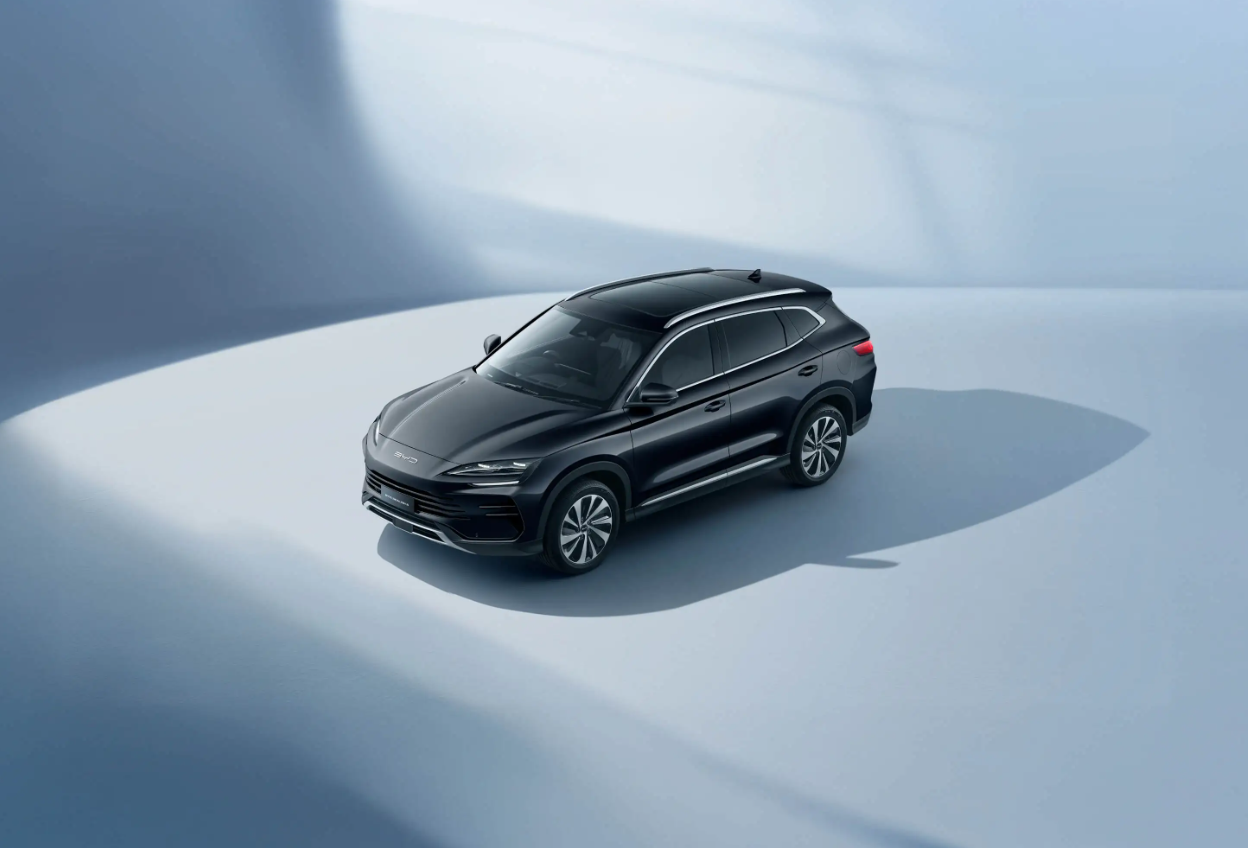
BYD is preparing to bring a new kind of electrified SUV to India. The company has teased its first plug-in hybrid model for the Indian market, and reports suggest the launch or unveil could happen on June 9, 2026. The strongest expected model is the BYD Sealion 6 plug-in hybrid, also known globally as the Sealion 6 DM-i.
This is interesting because BYD India has so far focused on electric cars such as the Atto 3, Seal, eMAX 7, and Sealion 7. A plug-in hybrid changes the story. It gives buyers the silent, clean city driving of an EV, but also keeps a petrol engine for long-distance travel.
For Indian customers who like EVs but worry about charging on highways, the BYD Sealion 6 could become a practical middle path. It is not a normal hybrid like the Toyota Hyryder or Honda City eHEV. It has a larger battery, external charging support, and a longer electric-only driving range.
What Is The BYD Sealion 6 Plug-In Hybrid
The BYD Sealion 6 is a mid-size SUV powered by BYD’s DM-i plug-in hybrid technology. Globally, it uses a 1.5-litre petrol engine, an electric motor, and an 18.3 kWh BYD Blade Battery.
BYD was founded in February 1995 by Wang Chuanfu. The company first became known for batteries, and that background now gives it an advantage in electric and hybrid vehicles. Its Blade Battery is one of the brand’s most important technologies and is used across many BYD models.
In simple words, the Sealion 6 is designed to drive like an EV most of the time. At low speeds and in city traffic, the electric motor can do most of the work. The petrol engine comes in when the battery is low, when more power is needed, or when the car is running at higher speeds.
This makes it different from a standard petrol SUV. It also makes it different from a full EV. You can charge it at home or a public charger, drive short trips mostly on electricity, and still use petrol when you do not want to stop for charging.
Expected India Launch And Price
BYD has confirmed plans to bring a plug-in hybrid SUV to India, but the final model name and India-specific specifications are still awaited. Most reports say the Sealion 6 is the likely candidate, while some also mention the possibility of the Atto 2 DM-i.
The June 9, 2026 date is being reported as the launch or debut date for BYD’s first hybrid model in India. Since the official variant details are not out yet, buyers should treat the Sealion 6 name as highly likely but not fully confirmed until BYD makes the final announcement. Expected pricing may be in the premium SUV space. Some market estimates place it around Rs. 40 lakh to Rs. 50 lakh, while others suggest it could go higher if imported as a CBU. If BYD can assemble it locally or price it aggressively, the Sealion 6 may attract buyers who are considering premium petrol SUVs, strong hybrids, and entry-level luxury EVs.
Expected Specifications
Global BYD Sealion 6 specifications give us a good idea of what India may get. The SUV measures around 4,775 mm in length, 1,890 mm in width, and 1,670 mm in height, with a 2,765 mm wheelbase. That puts it in the same broad size space as premium mid-size SUVs.
The international model uses an 18.3 kWh Blade Battery. In the front-wheel-drive version, it has a 1.5-litre petrol engine and an electric motor, with combined output of around 160 kW and 300 Nm. The all-wheel-drive version adds a rear motor and produces around 238 kW and 550 Nm.
The global front-wheel-drive model can do 0-100 kmph in about 8.5 seconds, while the all-wheel-drive version is quicker at about 5.9 seconds. Boot space is listed at 425 litres, expanding to around 1,440 litres with the rear seats folded.
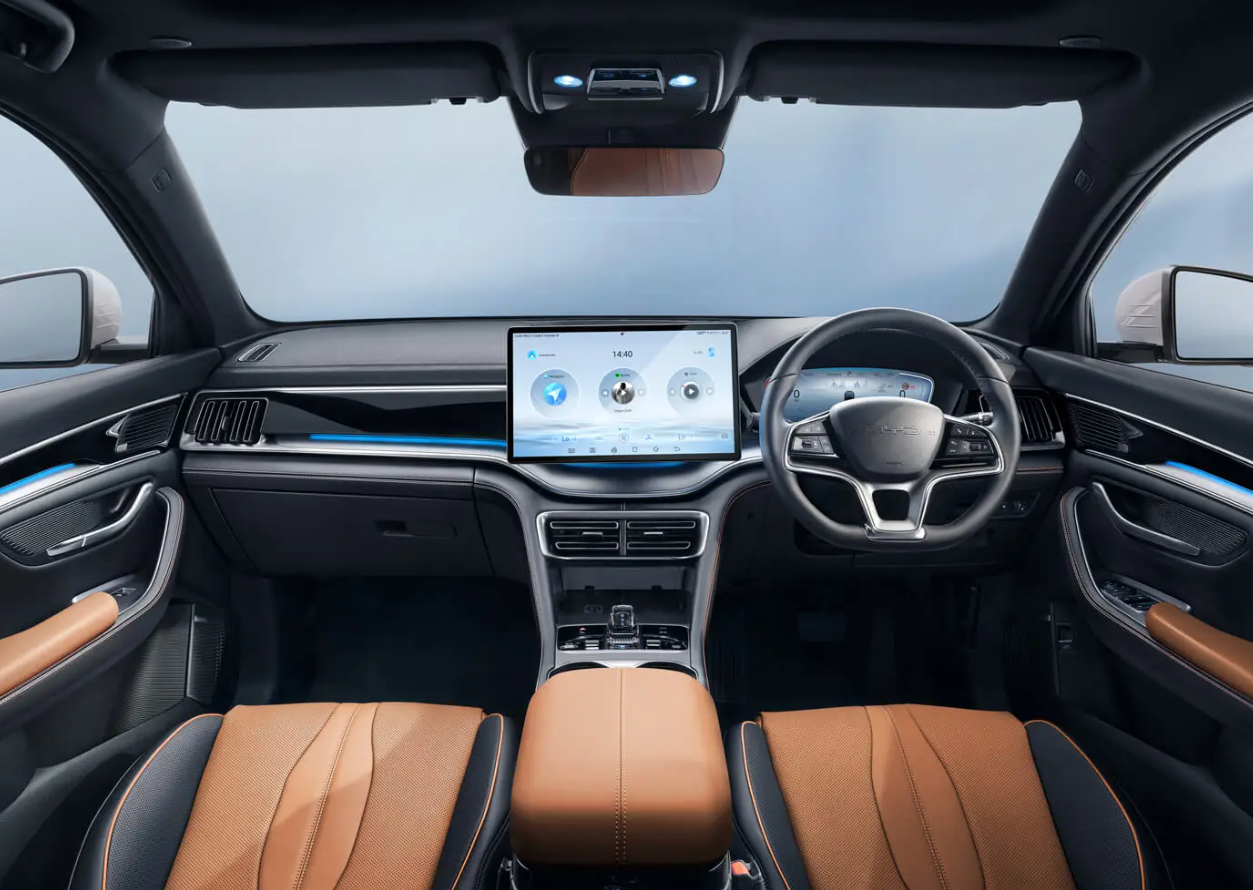
Expected features may include a 15.6-inch rotating touchscreen, digital driver display, panoramic sunroof, 360-degree camera, connected features, vehicle-to-load function, adaptive cruise control, lane support, blind-spot monitoring, and autonomous emergency braking. India’s final feature list may differ by variant.
Efficiency And Real-World Range
The biggest selling point of the BYD Sealion 6 will be efficiency.
In global specifications, the front-wheel-drive model offers around 92 km of electric range under the listed test cycle, while the all-wheel-drive version offers around 81 km. Combined driving range is listed at more than 1,000 km in some global versions, depending on variant and test conditions.
Fuel consumption is also very low when the battery has enough charge. The Australian specification lists combined fuel consumption of around 1.1 litres per 100 km for the front-wheel-drive version and around 1.4 litres per 100 km for the all-wheel-drive version in a battery-supported cycle. When the battery state is low, the fuel consumption rises to around 4.8 litres per 100 km and 5.8 litres per 100 km respectively.
For Indian buyers, here is the practical meaning. If your daily commute is 40 km to 60 km and you charge the car regularly, you may drive most weekdays like an EV. Petrol use may stay low. But if you do not charge it often and drive it like a normal hybrid, fuel economy will depend more on the petrol engine and hybrid system.
This is why plug-in hybrids reward disciplined owners. The more often you charge, the more value you get from the technology.
The Technology Behind BYD DM-i
DM-i stands for BYD’s plug-in hybrid system focused on efficiency. The idea is to use electric driving as the main experience and petrol power as support. At city speeds, the electric motor can move the car smoothly and quietly. When the battery gets low, the petrol engine can work as a generator or directly help drive the wheels depending on the situation. The system automatically chooses what is more efficient.
The Blade Battery is another key part. It uses lithium iron phosphate chemistry, often called LFP. This chemistry is known for better thermal stability and long life compared with some other battery types. BYD also packages the cells in a blade-like structure, which helps improve space use and safety.
The Sealion 6 also supports external charging, unlike a normal strong hybrid. This means owners can plug it in overnight and start the next day with usable electric range.
Who Should Consider The BYD Sealion 6
The Sealion 6 plug-in hybrid is best for buyers who want an EV-like drive but are not ready to fully depend on charging infrastructure.
It may suit urban families with home charging, corporate users who travel between cities, and buyers moving from petrol SUVs who want lower running costs without range anxiety. It may also work well for people who drive mostly in the city during the week and take highway trips on weekends.
However, it may not suit buyers who cannot charge at home or office. Without regular charging, a plug-in hybrid becomes less special and may feel like an expensive hybrid SUV.
Competitors In India
The BYD Sealion 6 will enter a space with few direct competitors. India has strong hybrids such as Toyota Urban Cruiser Hyryder, Maruti Suzuki Grand Vitara Hybrid, Honda City eHEV, and Toyota Innova Hycross Hybrid. But these are not plug-in hybrids.
Its closest future competitor may be the JSW-Chery Jetour T2 PHEV, which is also expected for India. Depending on price, buyers may also compare the Sealion 6 with the Hyundai Ioniq 5, BYD Sealion 7 EV, Kia EV6, Toyota Fortuner, Jeep Meridian, Skoda Kodiaq, and premium diesel or petrol SUVs.
BYD’s advantage is battery and hybrid technology. Its challenge will be pricing, brand trust, service reach, and how clearly it explains plug-in hybrid ownership to Indian buyers.
Conclusion With Key Takeaways
The BYD Sealion 6 India launch could be a major moment for plug-in hybrid SUVs in India. If it arrives on June 9 as expected, it may become BYD’s first PHEV in the country and one of the few premium SUVs offering both EV-style city driving and petrol-backed long range.
Its global specifications are promising, with an 18.3 kWh Blade Battery, around 80-90 km electric range, more than 1,000 km combined range in some versions, and strong efficiency when charged regularly.
Key takeaways
- BYD’s first India plug-in hybrid SUV is expected to debut on June 9, 2026.
- The likely model is the BYD Sealion 6 DM-i.
- It uses a 1.5-litre petrol engine, electric motor, and 18.3 kWh Blade Battery globally.
- Expected electric-only range may be around 80-90 km, depending on variant.
It is best for buyers who can charge regularly and want EV-like city driving with petrol backup.
Facts Input- AutoCar, BYD Australia
Discover more from Newskart
Subscribe to get the latest posts sent to your email.

Comments are closed.