


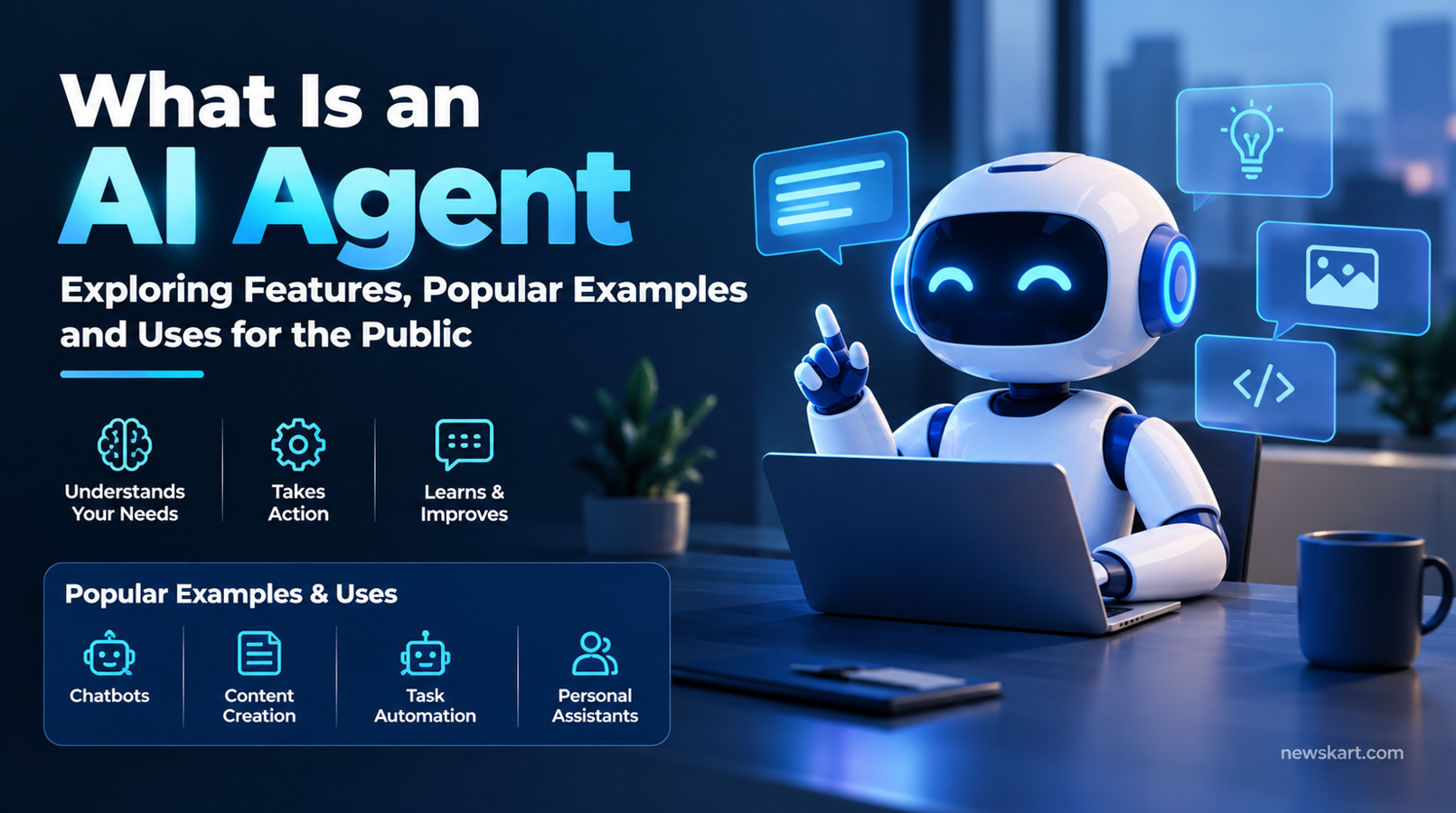
Artificial intelligence is moving beyond simple question-and-answer tools. A chatbot gives a reply when a user types a question, but an AI agent can understand a goal, plan several steps and use approved tools to complete the task.
For example, instead of only explaining how to compare flight tickets, an AI agent may search available options, organize them by price and timing, and prepare a shortlist. It may still ask for approval before making a payment or final booking.
What is an AI agent
An AI agent is software that uses an AI model to complete a task or reach a specific outcome. It can combine reasoning, memory, web access, documents, databases and external tools.
A normal chatbot may answer, “Here are some budget smartphones.” An AI agent can search selected websites, compare specifications, create a table and prepare a buying guide based on a user’s budget.
The important difference is action. An AI agent does not only generate text. It can sometimes search, calculate, organize, update records, fill forms or trigger another software system.
Main features of an AI agent
AI agents usually include several important capabilities.
A. Goal understanding
The user provides an outcome, such as “prepare a weekly sales report,” rather than explaining every small step.
B. Planning
The agent breaks the request into smaller tasks. It may collect data, check for missing information and decide the order of work.
C. Tool use
Agents can work with browsers, spreadsheets, calendars, business databases, APIs and other software when access is provided.
D. Memory and context
An agent can use information from the current conversation, connected documents or approved company data.
E. Multi-step work
It can continue through several actions instead of stopping after one response.
F. Human approval
Good agents pause before sensitive actions such as sending an email, making a purchase, deleting information or submitting a form.
These capabilities are not unlimited. An agent can make mistakes, misunderstand instructions or use outdated information. Users should review important results before acting on them.
Popular AI agents and platforms
1. ChatGPT agent capabilities
OpenAI’s agent tools are designed to handle tasks such as online research, working with uploaded files, using connected sources and editing spreadsheets. Browser-based actions can include opening websites, entering information and completing supported workflows, with confirmation required for sensitive steps.
This can help a public user compare products, organize travel research, summarize documents or prepare a project plan.
2. Google Gemini Enterprise agents
Google offers business-focused agents through Gemini Enterprise. Its Deep Research agent can search across the web and approved enterprise data before producing a report. Organizations can also create custom agents using no-code tools, Agent Studio or the Agent Development Kit.
A company could use one agent to answer employee questions and another to analyze spreadsheets or retrieve information from internal documents.
3. Microsoft Copilot agents
Microsoft Copilot agents are designed to work with applications and business data across tools such as Teams, Outlook, Word and Excel. They can retrieve information, summarize content and take actions such as updating records or managing leads when permissions are configured.
4. Claude computer-use tools
Anthropic’s computer-use technology allows Claude-based systems to interact with a computer interface by observing screens, clicking and typing. This is mainly useful for developers and organisations building controlled automation workflows.
5. Meta AI
Meta AI is available across WhatsApp, Instagram, Facebook, Messenger, the Meta AI app and selected smart glasses. People can use it for questions, image creation, recommendations, translation and everyday planning.
Meta has also introduced more action-oriented features. Depending on availability, Meta AI can create recurring tasks such as weekly meal plans, track topics and provide updates. Its support assistant can help users manage settings, reset passwords, report scams and handle selected account issues.
For the public, Meta AI can be useful for planning a trip, creating shopping ideas, understanding a photo, preparing a message or getting help with Facebook and Instagram settings. Availability and capabilities may vary by country.
6. xAI Grok agents
Grok is xAI’s AI assistant, available through Grok and X in supported regions. The latest Grok models offer reasoning, tool use and multi-agent capabilities. In simple terms, Grok can divide a complex request into smaller parts, use tools and combine the results.
xAI’s documentation also describes Grok’s ability to work with tools and project workspaces for coding tasks. It can read tool outputs, make changes and continue working through a task instead of only producing a single answer.
People may use Grok for research, current-topic discussions, coding help, document analysis, idea generation and summaries. Users should still check information carefully, especially when dealing with news, finance, health or personal decisions.
These additions fit the wider definition of an AI agent because both platforms are moving beyond simple conversation. They can use context, follow multi-step instructions and, in some cases, complete recurring tasks or interact with connected tools. Availability, permissions and safety limits remain important.
How the public can use AI agents
People may use AI agents for:
- Comparing phones, laptops, cars or insurance plans
- Planning trips and creating day-by-day itineraries
- Sorting emails and preparing replies
- Creating budgets from bills and bank statements
- Summarizing long reports or legal documents
- Preparing study plans and practice questions
- Tracking deliveries and checking appointment availability
- Turning notes into presentations or spreadsheets
- Monitoring prices and creating purchase shortlists
- Supporting small-business invoices and customer follow-ups
The safest approach is to give an agent limited access, clear instructions and approval checkpoints. Avoid sharing passwords, one-time codes or sensitive financial information unless the service provides a secure and trusted method.
Conclusion with key takeaways –
An AI agent is an AI-powered helper that can plan and perform tasks using approved tools. Its main difference from a chatbot is the ability to take actions across multiple steps.
AI agents can save time in research, office work, study, shopping and personal planning. They are most useful when the task is repetitive or involves information from several places.
However, they should not be treated as completely independent decision-makers. Users should check sources, review important actions and keep control over financial, legal, medical and personal decisions.
Disclaimer
AI agent features and availability vary by platform, plan and region. Users should review permissions and verify important outputs before relying on them.
Discover more from Newskart
Subscribe to get the latest posts sent to your email.
