

STCH Raises Funding for AI-Led Textile R&D: Why This Startup Is Getting Attention in India


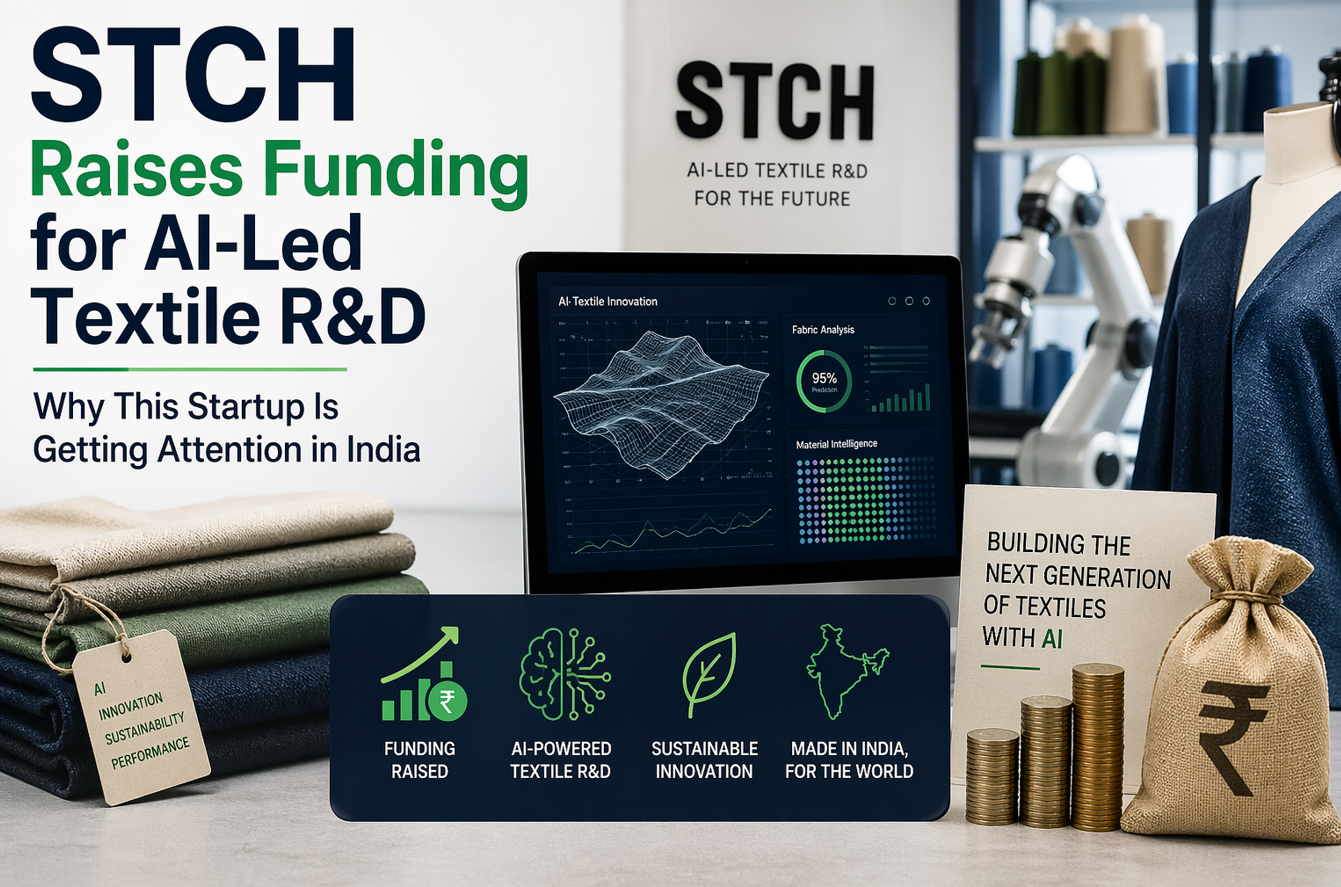
STCH has sparked interest across startup and manufacturing circles: an AI-first textile startup from India has raised fresh capital to scale fabric R&D and production workflows. As per reports, it raised $5.5 million in the round which was led by Omnivore with participation from Kae Capital and WVC.
STCH is building in a space that most tech headlines ignore: the back-end of fashion manufacturing. While many AI startups target shopping, recommendations, and virtual try-ons, STCH is focused on a harder problem: how fabrics are developed, tested, and moved into production.
For India, this matters because textiles are a huge employment and export sector. If AI can reduce waste, improve speed, and make sourcing more predictable, the impact goes beyond one startup’s funding milestone.
What STCH Actually Does
STCH positions itself as an AI-led contract development and manufacturing (CDMO) platform for textiles. In simple words, it helps brands move from fabric idea to production in a more structured way. Traditional fabric development often runs on trial and error. Teams test multiple swatches, change composition, adjust finishes, and repeat. This can be slow, expensive, and uncertain. STCH’s value pitch is that AI can reduce unnecessary iterations by predicting more accurate fabric “recipes” earlier in the process.
So the startup is not just selling software dashboards. It is building a bridge between:
- trend intelligence
- material science choices
- mill execution and manufacturing coordination
This is why investors see it as infrastructure-style innovation, not only a pure app play.
Why Investors Are Interested in This Space
Textile development has pain points that are ideal for AI-assisted optimization:
- Too many development cycles before final approval
- High sampling costs and timeline delays
- Demand unpredictability across geographies
- Increasing pressure on sustainability and traceability
If a platform can reduce cycle time while improving quality consistency, it directly affects margin and delivery speed. That is exactly where investors are placing their bets.
In STCH’s case, reported plans include:
- expanding AI capabilities
- building/strengthening fabric R&D infrastructure
- growing manufacturing partnerships
- scaling delivery in key international markets
This is a classic “use capital to strengthen both software and supply-side execution” model.
Conclusion: A Small Round With a Big Industrial Signal
STCH’s latest pre-Series A raise is not just another funding update. It points to a larger trend: AI is moving into hard, operational sectors where process improvement matters more than flashy demos. Yes, the round-size reporting saw a quick correction cycle. But the core message remains strong. Investors are backing AI-led textile infrastructure from India because the problem is real, large, and globally relevant. If STCH can convert this capital into measurable execution gains for brands and mills, it could become an important reference point for India’s next wave of industrial AI startups.
Facts Input- E.ET
Discover more from Newskart
Subscribe to get the latest posts sent to your email.

Comments are closed.