

Sahamati Raises INR 50 Crore: Why This Is a Big Moment for India’s Account Aggregator Ecosystem


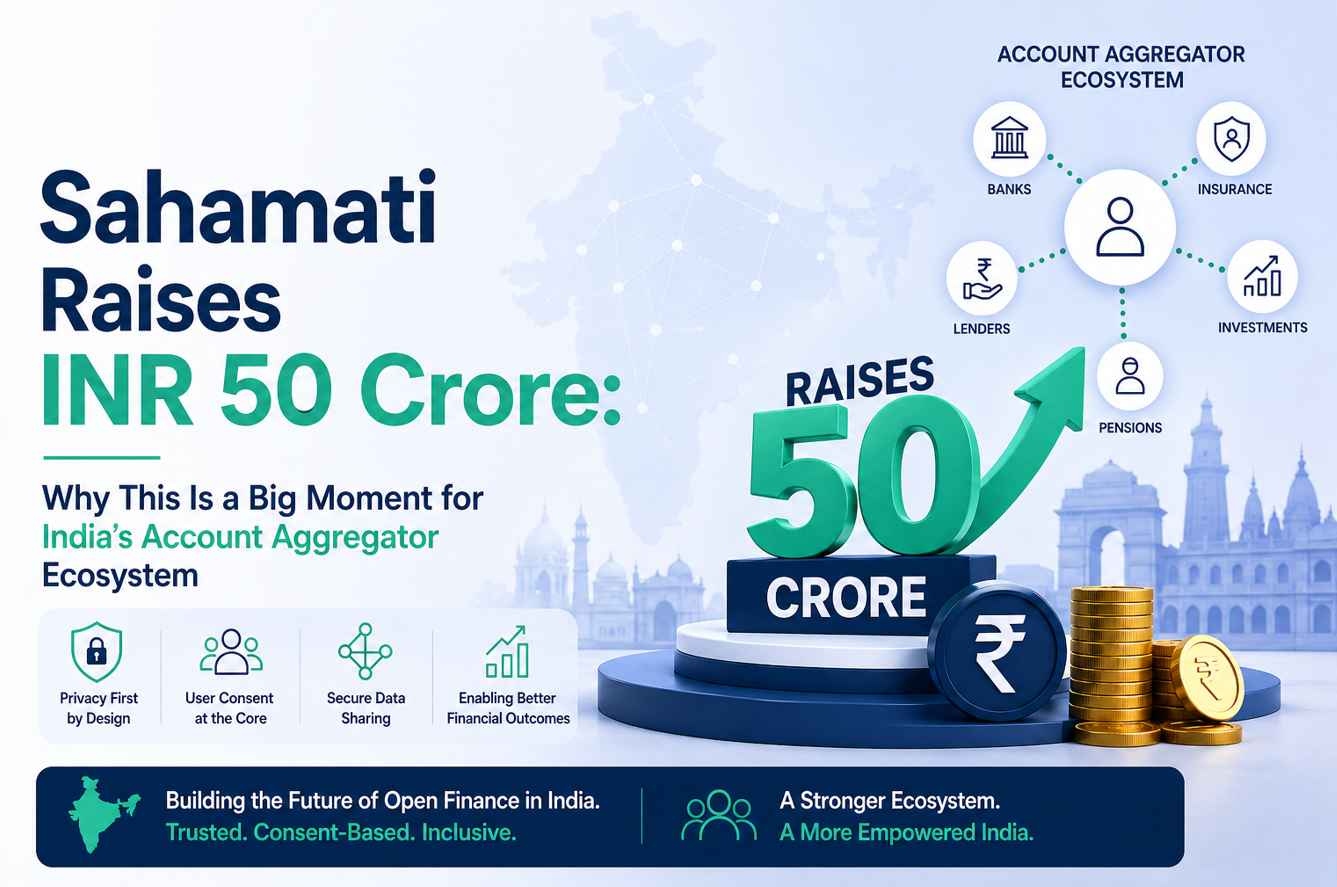
Sahamati has raised INR 50 crore, which is an account aggregator ecosystem. This is about India’s consent-based financial data infrastructure moving into its next phase. Unlike most venture-backed startup raises, Sahamati is a not-for-profit, industry alliance supporting the Account Aggregator (AA) ecosystem. That means the objective is not app growth alone. The focus is on ecosystem scale, standards, governance, interoperability, and responsible data-sharing adoption across banks, NBFCs, AMCs, brokers, and fintechs.
In simple terms, this funding is a signal that large financial institutions now see AA rails as a strategic layer for the future of lending, wealth, insurance, and customer-facing financial products in India.
How Sahamati Works (Simple Model)
Consent-led financial data sharing through India’s Account Aggregator ecosystem
Step 1: User Consent
A customer explicitly approves what financial data can be shared, with whom, and for what purpose.
Step 2: Data Flow via AA
RBI-regulated Account Aggregators securely transfer data from FIPs to FIUs after consent is granted.
Step 3: Faster Decisions
Lenders, insurers, brokers, and fintechs use verified data to speed onboarding and improve risk assessment.
Step 4: User Benefit
Users get smoother access to loans, investments, and insurance while staying in control of data permissions.
Sahamati’s Role in the Ecosystem
Sahamati acts as a member-driven industry alliance that supports trust, standards, and interoperability across the AA network.
It provides ecosystem services like central registry/certification support, guidance, governance collaboration, and industry adoption enablement.
Where It Is Being Used
Lending, stockbroking, personal finance management, and life insurance workflows that need secure, consent-based financial data sharing.
What Happened in This Funding Round
Sahamati announced a INR 50 crore raise backed by a broad group of financial entities. Reports indicate participation from major banks, large financial institutions, and fintech players, with over two dozen participants involved.
Names widely cited include:
- State Bank of India
- ICICI Bank
- HDFC Bank
- Axis Bank
- Bajaj Finserv
- Aditya Birla Group entities
- Zerodha
- Dhan
- Angel One
- INDmoney
- and others
This is notable because it is a collective industry-backed funding event, not a concentrated one-investor bet.
Why This Raise Is Different From Typical Startup Funding
Most funding stories are about revenue acceleration and market capture. This one is different for three reasons.
1) It is ecosystem capital, not just company capital
Sahamati supports the broader AA network, not only one commercial product line.
2) It is governance-heavy by design
The AA model depends on trust, standards, and compliance. Funding in this case supports institutional and technical strengthening, not only top-line growth.
3) It indicates ecosystem maturity
When many competing institutions fund the same infrastructure layer, it usually means the market has moved from “pilot curiosity” to “strategic necessity.”
That shift is what makes this round important.
Quick Refresher: What Is the Account Aggregator Ecosystem?
The Account Aggregator framework enables consent-based financial data sharing between entities in a regulated way.
In simple user terms:
- You give permission for your financial data to be shared for a specific purpose.
- Data moves securely from where it sits (banks/financial institutions) to where it is needed (for example, a lender evaluating your loan application).
- You remain in control through consent architecture.
This model can reduce paperwork, speed decisions, and improve product relevance across financial services.
Conclusion
Sahamati’s INR 50 crore raise is a significant development because it reflects coordinated conviction across India’s financial sector. It is not just a funding milestone. It is a confidence signal for the next stage of the Account Aggregator ecosystem. For users, the long-term promise is smoother and more controlled digital finance journeys. For institutions, the opportunity is better underwriting, efficiency, and product design. For the market, it is a strong indicator that shared, consent-based data rails are moving from policy theory to practical scale. If execution stays disciplined, this can become one of the more meaningful infrastructure-led shifts in Indian finance over the next few years.
Facts Input- ET
Discover more from Newskart
Subscribe to get the latest posts sent to your email.

Comments are closed.